




STUNT RIGGING & AERIAL WORK
MOVEMENT. LOAD PATH. PERFORMANCE. CONTROL.
IN ONE TAKE
Stunt Rigging is the invisible architecture of action. It can support, lift, pull, redirect, rotate, decelerate or recover a performer—but the mechanism is never the point. The point is a movement the audience reads instantly: weightlessness, impact, danger, power, loss of control or impossible freedom.
At SlamArtist, Stunt Design, Stunt Rigging and Aerial Work are developed as one production conversation. Ferdi Fischer and our dedicated rigging team connect performers, camera, wardrobe, VFX and production, so the performer path, body line, timing, wire harness, equipment and recovery are considered before the shot reaches set.
MOVEMENT FIRST. SYSTEM SECOND.
Aerial Work begins by defining what the character should feel and what the camera must see. Sometimes that means a long flight, a rapid pull, a fall, a rotation or a wire-supported fight. Just as often, the rigging is nearly invisible: taking weight out of a jump, holding a lean beyond natural balance, shaping a slow drift, softening a landing or repeating an exact position for camera.
Every cue has its own body orientation, path, speed profile and end condition. This is where Stunt Design becomes physical movement design. A hand pull can preserve human timing; a powered or multi-axis system can support repeatable travel; descenders and deceleration systems answer different movement problems. The method follows the shot—not habit or spectacle.
When WarpCam® is part of the visual plan, camera and performer paths can be developed in the same spatial conversation. They remain distinct systems with separate equipment and responsibilities, but their timing, distance, lens relationship and clearances can be designed toward one image.
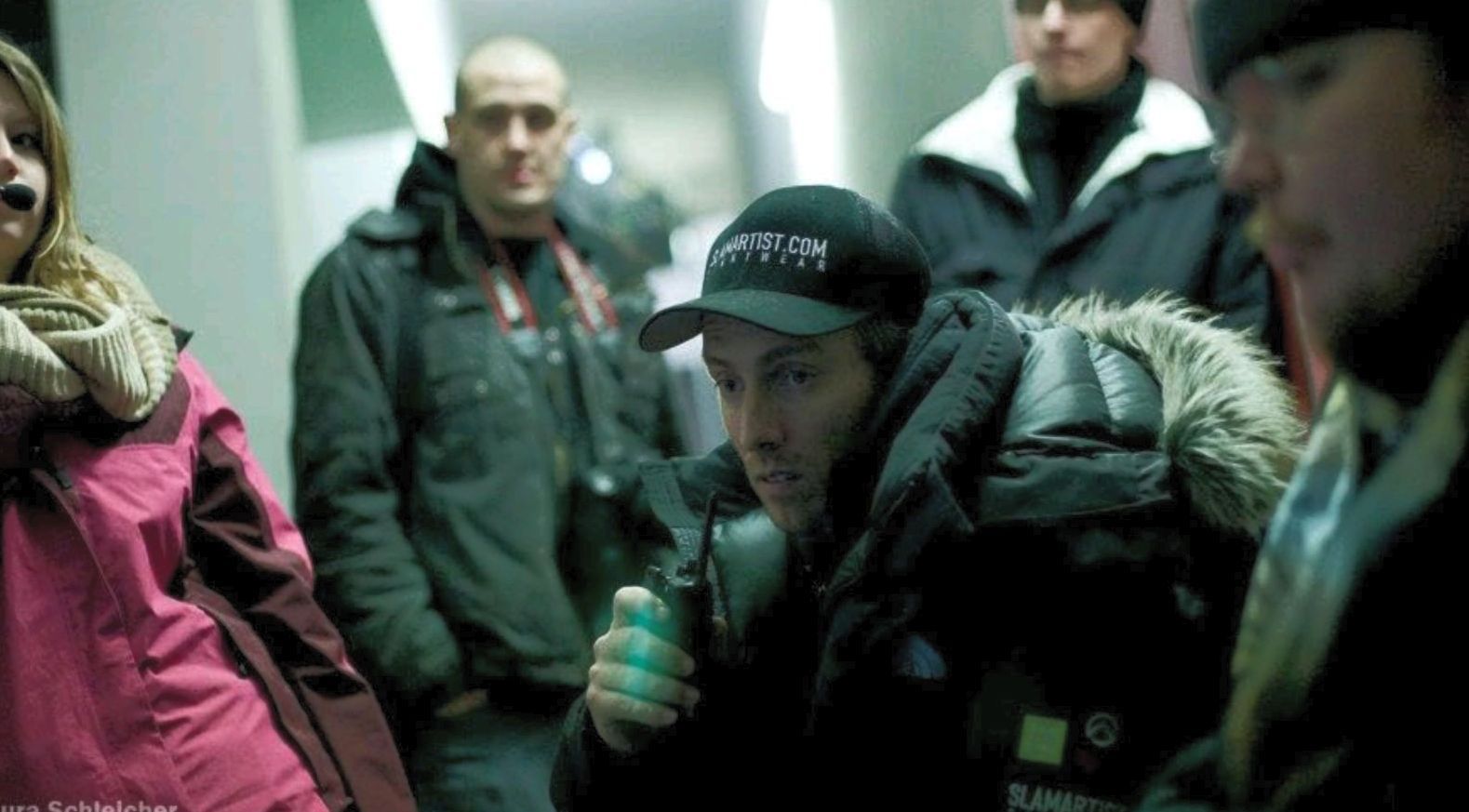
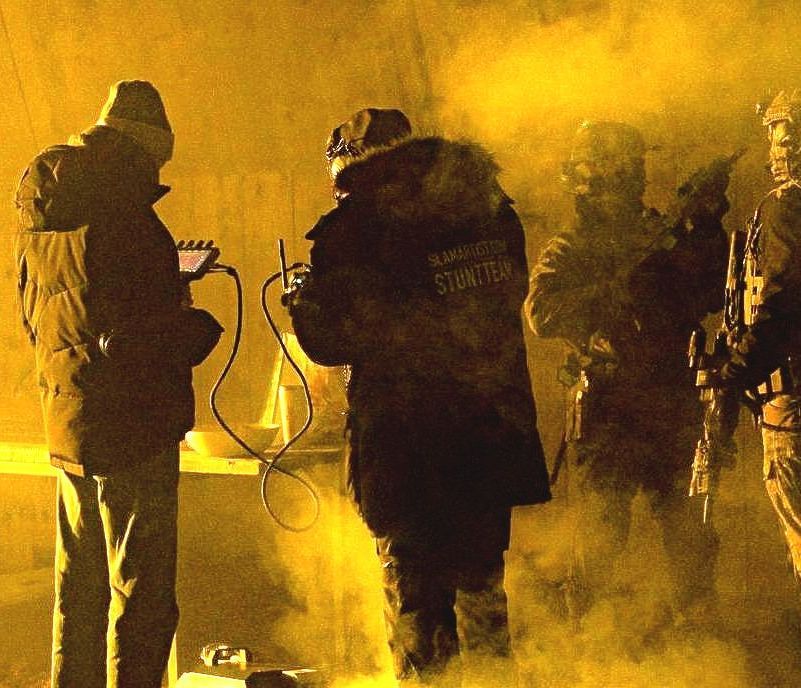
Tactical Precision in Action
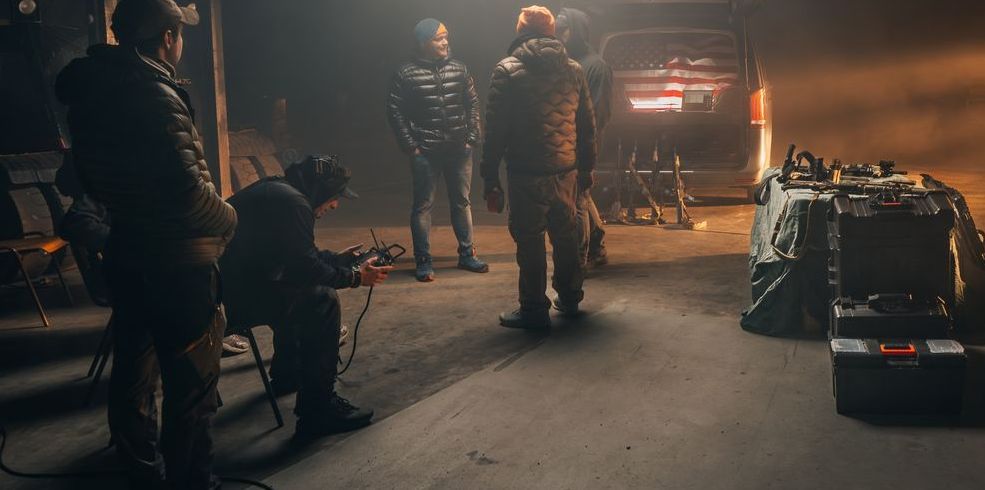
This photograph subtly captures the precision of three special operations soldiers as they clear a room. The focus is on both their coordinated movements and the methodical way the scene is shot, highlighting the simplicity and effectiveness of their teamwork in a high-stress environment.
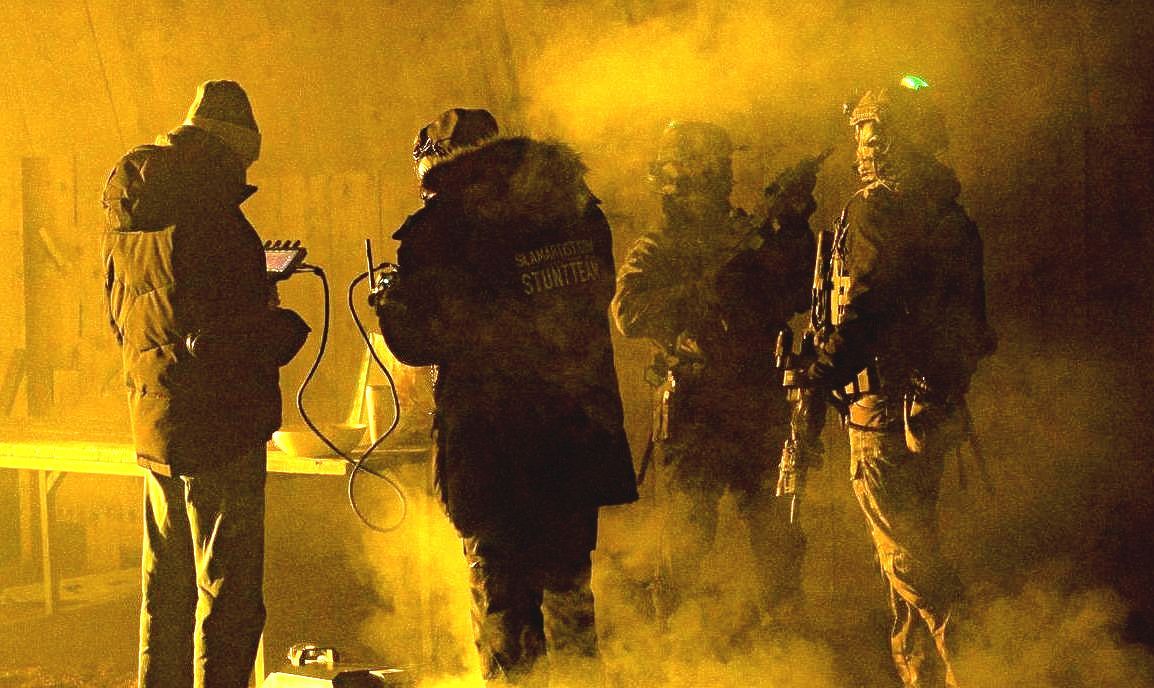
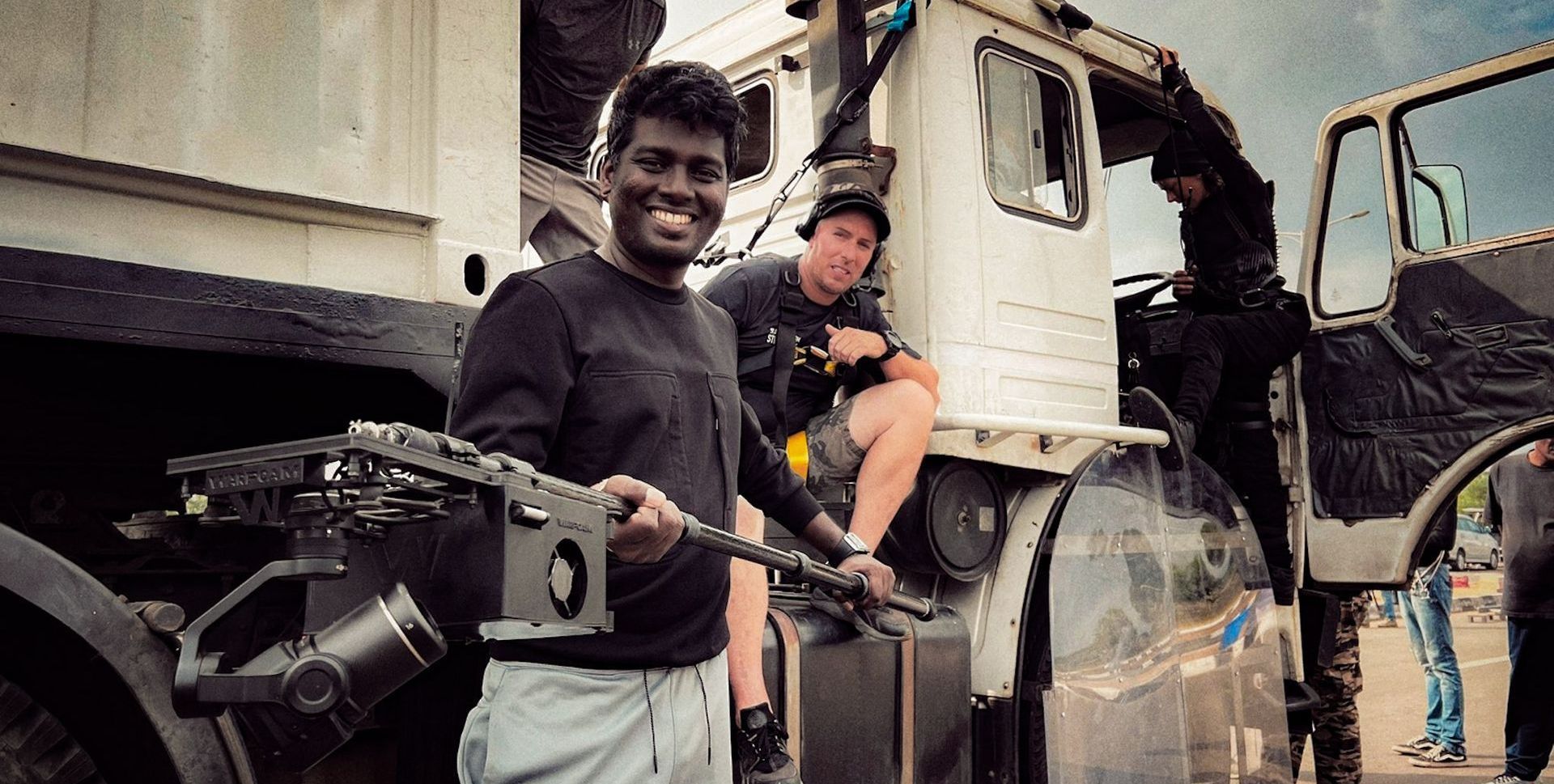
Directing on the Frontlines
This image showcases Ferdi Fischer in action, both directing and operating the WarpCam® alongside special operations soldiers. It captures the dual expertise of Ferdi as he blends cinematic technique with tactical operations, emphasizing the collaborative effort required to achieve authentic and impactful scenes.
THE LOAD PATH IS THE REAL DESIGN
A wire harness is not simply hidden wardrobe, and a line is not a complete rig. The performer interface—whether a vest, waist harness, seat or purpose-built carrier—is where force enters the body. From there, the load path continues through connectors, lines, redirects, drive or braking devices, anchors and the supporting structure.
Fit, anatomy, costume, pick geometry, acceleration, deceleration, slack, rotation, clearance and recovery all influence the finished movement. Professional Stunt Rigging therefore evaluates the assembled system for the exact cue. A component’s strength or a familiar harness shape does not establish suitability on its own.
SlamArtist’s riggers select compatible equipment, plan access and controlled areas, inspect and test the system, and develop the movement progressively with performer feedback. A change in performer, costume, camera, timing, route or location is treated as a change to the system. Production-specific engineering and qualified specialists are involved wherever the structure, cue or applicable requirements demand them.
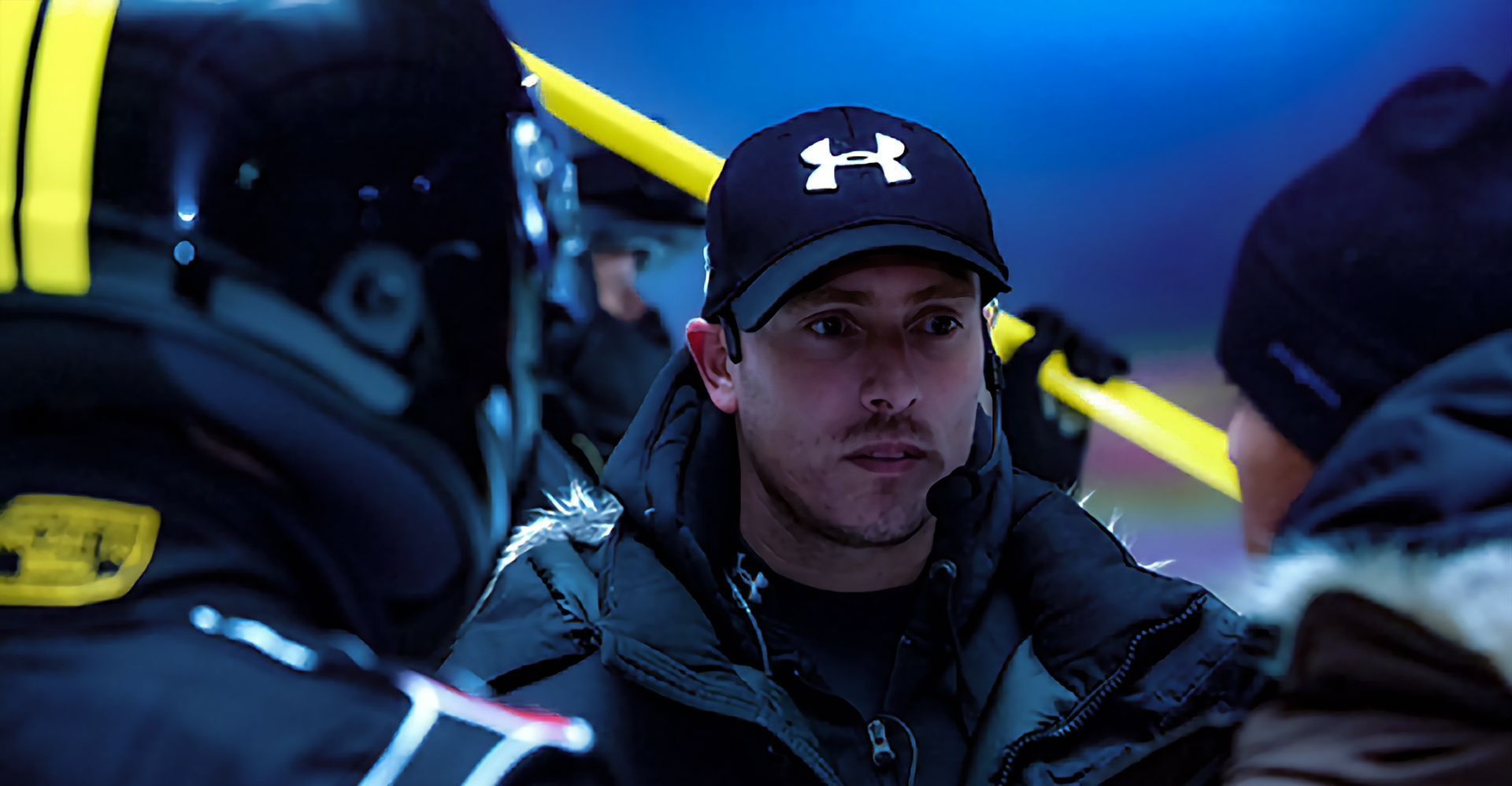
Stunt Coordinator Ferdi on a Dunlop Commercial
Over the shoulder view of two precision drivers listening as action director Ferdi Fischer briefs them on the next stunt for a Dunlop commercial, his face framed in a portrait style shot on a cold outdoor set.
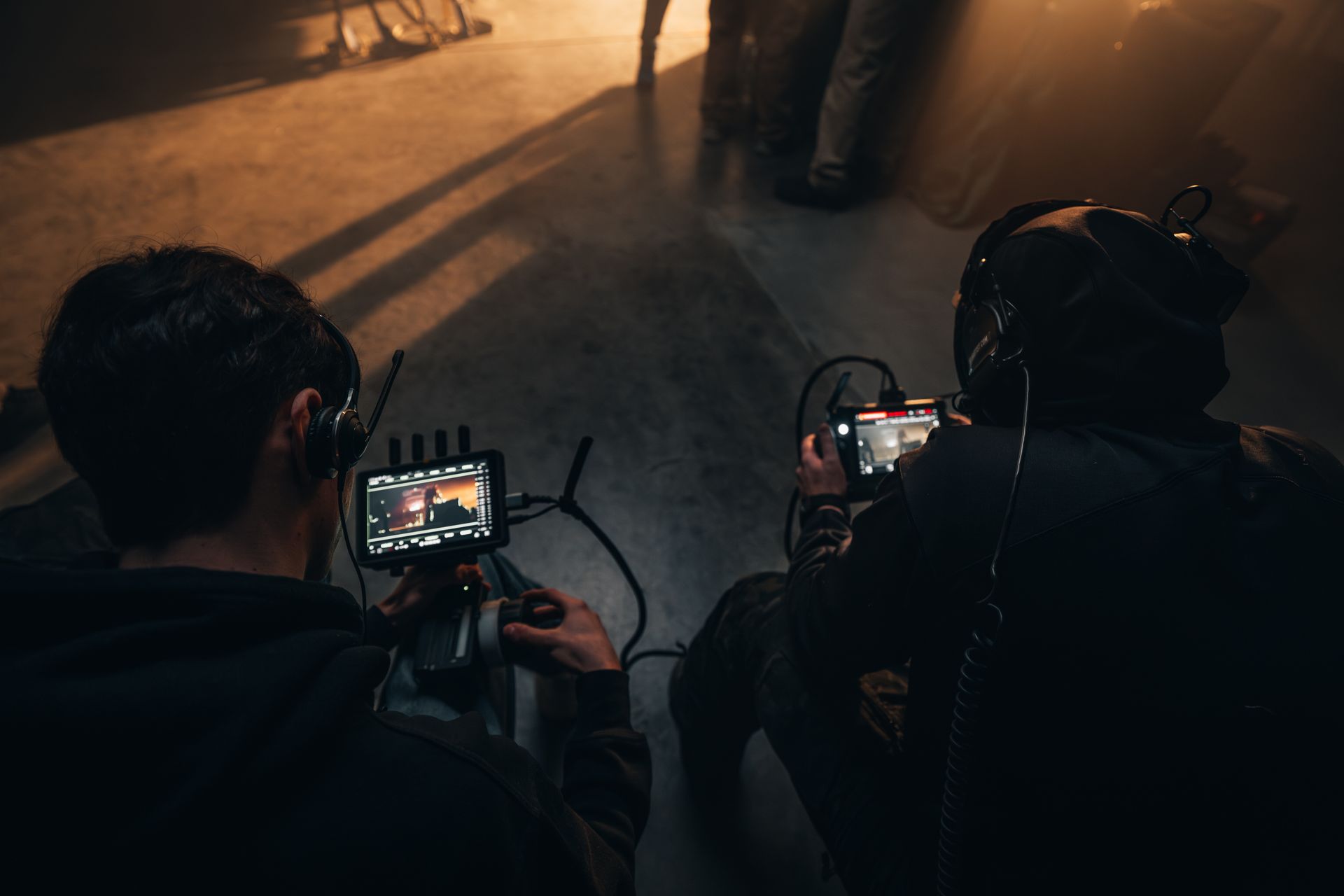
Ferdi setlife
Stunt coordinator Ferdi is captured in a side view, holding a monitor in one hand while he intently watches the action displayed on the screen.
ONE TEAM, FROM PREP TO RESET
Strong Aerial Work is created at the interfaces: creative and technical, performer and rigger, stunt and camera, wardrobe and wire harness, practical action and VFX. SlamArtist’s dedicated rigging team supports the production path from script breakdown, Stunt Design and equipment planning through installation, fitting, testing and progressive rehearsal.
On set, clear cues, line management, controlled zones, resets and inspection keep the system legible to everyone involved. Planning also includes what happens if a cue stops: how the performer can be lowered or recovered, who has authority to abort and what must be reassessed when conditions change.
That integrated approach lets the invisible system serve the visible performance. A pull can extend the rhythm of a Fight Design sequence. A float can preserve character intention. A descent can finish where camera and performance need it. The result is not simply someone “on wires”—it is performance, Stunt Design and rigging shaped into one cinematic frame.
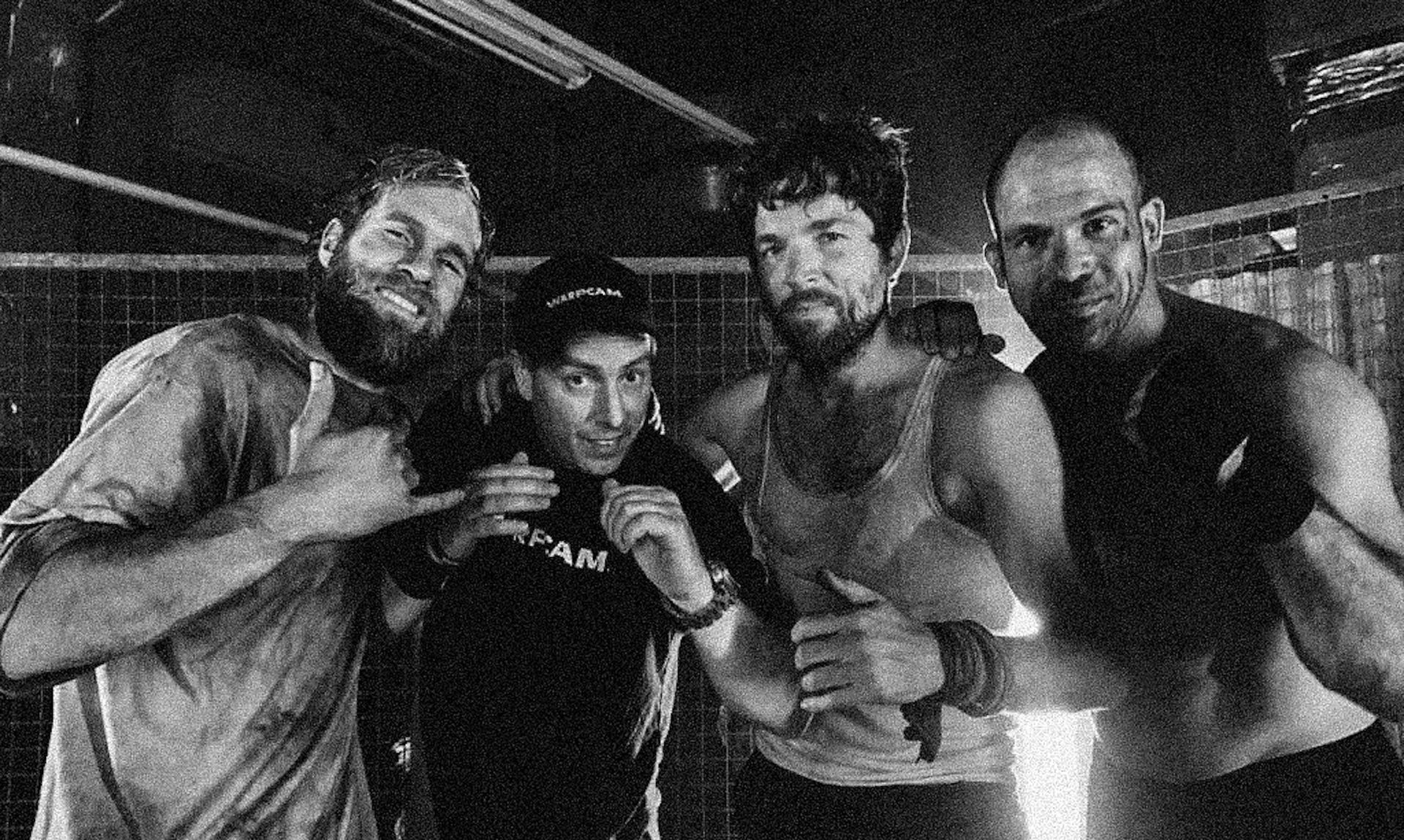
SoKo Stuttgart – Ferdi Fischer with Cast after Fight Choreography
Ferdinand Fischer with Peter Ketnath, Mathis Landwehr and Wanja Götz on the SoKo Stuttgart set, after choreographing and coordinating their fight scene.
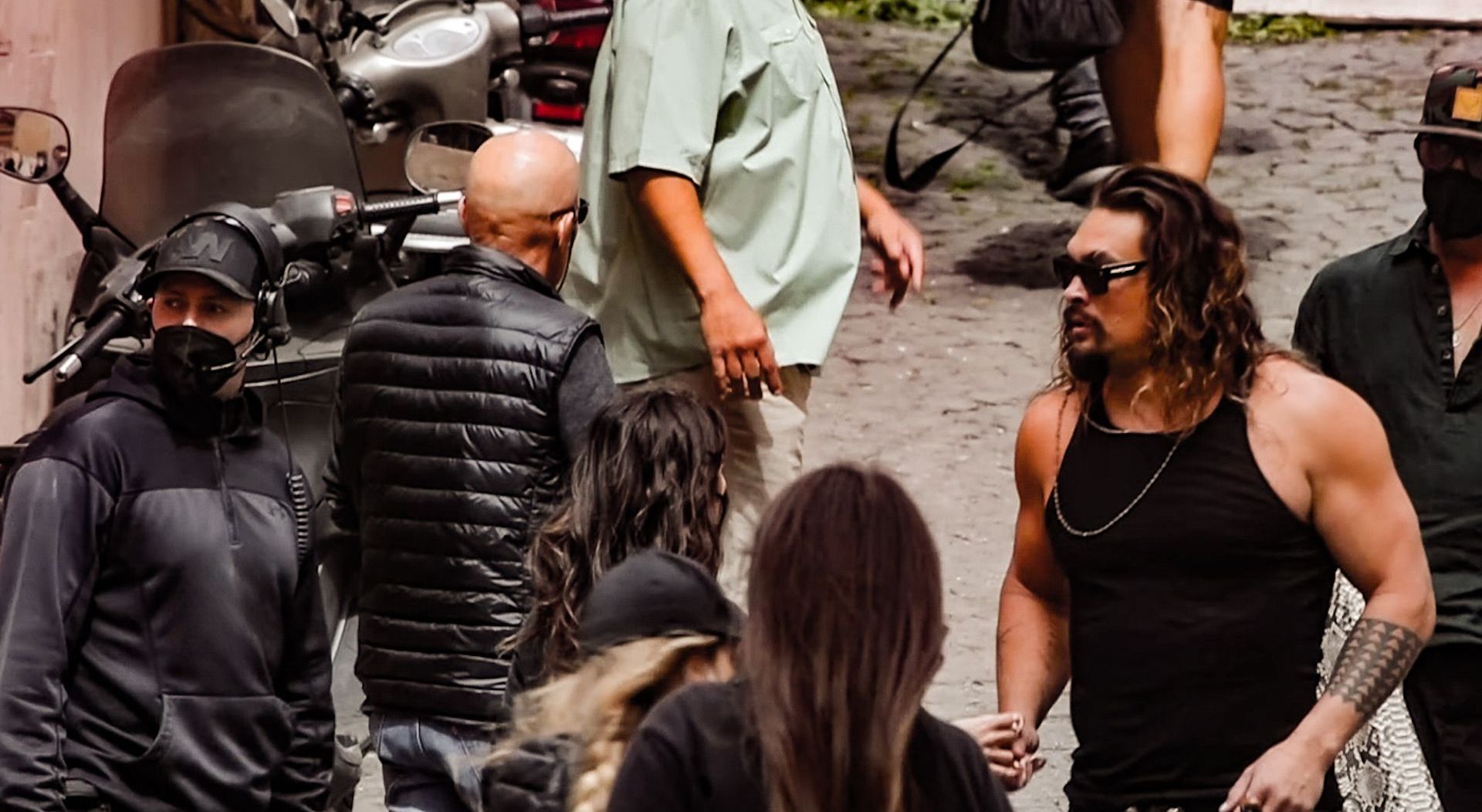
Fast X – Ferdi Fischer and Jason Momoa on Set
On the Fast X set with action camera operator Ferdi Fischer and Jason Momoa.
STUNT RIGGING / AERIAL WORK FAQ
What is Stunt Rigging?
Stunt Rigging is the design and operation of systems that support, move, redirect, decelerate or recover a performer for a specific action cue. It can involve manual pulls, counterweights, powered movement, descenders, deceleration systems, rotating interfaces or multi-axis travel.
Unlike general set rigging or cable-camera work, performer rigging must account directly for body orientation, force transfer, movement tolerance, costume, rehearsal and recovery. The complete path from performer interface to supporting structure is part of the design.
What does Aerial Work include?
Aerial Work extends far beyond large, visible flights. It can create controlled falls, suspended fights, impact pulls, rotations and travelling movement, but also subtle effects such as reduced body weight, an extended jump, a slow backward drift, an impossible lean or a precise landing.
The scale of the system follows the character, camera and story. Sometimes the most convincing rigging is the rigging an audience never notices.
How does Stunt Rigging connect to Stunt Design?
Stunt Design defines the dramatic beat: what happens to the character, how the movement should feel and what the audience needs to understand. Stunt Rigging translates that intention into a physical movement system.
Performer path, timing, body line, acceleration, deceleration, camera position and recovery are developed together so the technique supports the narrative instead of drawing attention to itself.
What is a wire harness, and how is it selected?
A wire harness is the performer interface within a larger rigging system. Its fit and attachment geometry influence where forces enter the body, how freely the performer can rotate, which body positions are possible and how the system can be concealed under wardrobe.
There is no universal wire harness for every cue. Selection depends on the performer, intended movement, body orientation, costume, documented equipment configuration and the complete load path.
How is an aerial sequence prepared and rehearsed?
Preparation begins with the story beat, performer, movement path, equipment, anchors and supporting structure, clearances, camera, costume, reset and recovery condition. The system is inspected, tested and developed progressively with clear cues and performer feedback.
The exact process is determined by qualified personnel, equipment documentation, the location, production requirements and the applicable rules. If the performer, system, route or conditions change, the sequence is reviewed again.
What does the dedicated rigging team handle?
The dedicated rigging team translates the creative design into a workable on-set system. Responsibilities can include location and structure review, equipment selection, installation, testing, performer fitting, progressive rehearsals, cue communication, line management, resets, inspection and recovery planning.
SlamArtist’s riggers collaborate with stunt coordination, performers, camera, SFX, wardrobe, VFX, art department and production so every interface has a clear owner.
Does SlamArtist provide stunt rigging equipment?
Yes. SlamArtist works with a dedicated rigging team and a broad, purpose-selected equipment base. Because supporting, pulling, descending, decelerating and rotating are different movement functions, the exact package is defined around the cue, performer, structure and location.
Explore the available systems and equipment on our Aerial Gear page.
How do WarpCam® and Aerial Work work together?
WarpCam® allows the camera trajectory to be considered alongside the performer trajectory from an early stage. This can create more expressive relationships between action, perspective and timing while helping both departments plan distance, clearances and cues.
Camera and performer systems remain separate load paths with their own equipment and responsibilities. Planning them within one spatial concept helps both teams build toward the same final image.