




Action Director / Stunt Director
Ferdi Fischer
Action Direction for International Productions
IN ONE TAKE
Action Director Ferdi Fischer designs physical storytelling for international film, series and commercials—from fights, chases, crashes and tactical sequences to specialty-camera coverage. The work connects story intent, stunt design, performance, camera movement, action-unit execution and the edit. Book Action Direction for a defined sequence, Second Unit or Splinter Unit work, or a broader scope agreed with the production.
Based in Stuttgart, Berlin and Los Angeles, the setup can support European and international productions within the exact agreed role and unit scope.
Action Direction is force multiplication before and during the shoot. Story, performance, safety, camera geography, vehicles, effects, reset logic and edit structure are resolved as one connected production system. The Floating Action Unit is SlamArtist.com’s compact action-production cell: it can detach, join, stay or advance between First Unit, Second Unit and Splinter Unit while combining stunt design, specialty-camera execution and post-ready delivery.
Send the Sequence BriefACTION DIRECTING REEL ARCHITECTURE
- 🎬 Over the past few years, my journey as a director has taken me to the heart of intense action scenes. With both the primary Unit and my devoted action-unit, we've executed adrenaline-pumping moments. The patience and trust you've all shown me and my team are invaluable, and for that, I am eternally grateful. We stand committed to pushing the limits and making the seemingly impossible, a reality.
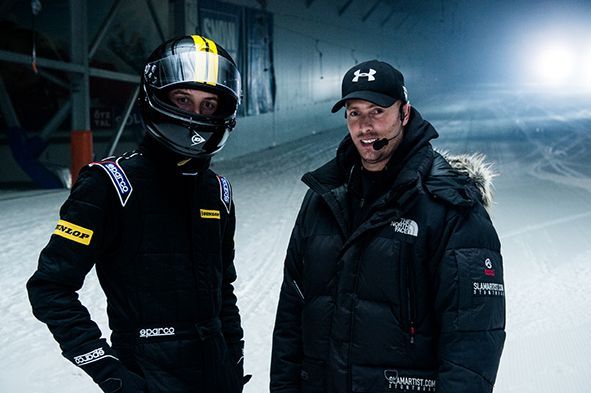
The Role of an Action Director
Ferdi Fischer exemplifies the critical role of an action director in modern filmmaking. While the 1st unit director concentrates on the core emotional narrative and actor performances, Ferdi, as an action director, masterfully shapes the film’s physical storytelling and dynamic movements. Often collaborating closely with
stunt coordinators, his work ensures that every action sequence pulses with intensity and precision. Though the limelight frequently shines on the 1st unit, the transformative magic of an action film often unfolds under Ferdi's direction in the 2nd unit. His role, deeply rooted in the legacy of Hong Kong’s fight directors, continues to evolve, showcasing his pivotal contribution to the cinematic arts as an action director.
Pioneering in Europe
In Europe, the role of an action director was more than just uncommon; it was virtually unheard of. Ferdi Fischer often found himself in rooms with producers who looked puzzled at the mere mention of an "action unit."
But Ferdi was undeterred. With a vision to bring a "modern movement to serve the narrative and storytelling," he knew he had something invaluable to offer.
Ferdi was not alone. A select group of forward-thinking directors saw the untapped potential. They recognized that action sequences could be more than just filler; they could be narrative powerhouses in their own right. Working with like-minded directors and producers, Ferdi Fischer helped establish the action-director role across productions in Germany and Europe.
Not Just a Director
Ferdi is no stranger to high-stakes environments; he's often the one creating them. With many years in the industry, his portfolio in stunt performance includes Hollywood blockbusters like "Fast X" or "Inglourious Basterds" and Bollywood hits like "Jawan" alongside Shah Rukh Khan. Ferdi's approach to directing is hands-on, literally. Whether he's directing a splinter unit, 2nd unit, or even the 1st unit, you'll find him in the thick of the action,
WarpCam®
and stunt wire in tow.
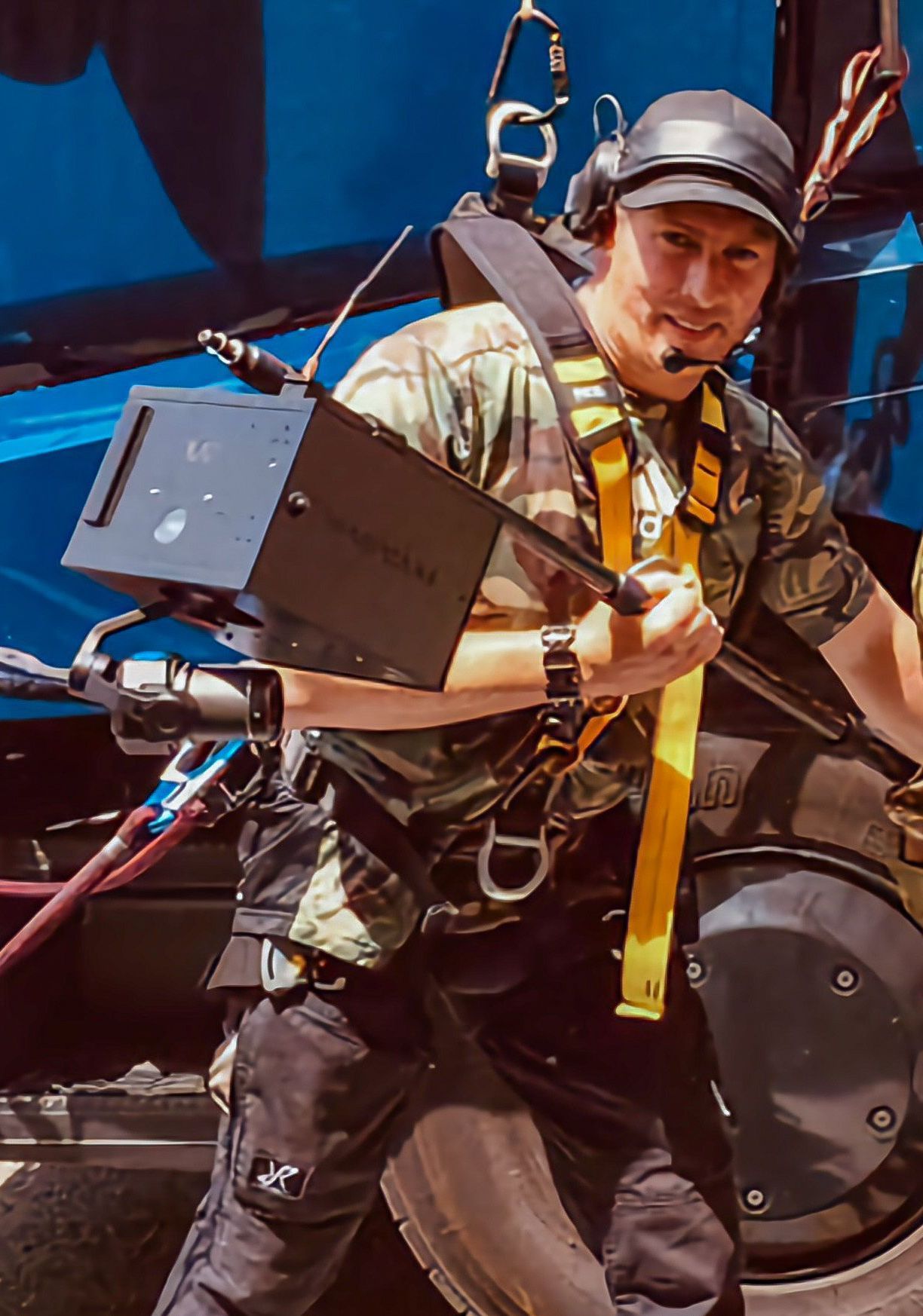
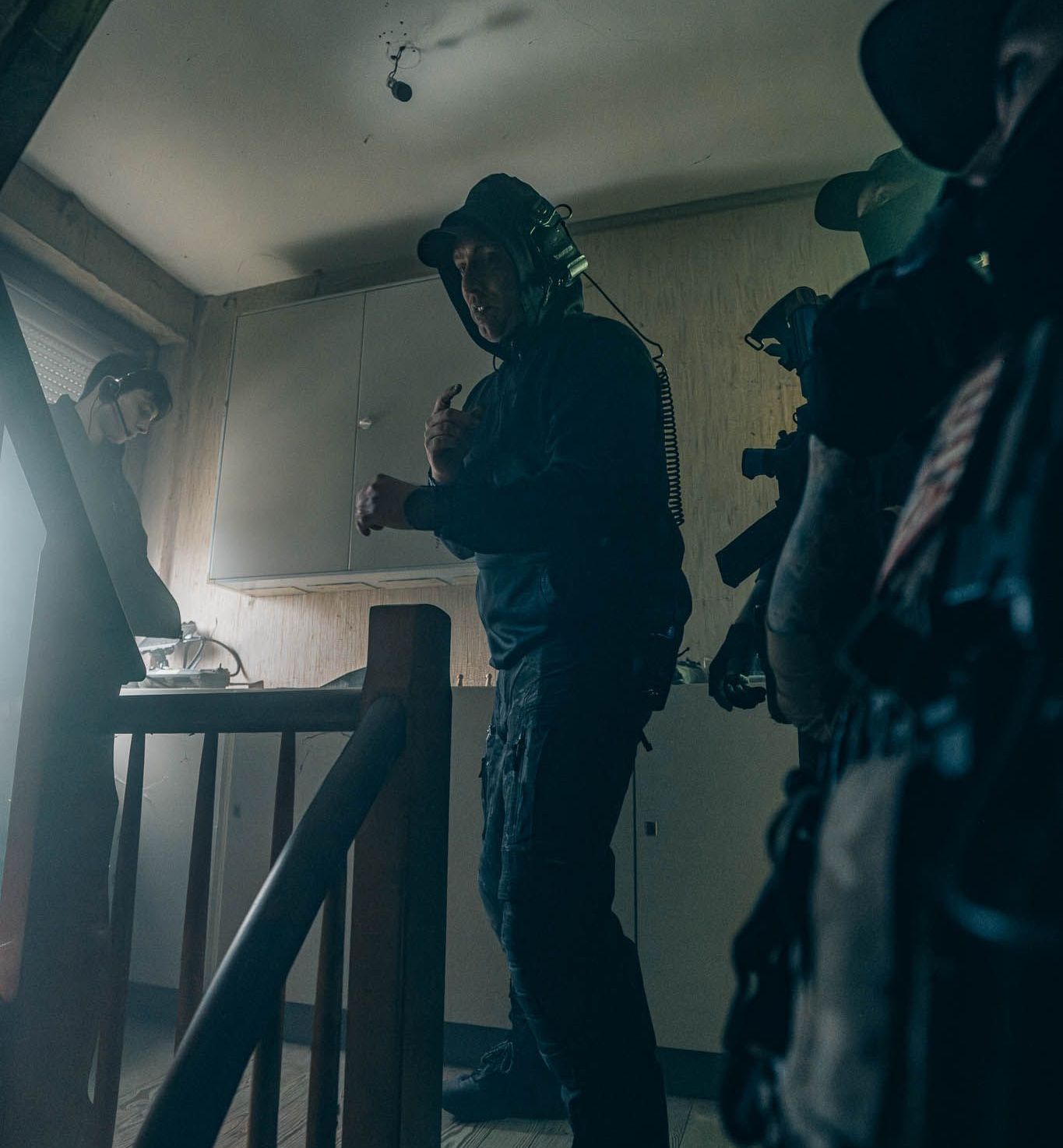
On The Gray Man, Ferdi Fischer worked as Action Director for a splinter unit, WarpCam® operator and stunt performer. Across a real rail tram, a picture tram, a destructible road tram and a hydraulic mock-up, WarpCam® connected the tram sequence with coherent movement and readable action geography.
Versatile Expertise
In the realm of filmmaking, Ferdi Fischer stands out as a visionary action director, seamlessly collaborating with stunt coordinators to craft breathtaking action sequences.
While the 1st unit director handles the emotional narrative and performances, Ferdi masters the art of physical emotion and movement, bringing thrilling dynamics to life. Often, the significant contributions of an action director like Ferdi might not be as publicly recognized as those of the 1st unit director, yet it is in the 2nd unit that the real magic of action filmmaking unfolds, skillfully orchestrated by him.
His role, which has evolved from the traditions of Hong Kong’s fight directors, continues to shape the action directorship in profound ways.
Ferdi Fischer works with stunt coordination, camera and production to turn physical action into clear screen geography and story-driven movement. The exact contribution is defined by the agreed sequence and unit scope.
Action Director FAQ
What does an Action Director actually do?
An Action Director designs and directs the kinetic part of the story – the fights, chases, crashes and shootouts.
Not just “filming stunts”, but deciding:
- What the action means in the story
- How it’s choreographed
- Where the camera lives inside that chaos
- How it’s cut so the audience feels every impact
On a serious production, the Action Director usually runs a dedicated action unit / splinter unit, working in parallel with main unit. While the first unit covers dialogue and drama, the Action Director’s unit handles the heavy lifts: stunt sequences, precision driving, tactical scenes, FPV and WarpCam® shots – and delivers finished sequences that drop straight into the edit.
What’s the difference between a Stunt Coordinator and an Action Director?
Short version: the Stunt Coordinator owns safe execution; the Action Director turns that execution into cinematic storytelling.
- Stunt Coordinator
- Department head for stunts
- Breaks down the script for risk and logistics
- Hires stunt doubles and performers
- Designs safety setups, rigging and pads
- Makes sure everything complies with safety rules and insurance
Their mandate: execute the stunt safely.
Action Director
- Designs the physical storytelling of the scene
- Runs the action unit / splinter unit
- Chooses camera positions, lenses and movement
- Works with the DoP, editor and VFX to lock the rhythm of the sequence
- Often directs and operates specialty rigs (WarpCam®, FPV, drones) from inside the stunt
You need both. The Stunt Coordinator owns safe stunt planning and execution. The Action Director owns how that action serves the story and lands on screen.
What is a “Splinter Unit” / Action Unit and why does it matter?
A Splinter Unit / Action Unit is a lean crew that peels off from main unit to shoot:
- Complex stunts and explosions
- Car and bike work
- FPV / WarpCam® runs
- Inserts and pick‑ups that don’t need main cast
Under an Action Director, that unit stops being “B‑roll” and becomes the engine room of the spectacle:
- The stunt team also runs the cameras
- The lens is inside the stunt, not 50 meters away on a long lens
- You get visceral, immersive footage while main unit keeps moving on drama
For producers, it’s simple: you’re effectively shooting two movies at once – drama and action – without splitting the visual style.
Why should we bring an Action Director in early?
Because if you design action at the last minute, you pay for it three times: prep, reshoots, and VFX.
Bringing an Action Director in at script or early prep means:
- Action Design is baked into the story, not taped on top
- You can build proper previsualization (previs) – videoboards or 3D previs of fights, chases and gags
- Tech‑vis for drones, WarpCam®, cars and rigs is worked out before anyone is on set
- Insurance and bond companies see a clear risk‑management plan instead of guesswork
With SlamArtist, early involvement also means the sequences are designed around WarpCam® / Hyper‑WarpCam®, FPV drones and Tactical Cinematics from day one, instead of trying to bolt them on after the schedule is locked.
What is “Tactical Cinematics”?
Tactical Cinematics is SlamArtist’s term for combat scenes shot with real‑world tactics and immersive camera work.
The idea:
- Audiences today have seen helmet‑cam and drone footage, and they’ve played high‑fidelity shooters
- They instantly feel when gun handling, room‑clearing and use of cover are fake
- So instead of “movie soldiers”, you bring in active operators and special forces to work alongside stunt performers
Ferdi directs and often operates WarpCam® inside the stack – moving with the team like another operator. Real thermal optics and night‑vision are used where needed, so engines, bodies and muzzle flashes read like authentic footage, not a filter.
Result: grounded, efficient, scary action. Perfect for thrillers, war films, police shows and tactical brand campaigns where fakery kills credibility.
What is WarpCam® / Hyper‑WarpCam® and why does it matter?
WarpCam® is a Ferdi Fischer-developed, operator-led camera ecosystem configured for controlled close-proximity action coverage.
Key points:
- Operated by stunt professionals and the Action Director, not a distant camera op
- Ultra‑low profile, aerodynamic, almost invisible in frame
- Internal advanced stabilization – cinematic motion without accidental jitter
- Mounts on poles, FPV drones, cars, bikes, rigs, or handheld in the thick of it
Hyper‑WarpCam® (Ember 5K platform):
- Up to 600 fps in 5K, 800 fps in 4K
- Built for high-resolution speed ramps across explosions, crashes and impact beats.
Real‑world examples:
- On Fast X, a gimbal-mounted FPV configuration moved between drifting cars to capture close-proximity aerial coverage while keeping a camera operator off the vehicle path. Ferdi Fischer’s work on Fast X includes WarpCam® and Stunt Performance.
- Bad Boys – a tiny WarpCam® tucked into a helicopter setup to get the top shot without blocking other cameras; the few times it appeared in frame, a quick paint‑out saved an entire shooting day.
For a production, the system adds close-proximity angles, shortens selected resets and delivers footage designed for the edit; time and cost effects depend on the sequence.
What exactly does an Action Director handle from prep to wrap?
In prep
- Breaks down the script for all action beats
- Pitches concepts for fights, chases and set‑pieces
- Works with writers and director to lock the intent of each beat (“action as character”, not filler)
- Builds previsualization (previs): videoboards or 3D previs that map out choreography and camera
- Coordinates with stunt coordination, SFX, VFX and locations on what’s actually achievable
On set
- Directs the action unit / splinter unit
- Briefs stunt team and actors on story beats inside the action, not just moves
- Works with the DoP on lenses, blocking and camera paths
- Adjusts choreography and camera live when reality (terrain, weather, vehicles) pushes back
- Keeps continuity with main unit so the film feels like one vision, not two stitched‑together styles
In post (for action scenes)
- Advises on the cut, speed ramps and structure of the sequence
- Flags missing beats that may need pick‑ups
- Works with sound and VFX so impacts and destruction support the feeling of the scene, not distract from it
In other words: the Action Director doesn’t just “cover” a stunt. They author the kinetic language of the project.
How does an Action Director affect budget, insurance and risk?
Action is where films blow money – reshoots, injuries, overtime, and “we’ll fix it in post”.
An Action Director who actually understands logistics and risk (not just “cool shots”) brings:
- Fewer unknowns: Previs and technical planning replace on‑set trial and error
- Cleaner communication with insurers: Clear documentation of stunt design, risk mitigation and emergency plans – exactly what underwriters and bond companies want to see
- Tighter shooting days: The action unit shows up knowing precisely what to shoot and how, instead of burning hours figuring out angles with a hundred people on the clock
Insurance and bond requirements vary by territory, budget and stunt profile. Early previs, documented risk controls and experienced leadership give producers and underwriters a clearer basis for planning.
How does SlamArtist support Ferdi’s work as an Action Director?
SlamArtist is built as the infrastructure around the Action Director role:
- A vetted talent network of stunt performers, riggers, doubles, precision drivers and stunt coordinators
- An in‑house action design and choreography team that can take scenes from script to previs to finished action
- A culture that treats action as “physical storytelling” instead of disposable filler – the company’s whole brand is built on that philosophy
So when you hire Ferdi as Action Director, you’re not just hiring an individual. You’re plugging into an ecosystem that can design, plan and execute the kinetic side of the project from first draft to final cut.
Who is Ferdi Fischer as an Action Director?
Ferdi Fischer is a German Action Director, Stunt Coordinator and stunt performer who has worked on sets since 2003. His work connects action direction, stunt experience and specialty-camera operation. The exact credit, role, language requirements and unit scope are confirmed for each production.
On The Gray Man, Ferdi Fischer’s exact role and unit scope was Action Director / Splinter Unit. His work on the film also includes WarpCam® and Stunt Performance.
Ferdi Fischer is a German Action Director, Stunt Coordinator and stuntman with more than 20 years on sets and one simple obsession: make action sequences that carry story, not just noise.
Core trajectory:
- Started as a stunt performer and precision driver, taking the hits and doing the work on films like Inglourious Basterds, Hitman: Agent 47 and Point Break
- Moved up through stunt coordination and 2nd Unit on European and international productions
Became an Action Director on high‑end projects including Tatort, Unsere Zeit ist jetzt, Asphalt Gorillas where he was flown in specifically to handle the film’s largest action sequences
What that means for a production:
- He has a ground‑up understanding of the physics and psychology of stunts – because he’s done them
- He knows how to run a splinter unit that doesn’t just “fill gaps”, but builds tentpole moments that carry marketing and box office
- He is fluent in German, English and Portuguese and has proven he can run crews in radically different conditions – from Kenyan mud and heat to Alpine snow to Indian megabudget sets
He’s the version of an Action Director who’s as comfortable in a harness on a rig as he is in a director’s chair talking structure with producers.
How do stunts and action beats change when an Action Director is in charge?
When nobody owns the action, it tends to become:
- A random chase because “we need something exciting here”
- A fight that could happen anywhere, to anyone, and doesn’t change the story
- A VFX‑driven mess that tests badly and triggers reshoots
When an Action Director like Ferdi is in charge, the rule is simple: action is character.
- How a character drives, reloads, hesitates or doesn’t – all of it says more than the speech they gave a scene earlier
- Geography is clear, so the audience knows what it costs to cross the room or the street under fire
- Every major stunt beat is tied to a decision or a consequence: if the car chase doesn’t change the character’s situation, it doesn’t earn its page count and budget
That’s the difference between “some stunts” and an action film people still talk about years later.