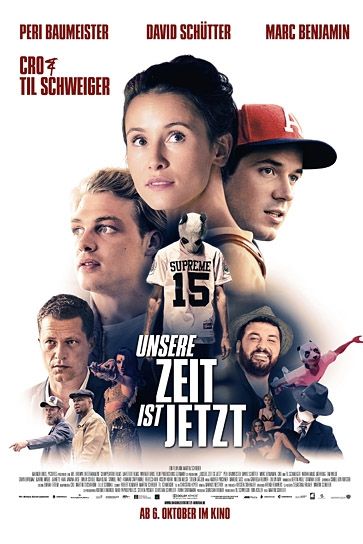
Unsere Zeit ist jetzt
Directing action at 1,000 fps and in free fall
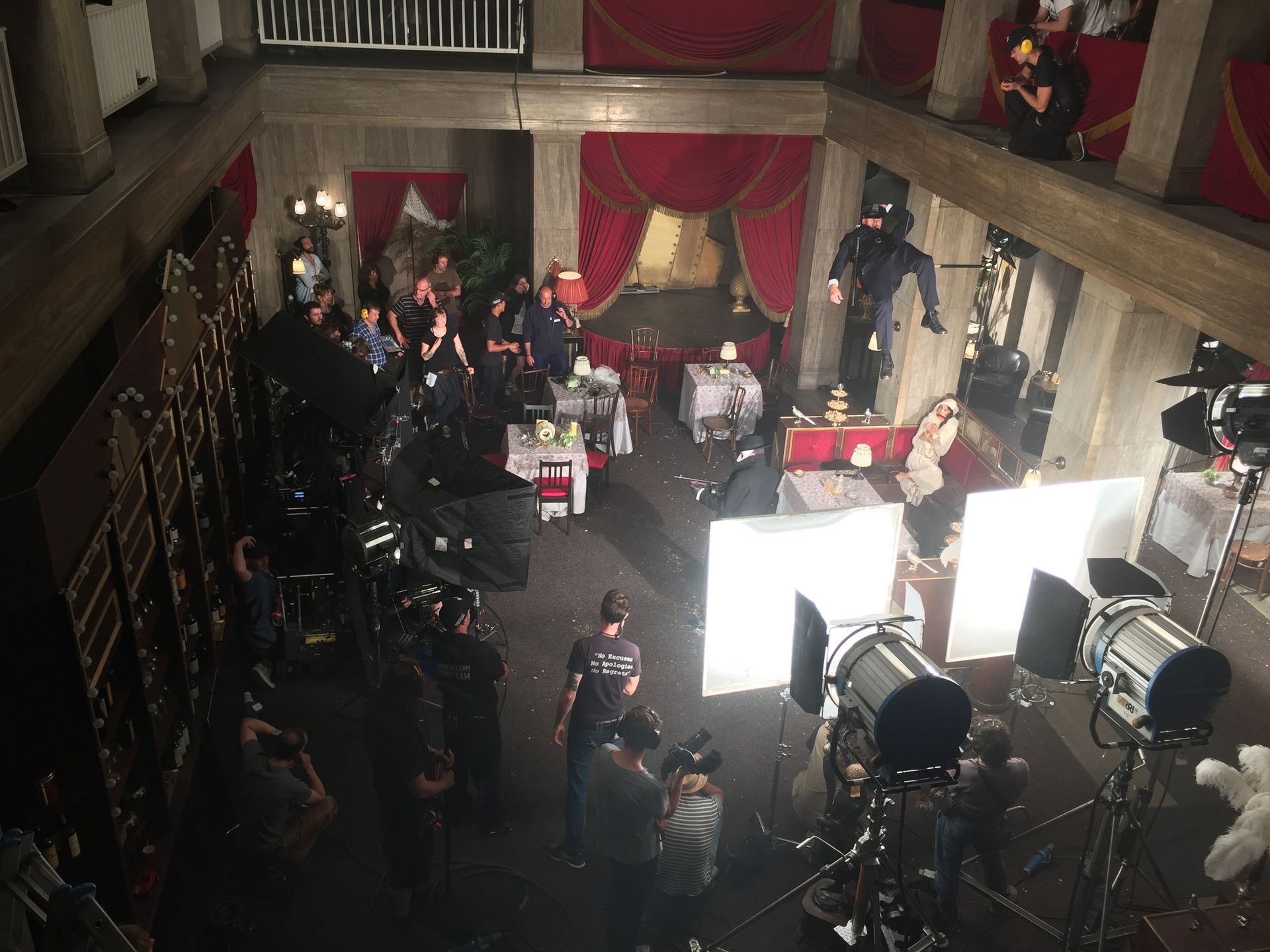
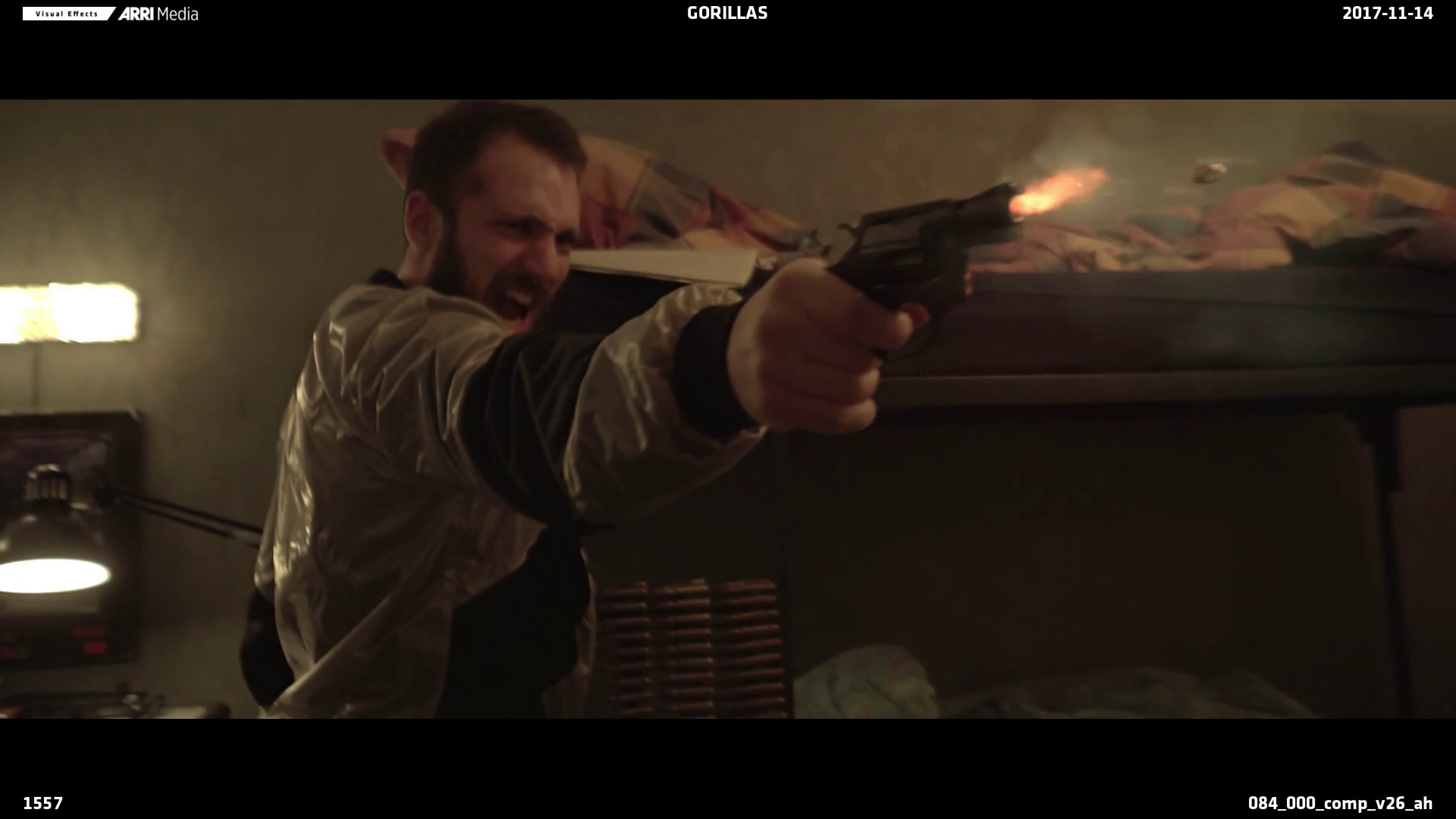
Seen from above, the jazz bar opens up into several layers of playing space.
Ferdi Fischer directed the action throughout Unsere Zeit ist jetzt. As Action Director & Supervising Stunt Coordinator, he worked with his assistant Andy Long, the film’s Assistant Stunt Coordinator. For the opening, a filmmaker imagines an outrageous jazz bar action sequence for Cro’s new music video. A Phantom Flex4K sweeps 180 degrees around the performers in a second or two, recording 1,000 frames per second in 4K. Elsewhere, a WarpCam® follows a stunt performer over a ledge all the way down to a car.
Martin Schreier directed the film, released in 2016. Fischer’s remit covered the fights, all stunt coordination, extensive rigging and the development of original camera systems. The jazz bar shows just how far that remit could reach. It took in the set dressing, the choice of camera, where the action played in the frame and the rhythm available to the editor.
Each decision started with the audience. Which angle lets you read a movement? What brings you closer to a performer? When does an impact need a fresh angle? And how can you shoot the action so its pace can still be adjusted to the music and the story?
Inside a filmmaker’s pitch
The film drops us into the middle of a gunfight in a jazz bar. Every move and reaction is larger than life. The man at the centre moves through the chaos as if it were the most natural thing in the world. We aren’t meant to recognise Cro at first. Then a hard cut pulls us out of the action. Only now do we realise we’ve been inside a filmmaker’s pitch all along. He dreamed up the whole jazz bar sequence for Cro’s new music video.
Schreier set the narrative and gave Fischer a specific punchline. Riddled with bullet holes, Cro takes a drink. Little arcs of liquid come pouring back out through the holes, straight out of a comic book. Fischer devised the action that would get him to that drink. He decided on the style and build of the sequence, where things would happen in the room and where high-speed photography would count.
Schreier entrusted the entire design of the jazz bar sequence to Fischer, down to the set dressing and camera selection. That freedom meant he could stage the room as a whole. A table could establish the layout before becoming the site of an action. Something happening in the background could set up the next move. A camera move could shift the audience’s attention between the two.
The action had to follow the wild logic of the filmmaker’s pitch and play out across the whole room. Its choreography and the idea for a high-speed camera move of Fischer’s own both came out of that brief.
The whole jazz bar is in play
Fischer staged the action on several planes. A figure ducks in the foreground, an opponent reacts behind him and another movement takes place farther back. High-speed photography holds those relationships on screen long enough for the eye to pick up more than one action within a single frame.
That puts specific demands on the choreography. A performer’s movement, the position of the camera and the next piece of action to come into view have to line up. The sequence still has to read when it is slowed right down. A moving camera can reveal someone who was hidden a moment earlier or shift the emphasis from the foreground to the back of the room.
In the Slingshot shot, the figure up front ducks, bringing the shooter behind him into play. A kick follows and the performer at the back is pulled out of position. In the time it takes for that exchange to unfold, the camera swings through 180 degrees. The camera move and the performers’ movements were conceived as one shot.
The original footage traces the route from the fight rehearsals through individual stunt beats to the shoot on set. The split-screen comparison lets you follow a movement or a use of space from the rehearsal into the finished scene.
Slingshot | 180 degrees of movement, with timing still open
Fischer wanted to take the spatial effect of bullet time further while recording the action as it happened. His point of reference was the familiar array of still cameras that shows an almost frozen instant from a succession of viewpoints. In the jazz bar, the action itself needed to keep moving as the camera went around it.
“What mattered to me was to keep the action from freezing, so I could vary the speed continuously with speed ramps in post.”
A physically moving Phantom Flex4K gave him the shot. It recorded 1,000 frames per second in 4K while travelling 180 degrees around the performers in about one to two seconds. That was the time the camera actually took to make the move on set. The length and pace of the shot on screen could be decided later.
In post, Fischer could hold one movement, accelerate into a beat, pick out a reaction and then bring the pace back up. Different degrees of slow motion could run into passages at real speed within the same recorded action. The spatial continuity of the 180-degree arc carried through each change.
The high frame rate gave him room to respond to the music, the feel of the gunfight and the rhythm of each exchange. The shot never had to settle on a single speed. With Slingshot, the physical camera move was set, and its timing could still be shaped in the edit.
Fischer’s own design, realised by his stunt team
The idea for Slingshot was entirely Fischer’s. No Slingshot camera of this kind existed at the time. He had a custom dolly built to carry the camera around the fast curve and keep it on its path. He devised the acceleration concept and coordinated the move with the performers. He worked hands-on with his riggers and stunt team to bring it to the set.
Fischer put the shot under the stunt department, in part for insurance reasons. One team had to direct the fast camera move and the simultaneous physical action as a single event. No grip crew was involved in this setup. Development, rehearsals and execution all belonged to the stunt team, with a clear chain of command.
That distinction also matters to the authorship of the shot. Members of the Berlin grip community later tried to claim the idea as their own on forums. The Slingshot used on Unsere Zeit ist jetzt came from Fischer’s design and was realised by his stunt team.
The preparation included tests, test shoots and further tests on set. The team carried the planned approach all the way from rehearsal to the take.
“It went exactly as we’d planned.”
For a production, much of the value lies in the work before the shoot. By the time the camera rolled, the team had turned the idea into a sequence it could check. Camera and stunt performers had prepared together and everyone knew who was responsible for what. The shot went ahead as designed.
Choosing a camera for the job
The Slingshot carried the Phantom Flex4K. The team also worked with the then-new Alexa Mini. Slingshot was a separate camera concept of Fischer’s own. It was not a WarpCam®.
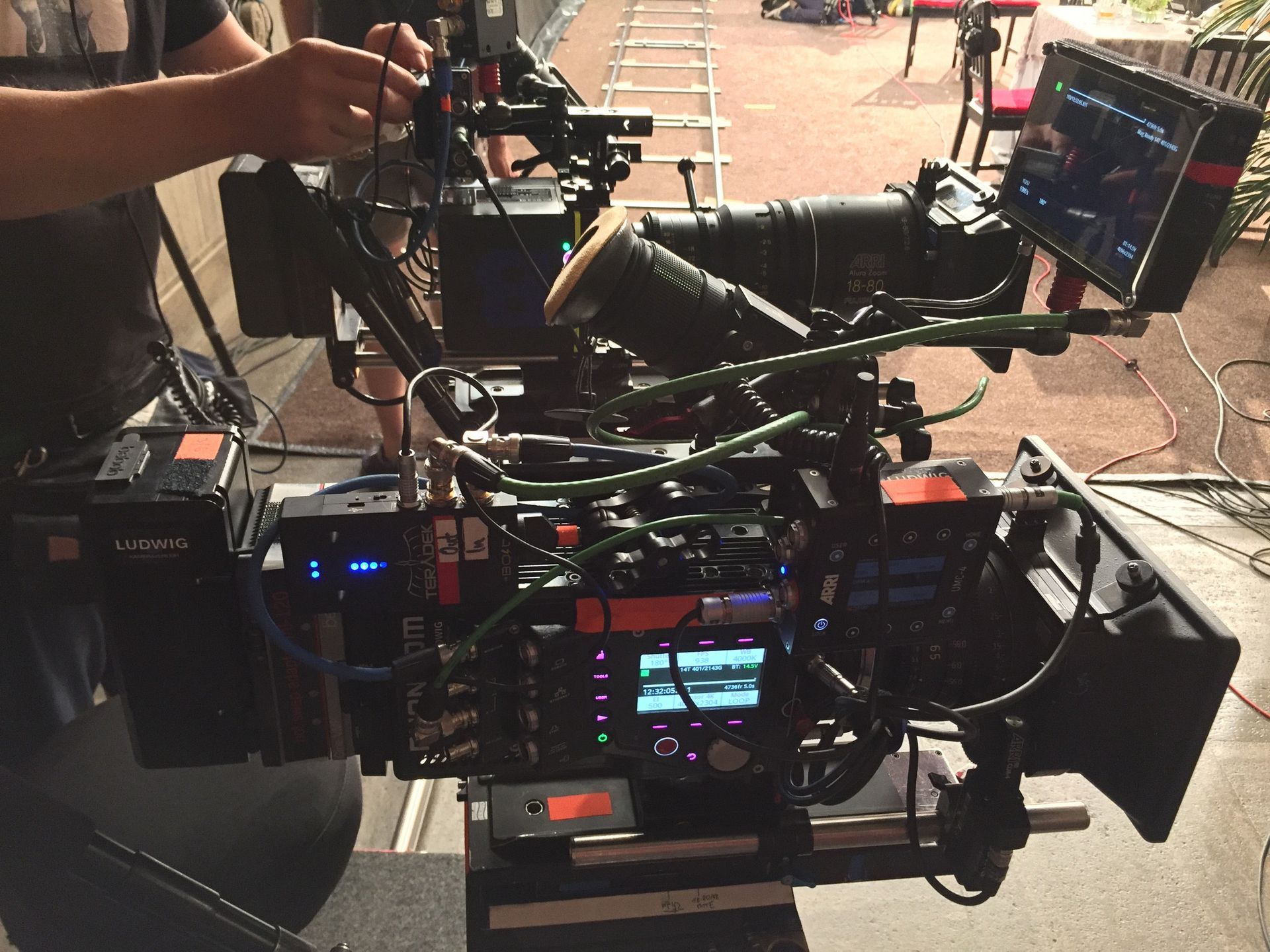
Camera and monitor during the jazz bar shoot.
Fischer could have staged the jazz bar with WarpCam®. This particular shot called for 1,000 frames per second in 4K, so he designed the setup around the Phantom and the needs of the scene. He used WarpCam® elsewhere for shots that called for its particular freedom of movement.
In his WarpCam® interview with STUNT.BLOG, Fischer describes the next question once he knows what he wants a shot to tell:
“Then it becomes a question of where the camera needs to go.”
For a director or producer, this keeps the choice open. An existing system, a combination adapted to the shot or an original design can all deliver a visual idea. The space, the movement, the frame rate and what the shot has to communicate determine the choice. Slingshot, Phantom, Alexa Mini and WarpCam® each answered a different need on this film.
Over the edge with WarpCam®, then a side view for the impact
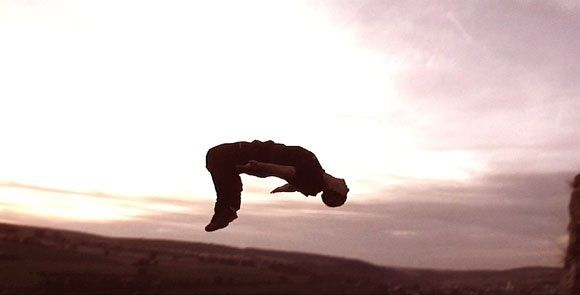
In another sequence, the camera goes over a ledge directly behind a stunt performer. It follows the wired jump, stays with the performer through the descender fall and goes all the way down to the car. The crew filmed the move in one continuous take.
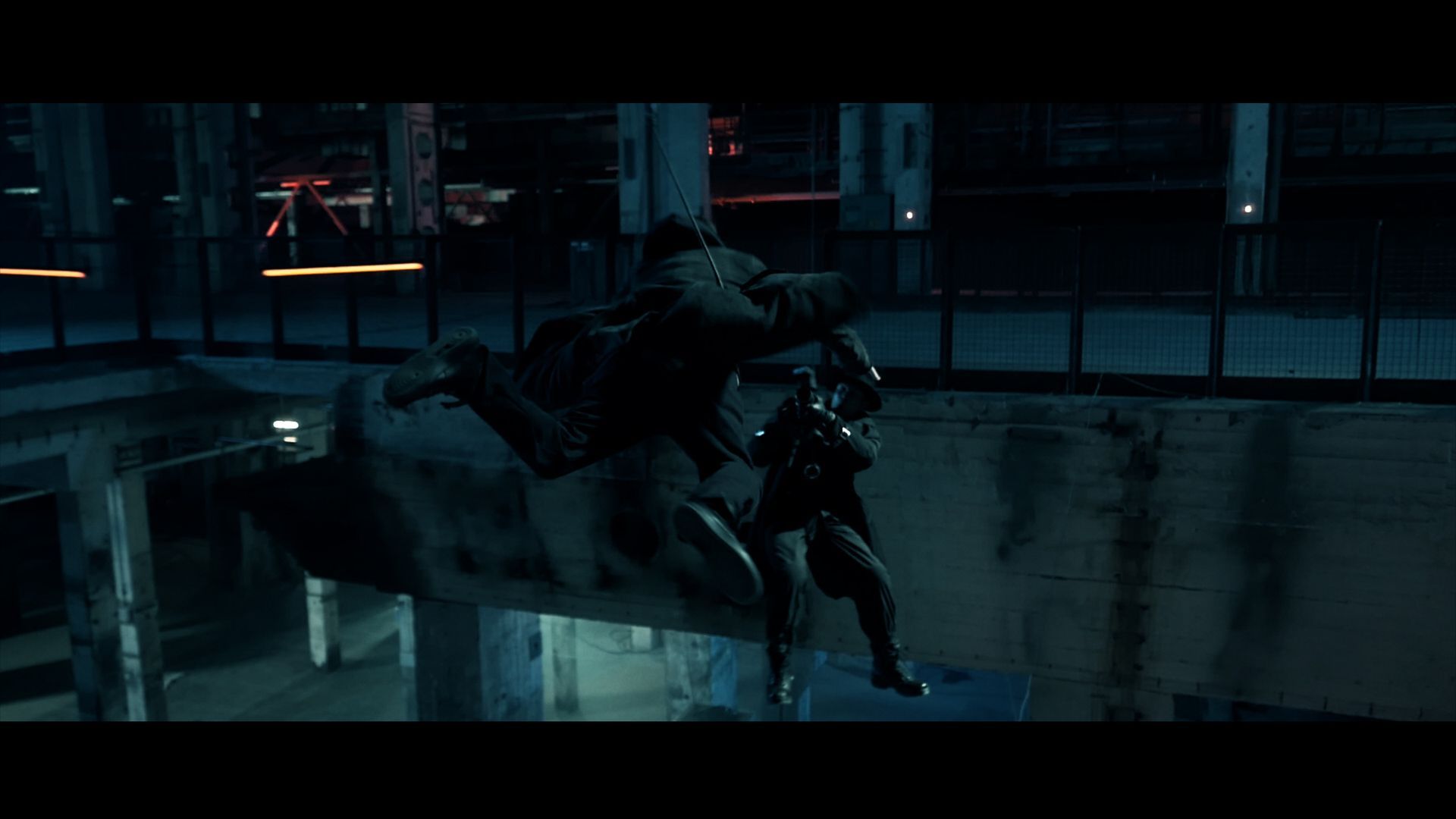
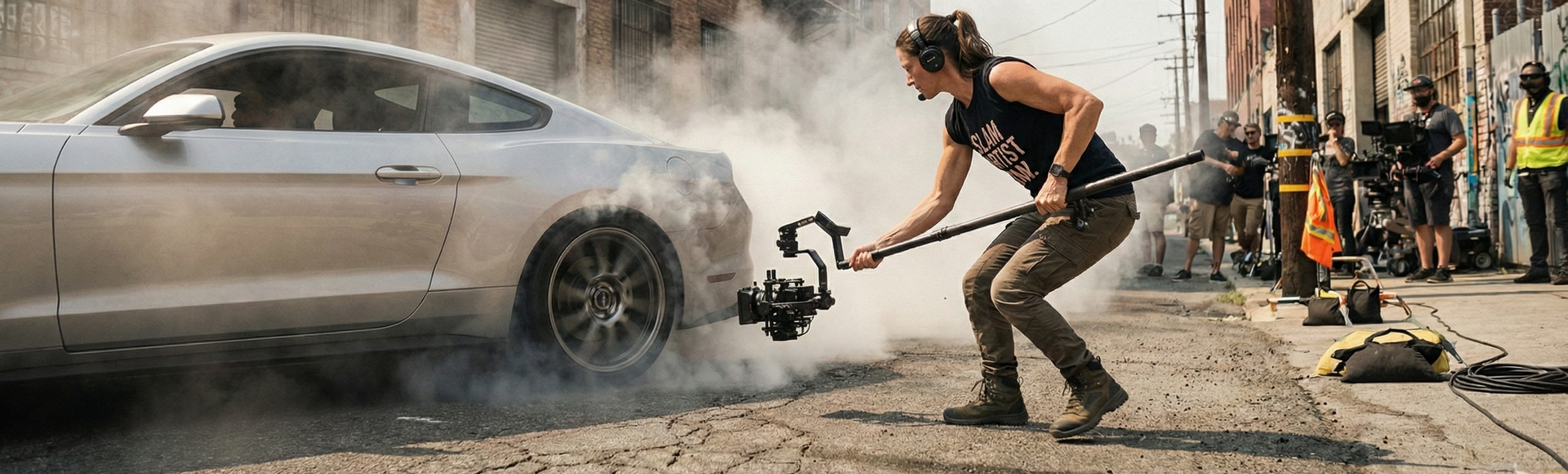
The operator follows the stunt performer over the ledge.
The following angle puts the viewer just behind the performer at the instant he leaves solid ground. The camera shares his path into the drop. That is what gives the opening of the shot its immediacy.
For the impact, Fischer chose to cut to a position about 90 degrees around to the side. Seen from above, the moment loses some of its force. Seen from the side, the audience can read the speed of the fall, the instant of contact and the car giving way underneath the body.
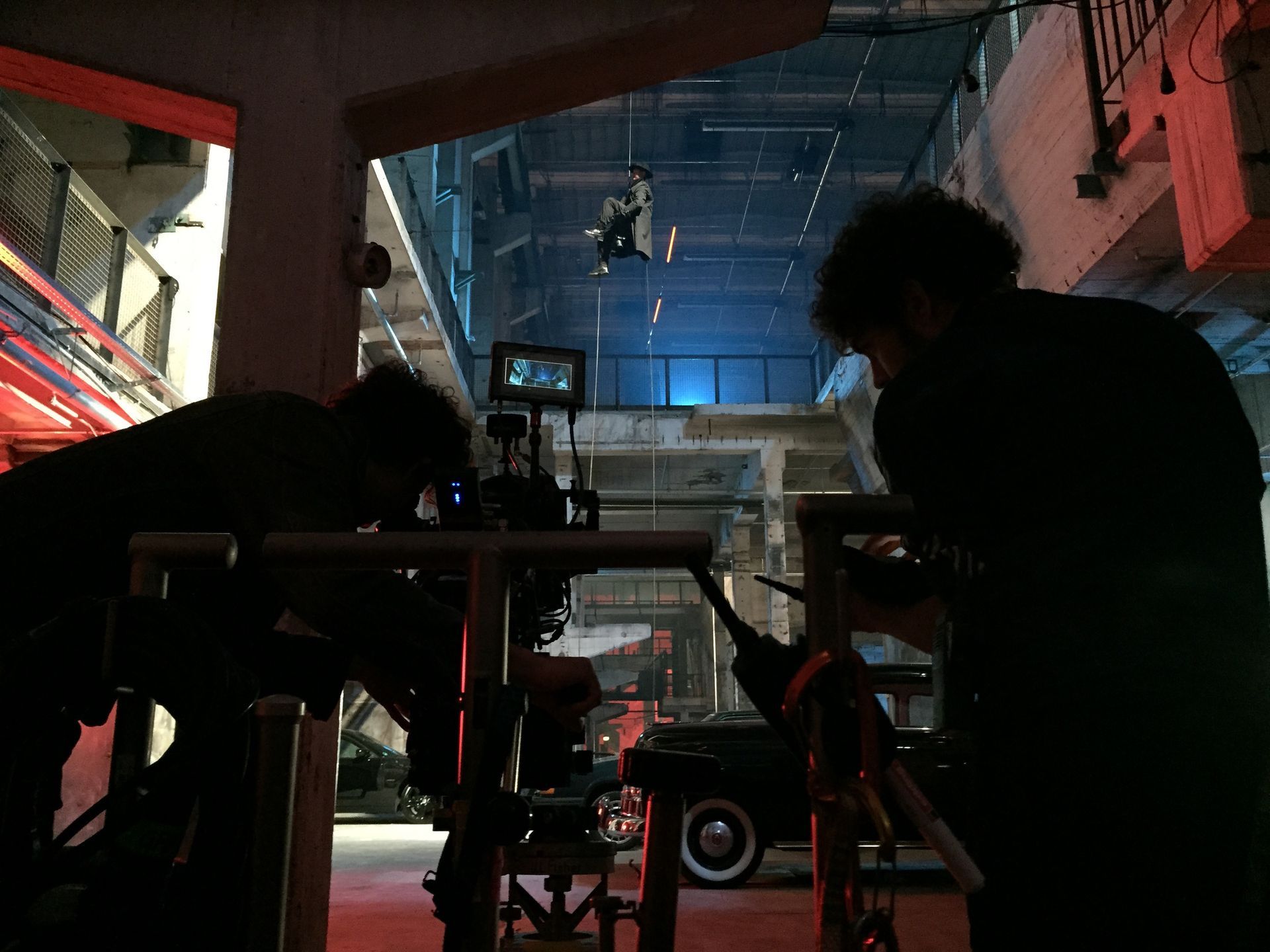
The crew, camera and vehicle on the garage set.
The complete following take gave the edit the option to stay with the performer. At the moment of impact, Fischer paired it with the angle that made the hit register most clearly.
“The narrative takes priority.”
The continuous shot builds proximity, orientation and tension. The side view adds the telling detail at the point of contact. Even when a continuous take works, the edit can switch angles exactly where the change lets the viewer feel the action more clearly.
The action excerpt shows the following perspective and the cut to the side view. In the longer original, that passage runs from 01:12.5 to 01:15.8. The comparison of previs, behind-the-scenes footage and the finished shot follows the sequence through its stages of production.
Slide for Life | Across the garage and into the fight with Til Schweiger
In the scene with Til Schweiger, the camera’s approach is part of the action. A wirecam first covers the long distance through the space. When it reaches the actor, a planned handoff releases the camera to carry on with the fight at close range. One move covers the width of the room and stays with the physical exchange at the far end.
The team rehearsed that move in a Slide for Life previs, then shot it on location. The test starts at a distance from the performers and carries the camera right into the fight choreography. On location it travels through the large garage, reaches the performers and continues close to the action.
The two versions show the same passage from wide to close:
- Slide for Life previs — the rehearsal-room approach is especially clear around 00:03–00:05.
- The garage approach on location — the opening twelve seconds take the camera from the wide view into the fight.
The comparison shows what previs contributes to a production. The idea of crossing the space quickly and staying with the performers on arrival becomes a shot everyone can see. Director, camera crew and performers can work from the same movement before they bring it together on location.
Responsibility for the action across the film
The jazz bar and the moving-camera sequences are the focus here. Fischer also coordinated all the stunts, designed the film’s fights, took responsibility for numerous other action scenes and oversaw extensive rigging. A performer from his stunt team doubled Howard Carpendale for his fight.
Andy Long worked as Fischer’s assistant and Assistant Stunt Coordinator. Fischer directed the action and led stunt coordination across the production as Supervising Stunt Coordinator. That division of responsibilities is part of the record of the work.
For producers, directors and showrunners, the value of that remit is in how the decisions connect. The fight choreography already allows for the eventual camera position. The choice of camera takes the intended rhythm into account. Rigging and rehearsals prepare the team for the shot. In the edit, each angle is available because somebody worked out what the story would need from it.
The film offers several versions of that process. The jazz bar called for an original system to combine the desired frame rate with the camera move. The garage called for a long approach that could become intimate as soon as it reached the fight. For the fall onto the car, the team supplemented the continuous take with the angle that conveyed the strongest impact.
Taurus | Submitted on time, excluded before judging
The film was submitted to the Taurus World Stunt Awards on time. The organisers had it for weeks. They later refused to admit it on the grounds that the submission deadline had passed. The entry had arrived on time. The organisers had failed to watch the film they already held before the deadline.
The stunt work was therefore excluded before it could be judged on its merits. Fischer’s criticism is direct. The organisers used a delay of their own making as a pretext to keep a foreign film out of the competition. For him, a process that restricts access to judging in this way amounts to gatekeeping and precludes a neutral assessment of the work.
The trust behind the sequence
Fischer extends special thanks to Martin Schreier, the film’s director and a good friend. In the jazz bar, Schreier’s trust extended to the set dressing, the choice of camera and the development of the entire action sequence. He gave Fischer the freedom to take a narrative brief and stage it in his own way, down to what the audience sees in each shot.
Fischer and his team put that trust into practice through original development, fight previs, tests and the work of the riggers and stunt performers, with clear responsibility on set. Andy Long was alongside him as his assistant and Assistant Stunt Coordinator.
Across all three sequences, Fischer knew how he wanted the audience to experience the action. Sometimes that called for 1,000 frames per second and a new camera setup. Sometimes it called for a move across a whole room. And sometimes it meant cutting away from a complete take to the angle where an impact carries its full force.
Official trailer for Unsere Zeit ist jetzt