SWR1 “Leute” Interview (German): Behind the Scenes of Hollywood Stunts
Behind the Scenes of Blockbusters
I was invited to SWR1 “Leute” — a long-running interview format from German public broadcasting — to talk about my work in the stunt and action world, and what it really takes to deliver high-intensity sequences safely and cinematically.
The interview is
in German, and you can watch my YouTube upload below.
I’m also linking the official SWR/ARD pages (video + audio + articles) for reference and sharing.
▶ Watch the interview (YouTube with English subtitles)
What we talk about
A few themes covered in the interview:
- Working as a stunt performer and what “behind the scenes” really looks like on major productions
- The discipline, preparation, and safety culture required when the stakes are high
- Experiences from large-scale projects (the official episode description references films like Inglourious Basterds and Fast & Furious 10)
Language, subtitles, and transcript
- This episode is in German but the Youtube video has english subtitles.
About me
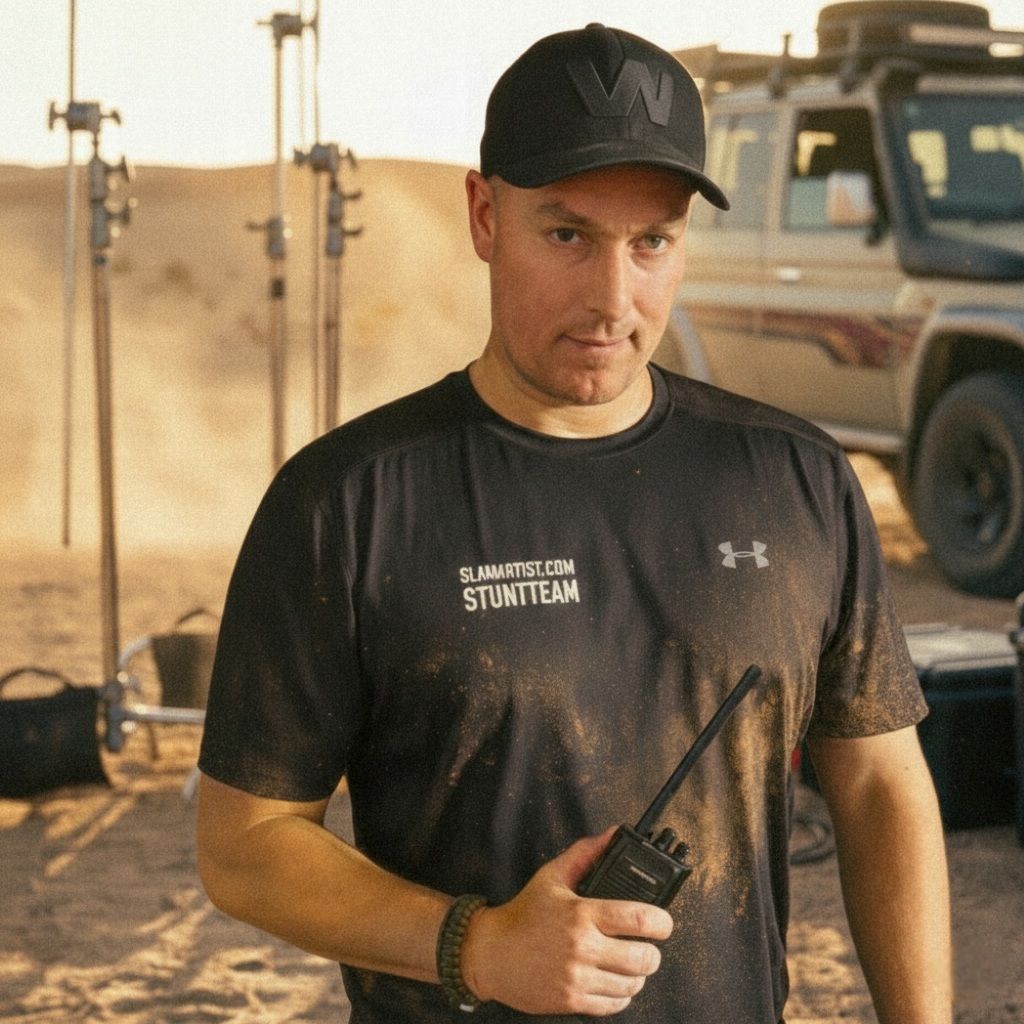
I’m Ferdi Fischer — Action Director / Stunt Coordinator / stunt performer — focused on designing and executing action that feels real, reads clearly, and stays safe.
Credits / Sources
- SWR1 Leute episode in ARD Mediathek (date and episode info)
- Background on SWR1 “Leute” as a long-running SWR interview show with podcast/video publishing
Watch on ARD Mediathek (official video)
SWR article page
Listen on ARD Audiothek (official audio)
English transcript interview Ferdi Fischer SWR1 Leute
I mean, Hollywood is here in person in the person of stuntman Ferdinand Fischer. From Baden-Württemberg he went out into the world. The man jumps for others from very high up, goes through fire or lets himself be blown up. A very good morning, first of all. Hello. How dangerous was it today in comparison to your certainly much more unspectacular everyday life? Did you jump out of bed okay? Yes, I was on the road for quite a while, I drove straight here from Vienna and, um, very unspectacular. So your day, your life doesn't have adventures for you every day planned. That's quite good. But if it doesn't bang and crash today here on Essen's 'Leute', then I don't know either not. Stuntman Ferdinand, Ferdi, FDY, we still need to talk about that, too.
Fischer is our guest. I just made it clear. Ferdinand, Ferdi, FDY explain to us what you prefer, who calls you what. So Ferdi would be best for me Ferdinand, like I said, if I have somehow screwed up. Yeah, or it's just what's in the passport or something. Exactly. Or on official documents and FD, Fergie—the Americans—they just can't quite get it right. That's why people often, uh, pronounce my name kind of strangely, and it even turns into a bit of 'Fergy'. Uh Alright, then let's go through the classic stuntman questions. How high was your last jump? When were you last on fire?
The last time I was on fire was really a while ago. Um, we do jumps more often. The last really high jump was also a while ago—45 m—but um, back then that was into boxes, in but in theory we don't need that at all anymore, because these days we have wire work. That means we can secure ourselves with ropes, and it looks similar to a high that is, it looks like a fall, but you—you never hit the bottom. Exactly. And that also made it safer, when we, so to speak, don't want to use a double, but instead show them in the fall if we want to show them. With a second camera, that flies along, for example. Then we attach them to the rope, then we simulate the free fall together with them so to speak.
So that means your job has changed, you've been doing it for several decades now over 20 years, quite significantly, so that it no longer just means: put on a wig, so I look like so-and-so and I jump off something somewhere, but rather the one who is the actual lead actor, the actor should also be seen in the air be visible. Exactly. So the days of 'I'm on set and where am I supposed to jump down from?' are pretty much over, and, um, yeah we it's now called action design, stunt design. That means we're involved quite early in the production and then design the action around the actors, around the whole scenario, basically, to integrate it better with the story, with the script, so that it dovetails seamlessly into each other.
What projects are you working on at the moment, if you can be here in Stuttgart right now? Um, where are you currently staying? So the day after tomorrow is SOKO Stuttgart here in Stuttgart. Right now I'm shooting a series in Vienna, and I go there again the week after next and in between, Mallorca for a treatment for the series. Okay. And then SOKO Stuttgart is for you also a real home game, because you're from Stuttgart. Absolutely. I've also definitely done SOKO, I don't know how many, but definitely 30, 40 episodes already, and it really feels like a home game, like coming home.
You also know the team, of course for, really, almost 20 years, or 15 years at least, and of course, that always makes it fun again, even if the stunts of course aren't that spectacular logically on SOKO Stuttgart, but it's always fun to shoot here as well in my hometown and apparently it's important to you too, that for that you also, of course, again, when you're otherwise in America on the road, come back to Europe Exactly, the apartment here in Stuttgart, I've always still kept, and it's absolutely, uh, for me always great, and the things that I used to think I didn't like in Germany or in Stuttgart, I miss them extremely now when I'm somewhere else.
You only appreciate it when you no longer have it. For actresses and actors, we know that casting is the decisive thing if they want to be in it. That decides it. How does it work for you? That exists for us too, of course, but more only for the stunt performance, so basically as a double or as a sidekick for the lead actor, or as a small supporting role, depending. There are stunt people are often cast for that that's the case too. Exactly, it's identical to actors, but as a stunt coordinator and so on it of course goes through connections, through people who know you, who've worked with you before, just like an action director. There are action sequences that basically only we can do, or can do better with our experience, and then it is more about connections—who knows whom?
website and so on and also classic word of mouth. Exactly. Exactly. Or a radio show for example. Alright, then let's see what comes out of it when you're sitting here today. Um, which actors do you like to double in tricky situations? Is there anyone where you say, uh, that suits me I don't know, because of body type, because because the type fits pretty well too. Yeah, we're—yeah—we're basically matched, you recognized that correctly, um from the physical characteristics less so; with the Hollywood productions we also have face replacement, meaning we have these little dots on the face, then digitally the actor's face is put onto it added.
Uh, for the big productions, for the smaller productions we have to of course, with a wig and get as close as possible to the actor. That's still the classic way. Exactly. Yeah, so with the smaller productions, definitely, and then the scenes are planned in such a way that you don't see the face that clearly You see. Are there actors where, if you know, okay, he's on set, I don't have much to do, because he does a lot himself. Yes and no—often it's also the case that with many actors we're sometimes only brought in when they're too tired. So, when they've already been filming all day and then, uh, sometimes have to do running scenes—really totally ridiculous stuff. Um, but that happens again and again. You can't say it in advance.
Our 'Leute' guest was Ferdi Fischer, and I found a parallel, I realized in the preparation. As kids, we both really liked the early-evening series, 'Ein Colt für alle Fälle' about stuntman Colt on TV. For me it was also because of the friendly companion, Heather Thomas. For you it changed your life, right? Yes, and not alone, but it was a part of it. Absolutely. It set me on the right path I'd say. So it didn't completely change things back then, because of course you still had to go the normal route. At that age, you still listen to your parents and the people around you, but Jodi was definitely influential.
That was Heather Thomas. Yes, exactly. And, um, of course that was that showed me above all that what I enjoy doing anyway can be a job which, up to that point, of course I didn't know. You learn: firefighter, astronaut, pilot, whatever, but stuntman—this series kind of showed me that it's even possible to work like that. But how wild was your childhood, apart from watching the TV show 'Ein Colt für alle Fälle'? Extremely wild, independent of the series.
It was always like that—on BMX, doing the biggest jumps. I had this little scooter, I was jumping around on it. Of course, skateboarding then semi-professionally. Um, and every skater, every street skater knows very well: if you ride a lot, you learn how to fall on concrete without any protective gear back then—no helmets, nothing. And now, these days, when you're here, you actually went back and revisited a few spots from your childhood. I—yeah—I was recently in the woods where we used to jump back then, where I wrecked my BMX ripped my clothes and limped home. And that I probably wouldn't, in my opinion, anymore really survive. Badly injured maybe. So, I wouldn't do it again. Definitely, that's pretty intense too. So actually, in my mind what you do today is clearly more dangerous. How enthusiastic were your parents back then, and especially when you decided to become a stuntman?
Yeah, I think they neither back then nor today really understood what I actually do. Um, above all that it can of course run in a controlled way. That's why—because you just said that it looks more dangerous now. But that's exactly the point: it just looks more dangerous now. Back then it was more dangerous, and now everything is controlled. It's planned, prepared, trained, and secured. So like I said, we're selling an illusion with the whole—with all the stunt stories.
When did it become clear to you, or when did you realize that this could become your job? Uh, that was relatively late. Um when I got the first—when I then went abroad to train, I wanted to go in that direction and train for it, but when I got my first job, I realized on set: 'Now it's my job and, uh, this is a real job—I get paid for it.' And that's why that was the moment when I understood, okay, now I've arrived in my profession. Col Seves actually made it back into theaters, I think last year.
I didn't see the movie because somehow I didn't want to ruin my impression of the series either. Um, I think it was called The Fall Guy, with Ryan Gosling in the lead role. Were you involved? No, not there. But I know the whole team and I shot Fast and Furious with them shortly before, in Italy. Um, uh It's similar to you. I didn't want to ruin my childhood dream either although the movie isn't bad, but it's different. It's a completely different story. It's also a completely different type. Um, it's a different time we're living in. That means it's shot much more modern and that's why I see it the same way as you. I wanted—I wanted—I watched it because I know a lot of people who worked on it, but, um, it doesn't come close to the series back then at all.
You seem very reserved. You don't brag about everything you've already done. So I have to I think, tease it out of you a bit differently right now. You already mentioned Fast and Furious—productions that are known worldwide, where you were involved. There was also Bad Boys and I could also mention Inglourious Basterds What else would you mention? Um, Murder Mystery, for example, for Netflix, also with Ryan Gossing, because you just mentioned him, we shot in Prague The Gray Man, lots of fight sequences with him. Um, and what else? Uh, we just shot Javan with Sharokan. That's a Bollywood legend in India. Um, yeah, so I've also done many bigger German productions as well. Of course, um first and foremost SOKO Stuttgart, of course, there it is mentioned again. So, now I have another question. You live the life of Col Siers. With him, what impressed me was always in the opening credits.
He had this outdoor bathtub, like a tub. You surely have one standing at home too, right? Not quite like that. Yeah, but I live kind of like a stuntman, in a trailer in America—I live in a typical trailer behind the house on our stunt facilities in Los Angeles. Yeah, is that important to you? No, but it was it's just there—it just kind of happened, and I love it because I basically only sleep in there and everything else I'm always out and about anyway and by the way, I was randomly once a friend took me to this bathtub from Coltidos. I was there actually in that front yard. Oh, and I looked at it, in the Hollywood Hills, of the guy back then who also wrote the song. That this—let's say—area belonged to him. It's in front of his house basically. And the bathtub is still there, well, back then—it's now also 15 years ago now.
Are you actually allowed to be afraid in your job? Um, yes, of course. You also have to be afraid in certain moments, um because it can of course steer you in the right direction, or I'd say protect you from certain things doing them, but you shouldn't act out of fear, so to speak—let fear influence you in such a way that you act because of fear, but rather turn the whole thing into respect assess it well and then act accordingly. Is that a gift, or did you have to work on it and train it? In my opinion it's the same kind of training as physical training—mental training—just assessing things correctly, not overreacting, not reacting wrongly, and accordingly, not becoming too scared, but instead as I just said, turning it into respect.
But when you say your last jump was from 45 m somehow, that really stuck with me—then, if I'm 45 m before the jump, I get weak knees. Yeah—if you don't train it beforehand, of course—and you have to —that's true in many professions— and I just mean, sometimes you in certain situations simply have to function, and you have to have clarified all the framework stuff beforehand, and then you have to function in that moment. Um, especially on big Hollywood productions it's important because there's so much money at stake if you mess it up and have to do it again.
And that's why it's very, very important not to have huge fear in the moment, but to have fear beforehand have that—turning it into respect—up there to stand there and function. What about everyday situations, mice, spiders, flying in an airplane, elevators, or even loneliness? Are those more the things you're afraid of? Good point. Yeah, but for me it's just cheese. You have I hate cheese. Okay, hate is a bit different, but you're not afraid of it if I hold a piece of cheese under your nose.
Okay. Um do you have, for those people—you just said turning the whole thing into respect —a tip on how that works? How do you do that? That's really, um, a mental thing—it's your psyche you have to work on. Like I said, it's training. You just have to be in those situations often enough and often enough simply understand what you have to do. You have to be able to rely on your abilities. Um, lots of training beforehand and being mentally stable. So just not trying to distract yourself or letting fears creep in just function. How can I imagine your routine on a set? You're not in use the whole time, but are you in the background, watching how the production is running until you get called up, or are you in your trailer meditating to stay relaxed until it's time for your call?
It's very broad. It can be all of what you just mentioned Anything can happen. Sometimes you really are waiting in the trailer and then you just run out and only do the thing Um, but it can also be that you're involved for a long time. You might already be helping with other things As a performer, you help others with rigging, with carrying mats, depending on where you need to help. We call it spotting —basically making sure that if he is, for example, at the edge or something, he doesn't fall off, so to speak not off-screen, so on camera and it's completely wide-ranging, it can be anything.
How old are you? I'm 46. Yeah, you do have to think about that. You're in your mid 40s. How long can you do your job for? Because it obviously has something to do with physical fitness. Yes, of course I train—unfortunately these days, less only outdoors. Luckily I have the opportunity to train at the Powerhouse, which is one of the best gyms here, because it belongs to a friend of mine, also from Hoffeld. Um, but otherwise of course worldwide it's a fallback—gyms, so basically fitness studios, but normally I try to do a lot outside—hiking, trekking, mountain biking, surfing, skating, everything everything you can do outside to stay fit.
But that sounds so little spectacular. Hiking, trekking. It's about maintaining physical fitness in the first place. Absolutely you're right. Of course also martial arts and so on, but those are special training—acrobatics and so on. Highfalls. We also do high-fall training. We basically have, once a week in LA—once a week training where we do certain things jump out of a car, do high falls, burn, prep fire gags rigging, set up ratchets, these are What is rigging? Rigging is the whole wire work, meaning all the ropes we get hung up on, that we get pulled around with, pulled backwards to sell impacts, so to speak, better.
Okay, so the jolt that happens with an explosion, that you get especially thrown far back, or for example if you take a shotgun blast to the chest, so to speak, that you then get pulled backwards. That's a pneumatic catapult that pulls you back. It looks extremely spectacular, exaggerated of course. But stuff like that. How is it—Is there a stuntman health insurance for very special people? There is a certain health insurance for artists. But I just stayed with the one I've always had. So nothing changed there—privately insured. Um, but it's a very high risk category where they classify you. I don't know what they call it over there, but okay.
They throw their hands up in horror when you call again, needing support. Yeah, I mean, we don't go to the hospital that often, but if something happens, it's probably something bigger. But luckily for me it hasn't been so bad that I have to be in the hospital all the time. Life insurance is also a topic. Um, have you dealt with it? No, not really, because I think I don't actually live as dangerously as other people, for example. Because with you everything is controlled and organized.
Um, exactly. We have this calculated risk, so to speak. We check exactly beforehand what we're doing. It's planned, it's trained. We know exactly what to expect and accordingly can react to it. Whereas with some other people it's not quite like that, not with me—not now—but if someone is tearing down the highway at 180 to the next appointment. Exactly, I believe that too. Um, what injuries have you had, or had to accept? All fingers and toes still there?
Yes. Uh—yes, damaged, but yes. It's one of those things I'm not proud of—of course you get injured in this job, and you shouldn't be proud of it, because then something went wrong. That's why it's something I don't really want to tell, how often and how 'great' I've been injured, but of course I've been injured more than once, and accordingly I've been in the hospital a few times, but that unfortunately is part of it. In my opinion it's just something you shouldn't be proud of.
But even if you don't want to give us an insight into that, which I can understand, the idea that as a stuntman you expose yourself to super dangerous situations, how dangerous was it? Was your life hanging by a thread? I can best describe it like this especially for the big Hollywood productions we have to sign that we could die Basically, we have to sign that in the event of death, it's not the production's fault. That means we basically sign our lives away.
if something goes wrong. That means, accordingly I've often been in life-threatening situations where one wrong step, one wrong move could have cost me my life immediately. Unfortunately that's how it is, but at some point it becomes relative, because you have done it often enough. Do you necessarily have to be a bit of a safety fanatic in your job, so that you check everything multiple times before it starts? Yes. Yes and no—yes, beforehand yes, but then in that moment you mustn't you have to put it completely aside so that it doesn't lead to other problems.
And you also have to rely on other people. I still remember the news vividly. Three years ago there was a fatal incident while shooting a film with Alec Baldwin. A female camera operator was killed by a real bullet, and the armorer was later sentenced to 18 months in prison. When you hear news like that —it's in your business— what does that do to you? Uh, it makes me remember how many times I've stood in front of a pistol that was fired in my direction with blanks. But you have to trust the armorers, you have to simply trust the team.
There's no other way. It's an isolated case if you look at the big picture—how often a weapon has been fired at an actor or a stuntman and nothing happened, then of course it's an absolute isolated case, and it should and must not happen, but it's not like I'm hugely worried that it happens often. Do you switch your brain off from time to time so you don't have thoughts like that? I wouldn't say switch it off, but certain things get blocked out. Certain things have to be blocked out to function—like the topic of fear and respect. Certain things you simply can't control. You have to check them beforehand. They have to be checked by others and monitored, and while you're doing stunts they're also watched by others and you have to trust them and then you have to blank that out for yourself and focus on the thing you can do yourself.
Are stuntmen, and also the women who do this job—are you like a small family? You all know each other. Absolutely. A lot of physical contact. Every evening we hug each other. It's really like that. It's a completely different relationship compared to the other people on set. We stunt people stick extremely close together, we depend on each other. I mean, five minutes earlier I was hanging with my life in his hands on a rope, so afterwards you go have a drink—best a Spezi. And that's why it's extremely friendly. Of course there are also hostilities, but normally we stunt people are extremely friendly with each other and treat each other very well.
So you can then rely better on him or her on set. Absolutely. The biggest award in your profession is what? Um, the applause. Yeah, not even the sweaty handshake from the director. No. Um, we can get the Taurus Award, Stunt Taurus Award, held in Los Angeles annually. Um, but they are very Hollywood-heavy. So, I say there's only one category for worldwide productions. That means, if you're not in and then only movies, no series and so on. So it's pretty difficult to even get nominated for an award at all.
There is no Oscar. There isn't one. Exactly. That has to do with appreciation and recognition, and just now it sounded a bit frustrated. Not even the applause, but the sweaty handshake. Um, does that get to you? Um, personally not really. I know it's a bit different for others. Because I do the job because I enjoy it enormously, and also to make my money with it. But it would still be important to acknowledge what we contribute on set just to create understanding And of course a category at the Oscars at the Academy Awards would be extremely important. I during prep, I thought that had existed for a long time, because there are awards for special effects, costumes—there's something for everything the film production needs There is an award at the Oscars for it That's why I thought you would have been included long ago. But apparently that's not the case. Um, why is that?
I mean, you are, let me just add officially also actors, because you appear in front of the camera. Exactly. When we're in front of the camera we officially also have to sign all the contracts that we are treated like actors Of course. Why it doesn't exist you can only speculate. Of course no one knows 100% what's behind it for what reasons. One guess might be that they don't want people to start risking extreme things just to get the Oscar. Another might be that they're afraid it would become like with actors that certain stunt people become so famous and are handled so intensely that they can demand extremely high pay, like actors and they probably want to prevent that. Anything else I don't understand Um, because I also believe especially when you're up for stunt coordination as an Academy Award, then I don't understand why there isn't a category for it.
Make the difference clear again Stuntman, stunt coordinator you are too. Exactly. Stuntman and stunt performers are the ones who actually perform the stunts in front of the camera. In front of the camera, exactly. And also train with the actors and everything else, and the stunt coordinator coordinates—basically is the director for the stunt people. Meaning: okay, we have an explosion back there and then three are supposed to fly through the air, and that's you three.
Exactly. Planning with the director, with the team, with the cameraman—how, where, what is done, how dangerous it is, and so on. What would you, in this discussion about Oscars for stunt women and stunt men—yes, no, maybe—what would you like to change? Would you just say: in the future, please also an award for my profession? Absolutely. For, like I said, for stunt coordination I'm 100% for it that there has to be a category. For stunt performers you can discuss it again and weigh it up, but overall, the whole area of stunts, stunt coordination, action directing, and so on, in any case it's the most important thing, in my opinion, to honor this profession.
The difference is, of course, when a big actor, a big actress constantly puts their face into the camera, you also get recognized on the street and then also have to take the heat for maybe a not-so-successful production. That's not the case with you. So you'll probably be recognized on the street less. No, never. No way. No, meaning you'd have to deal with that too. No—yeah—no, I don't think so, because I mean, actors get attention not through the Academy Awards, i.e., the Oscars, but because they're so clearly visible in the frame, because you always see close-ups of their faces in the film. But we would then be shown at the Oscars briefly but we're not present in the film. We're doubles, we double, or we're small sidekicks on the side, or some supporting actors, or we do some background action, or we face-plant back there again or something. No one notices that anyway.
But you also do music videos, for example for Die Fantastischen Vier—you've also worked with them back then. True, yeah, that's a long time ago. Yes, for example. Sure—action, wherever action or stunts happen, of course a stunt coordinator has to be there. I've even done opera as well. And if it's in Stuttgart, with Die Fantastischen Vier, or it comes from Stuttgart, then you like to take it on. Absolutely. I've also shot a video with Max Herr. Super, mega.
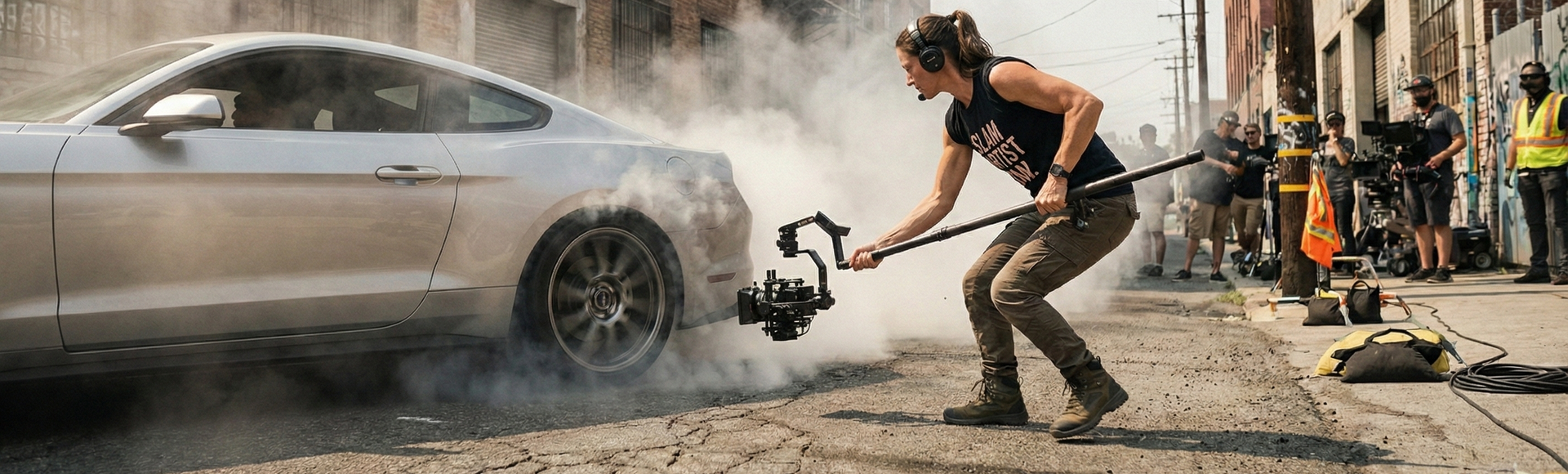
You also—this goes a step further—invented your own camera system Did I say that right? You can tell I'm not experienced with that. Take me by the hand and explain what you did. Yeah, it was kind of born out of necessity We kept noticing again and again that we did really nasty stunts that were dangerous, risking our lives and health, and then it either wasn't captured or was captured badly. And sometimes it was because of the gear, the technology, the cameras the camera operators had, because they were simply too big, too bulky, and so on. And accordingly we developed a camera system that is tailored exactly for action so that we can capture the things that we feel are extremely important.
Camera systems have changed drastically over the last decades I still remember heavy equipment you could only move with two people more or less all the way to systems on your body that follow every movement. What's it like with you then? Exactly, it's something like that—basically a gimbal system, just much smaller, everything shrunken down completely. Meaning the camera is suspended. Exactly, it hangs—it's suspended. It has a stabilized camera, has wireless focus, has a video output, is completely miniaturized basically all carbon, made lightweight. The whole technology itself is reduced in size and so on. It comes from drone technology. We kind of reverse-engineered it and adapted it so it works for us.
And how did you get the idea? You just gave the example of a super stunt, but poorly captured. That means the super stunt had to be done again and you don't feel like that anymore. Yes, exactly. That's the reason. Yeah, and we—I also, for example I've done a stunt 24 times—once I had to jump into a grave because they just couldn't capture it properly. How's your mood on the 23rd time actually? Back then I was younger. I wouldn't do it that many times now—I would already boycott earlier. But yeah, sometimes it has to be done often. That's way too much, but of course you have to count on at least three to five takes We always have to count on that, but over 20 is of course utopian. That should never happen.
And then you sat down and said: there has to be another way. Exactly. It has to work better—streamlined it just has to work. It has to be more stabilized, smaller faster, better resolution. So then you show up on set. They booked you as a stunt coordinator and you also bring your own camera system. Are people happy about that or do you first have to establish it? Exactly, you have to establish it. I actually keep it very separate, because either we mostly come with Warpcam or as stunt coordination, and you have to keep it somewhat separate, because they're different departments.
Just now, for example on Fast and Furious, we could combine it pretty well that we could combine action assistance and this camera system We had our own unit there on set and could move freely and capture the crazy action stuff that no other camera can capture Otherwise, normally you have to it's the camera department and the stunt department, and you really have to separate that, and then there's also grip involved. Grip department is 'Baubühnen' in German.
Okay. 'Baubühnen' are also involved, they for example lay the dolly tracks the dolly rails, exactly. And that means they are involved And that's why we combine we're kind of stirring up the industry a bit right now, because we kind of weld all departments together a bit, because I believe everyone has to work together, and to make everything more productive and also safer for the stunt people, because you mustn't forget: the fewer takes we do, the lower the risk of getting injured. Stuntman stunt coordinator, own camera system.
Are you a one-man show, or does that not work that way anymore? No—I'd say I never was. You're always only as good as the whole team especially with Warpcam, obviously it's very clear, because it's a camera that can only be operated by three people. One is a physical operator who holds the camera without a monitor. One is a virtual operator who has a monitor with a remote control, who controls the camera like with a drone. And then there's the focus puller, meaning the one who pulls focus, who makes sure the image is sharp.
On the internet you can find quite a bit also about SVS 'Leute' guest Ferdi Fischer. Feel free to correct it if anything isn't accurate. Immediate place of residence is given as Stuttgart Second residence Berlin, and as places to live there are also listed Hamburg, Cologne, Los Angeles, Munich, Nuremberg, Palmer de Mallorca and Zurich. That sounds like you're always on the move. Anything that stands, anything that's fixed doesn't exist in your life.
At times it's exactly as you just said. And I also have the ability, luckily—I've also worked in Zurich for a long time in various cities and countries but I'd say I nowadays kind of have LA and Stuttgart as a base. I for a while also had Palma on Mallorca as a base, but these days it's really been reduced to LA and Stuttgart when I'm home. But when I'm on productions, I'm in a hotel for weeks, sometimes months. That's why and not every Hollywood film production in Los Angeles takes place.
Exactly. Right now, Europe is definitely preferred as I said, the last five to eight big productions. Is it cheaper or it's cheaper, and in part people are a bit more deployable, I'd say in Europe, let's put it that way. The workflow is a bit different than in the USA—not better or worse I wouldn't say, it's just a different work mentality here in Europe than in America, in my opinion Do you like being on the road so much or do you sometimes wish it could be a bit less right now, but then it's probably less money.
Yeah, and it's not just about the money—above all it's also about realizing projects Seeing a finished product where you know you're sitting on a plane and watching the film you worked on and you know exactly which scenes you did. That's simply, I'd say for me, my satisfaction that I do my job well. What goals or dreams do you still have? That it keeps going like this for a while and that it even becomes more, and above all that I, I'd say, can do this as long as possible, as long as I enjoy it Like, for example, in America right now I'm working with legends who at 75 are still stunt performers.
That's wild absolutely, and they still do it brilliantly. Some things, of course not anymore, but they're incredible legends and I'm glad to have worked with them too to be able to work with them. Any film partners? I mean I think the idea is wrong if I say: on set, we kept mentioning the name Ryan Gosling Are you best buddies with Ryan Gosling and you go out to eat together in the evenings? But are there film partners where you say you'd like to experience them on set?
You mean actors, or I think I'm a bit different. I'm not really a fanboy in the sense that I absolutely have to meet certain people and because we also work a lot with them already and when we work with them they're just normal people. So that aura isn't there either. So yeah, of course I would like to work with certain directors, but in my area, there are certain stunt people, big stunt coordinators I've heard a lot about, some I've even worked with a bit already and I love working with them much more than with some actors or anything. It's more in my field, I'd say Stunt legends, for example, that I'm working with right now on Java or Fener—those are people who've really done 200 to 300 of the biggest Hollywood productions of the last 50 years—it's unbelievable when you go on IMDb and the stories they tell—it's you can sit there all evening and listen to their stories it's just great.
We already talked about recognition for your job— stunt people—that there should be more of it. There are also always a few actors who, in interviews while the camera is rolling say, 'Ah, that's the best stuntman I've ever seen.' You hear that also when the camera is off. Is there any particular praise where you think that feels good, I'll gladly take that with me. Yes. Yes. Recently, for example, one example that made me extremely happy I was in India, in Mumbai we were shooting a Hollywood production, and there were pretty famous stuntmen and coordinators from America there, and he—we somehow got to talking about this high fall that I did—45 m—and then he told me in passing that he had been trying for years to find the person behind it because he didn't just happen to know it was me.
And he then explained, basically, he kind of gave me an unconscious compliment about how great he thought the stunt was even though he didn't know I was the person. Stuff like that. It's extremely great, I'd say, when you hear something like that from other people. I can imagine. We already talked about Cole Sivers today, from the early-evening series. That stuntman basically even became the main character. You didn't list that as a goal or dream for your life. A series about Ferdi Fischer.
No, no way. No, zero. Um like I said, you have to bring a bit of a different mindset to set at least. You have to make sure that others become famous and look good and I mean myself. So I have to hold back a bit you don't have to be the one in the spotlight. Sure, you notice it, and then everyone's happy and thrilled for you, but I'm not a self-promoter who wants to see a series about myself I'd rather be the one who develops a series like that and the whole action, all the stuff behind it, and also executes it, and maybe even films it with the Warcam.
You're so versatile, and a few questions came in. Hermann Schulz from Reutlingen asks, for example, how on earth can you fall down a staircase without hurting yourself? Do you have a tip for everyday life? First of all as always: training and we also have protectors and you mustn't forget with you it's carefully prepared and controlled, and when I fall down I don't know about it beforehand because then I just happened to go flying down And by the way, for Hitman Agent 47 I did a really nasty stair protection, and there we built the stairs entirely out of mats hard mats that look like stairs. Meaning they weren't metal stairs at all but mats that looked like metal.
That might be a trick for at home: just replace all stairs with mats. Steffi wrote: "Hello Ferdi, my hips hurt just listening. Up to what age can you be a stuntman?" Hard to answer globally, because you have to look at it— as a precision driver, which is also part of stunts, you can of course do it into old age because you chases for example. Exactly. And of course these extreme, hard body stunts, depending on how fit you stay. I know some who at 60 still do pretty intense body stunts because older actors also want to be doubled.
Yes, exactly—although you can easily make someone younger look old. Okay. Because you just mentioned chases —are you automatically or do you have to be a good driver if you work in that area want to? Definitely. Yes, so if you're a precision driver for that kind of stuff or commercials and so on, then definitely. Sure. How good are you in a car? Every man thinks he's the best driver in the world. That's why I don't want to say something wrong. Um, Elfi wrote and had high praise for you. Wonderful guest.
He doesn't whine, isn't preachy, likes his life, likes working, isn't self-centered or oversensitive and on top of that positive and humorous more people like that, please. That you can take as a badge of honor. Uh, I think that really shows that over these two hours you've come across very well. And Anna from Esslingen wrote, she has, as she says, a heretical question: why risk your life as a stuntman if you can render everything in 3D? Meaning that's a computer technique where you can do everything Exactly. Yes, there are of course anim- animations that, I'd say, are created completely in the computer but these animated scenes in my opinion—and I'm sure many listeners know this—are sometimes totally unrealistic.
You can see very clearly that it's a computer-generated graphic and it doesn't look realistic, and that's why often the stuff just isn't wanted and productions ask stunt people whether they'd rather do it than have it done in the computer. But you have to admit a lot has happened there. You just touched on it: that you then take the face of a well-known actor and project it onto yours in post-production and beforehand you have to walk around with some dots on your face to do it.
Face replacement. Exactly. Yes, that exists. A lot has improved, sure but I believe that a full action fight sequence cannot be done completely in the computer at least not at the moment Of course, I don't know what the future brings, but at the moment it only helps us because with face replacement we can do even more with actors too. That's true. And I think I see it similar to you: that the movements will always somehow be a bit jerky compared to the movements you can do.
Thank you, my pleasure. Toward the end of our show I have a problem: what do you wish a stuntman? 'Break a leg' definitely isn't it. Um, I'd simply wish you all the best wishes. Ferdi, thanks for being here. I definitely wish you continued success with everything you do. You gave us a pretty good insight into your work, into your professional life between Stuttgart and Hollywood. Jump and be successful. Thanks for that. Thank you very much for having me, thank you that I was allowed to be here. And one more thing for anyone who has the same wish and, like you, is maybe ten, like you once were you can absolutely encourage being a stuntman indeed as a goal. Exactly. Exactly. Tell the parents too: it can be a profession and it can be fun and successful. Thanks for that. Ferdi Fischer on 'Leute'.
German transcript interview Ferdi Fischer SWR1 Leute
Ich sag mal, Hollywood ist zu Gast in Person von Stuntman Ferdinand Fischer. Aus Badenwürttemberg ging er raus in die Welt. Der Mann springt für andere von ganz weit oben, geht durchs Feuer oder lässt sich in die Luft jagen. Schönen guten Morgen erstmal. Hallo. Wie gefährlich war da im Vergleich heute so dein sicherlich deutlich unspektakulärer Alltag? Bist du gut aus dem Bett gesprungen? Ja, ich war sogar lang unterwegs, bin direkt aus Wien hergefahren und ähm sehr unspektakulär. Also dein Tag, dein Leben hat nicht jeden Tag Abenteuer für dich vorgesehen. Das ist auch ganz gut. Aber wenn es heute nicht knallt und rumst hier in Essens Leute, dann weiß ich auch nicht. Stuntman Ferdinand Ferdi FDY, da müssen wir auch noch rüber sprechen.
Fischer ist zu Gast. Ich habe eben schon deutlich gemacht. Ferdinand Ferdi FDY erklär uns was dir am liebsten ist, wer was sagt. Also Ferdi weren wir am liebsten Ferdinand, wie gesagt, wenn ich irgendwie Mist gebaut habe. Ja oder steht nur im Pass oder so. Genau. Oder auf offiziellen Dokumenten und FD, Fergie, die Amis, die kriegen das irgendwie nicht so richtig hin. Deswegen werde ich oft äh da so seltsam betont der Name und geht sogar bisschen zu Fergy. Äh gut, dann lass uns mal abklären als Stuntman so klassische Fragen. Wie hoch war dein letzter Sprung? Wann hast du das letzte Mal gebrannt?
Das letzte Mal gebrannt ist echt schon eine Weile her. Ähm springen tun wir öfters. Der letzte richtig hohe Sprung ist auch schon eine Weile aus 45 m, aber ähm das war in Kartons damals noch in aber wir brauchen das theoretisch gar nicht mehr so, weil wir mittlerweile Wireworks haben. Das heißt, wir können uns mit Seilen absichern und das sieht ähnlich aus wie ein High das heißt es sieht aus wie ein Fall, aber du du kommst nie unten an. Genau. Und das war ich auch sicherer, wenn wir Schauspieler sozusagen nicht dubeln wollen, sondern sie im Fall zeigen wollen. Mit einer zweiten Kamera, die mitfliegt z.B. Dann hängen wir die an Sale dran, dann simulieren wir den freien Fall mit denen zusammen sozusagen.
Das heißt, dein Job hat sich, du machst den jetzt über mehrere Jahrzehnte schon über 20 Jahre auch deutlich verändert, dass es eben nicht nur heißt Pyrücke an, damit ich aussehe wie XY und ich springe dann irgendwo runter, sondern derjenige, der der eigentliche Hauptdarsteller, der Schauspieler soll auch noch im Flug zu sehen sein. Genau. Also die Zeiten von ich bin am Set und wo soll ich runterspringen? sind ein bisschen vorbei und ähm genau wir das nennt man jetzt auch mittlerweile Action Design, Stun Design. Das heißt, wir sind ziemlich früh schon integriert in die Produktion und designen dann die Action um die Schauspieler rum, um die ganze um Szenario einfach rum, um das besser zu integrieren mit der Story, mit dem Drehbuch und damit es eben ineinander nahtlos miteinander eingreift.
An welchen Projekten arbeitest du momentan, wenn du hier in Stuttgart sein kannst? Ähm was wo hältst du dich gerade auf? Also jetzt nach morgen ist Soko Stuttgart hier in Stuttgart. Gerade habe ich dreh ich eine Serie in Wien, da gehe ich dann auch wieder übernächste Woche hin und dazwischen noch Mallorca für eine Ausarbeitung von der Serie. Okay. Und dann ist Soko Stuttgart für dich auch ein absolutes Heimspiel, weil du aus Stuttgart kommst. Absolut. Soko habe ich auch bestimmt, ich weiß nicht wie viel, aber bestimmt 30, 40 pro Folgen schon gemacht und es ist wirklich wie ein Heimspiel, wie nach Hause kommen.
Auch das Team kennt man ja schon seit ja wirklich jetzt fast 20 Jahren oder 15 Jahre auf jeden Fall und das ist natürlich also das macht immer wieder Spaß auch wenn die Stand natürlich nicht so spektakulär sind logischerweise bei Soko Stuttgart, aber es macht immer wieder Spaß hier auch zu drehen in der Heimatstadt und ist dir anscheinend auch wichtig, dass du dafür dann logischerweise auch wieder, wenn du sonst in Amerika unterwegs bist wieder nach Europa kommst. Genau, die Wohnung hier in Stückgart habe ich auch noch schon immer immer behalten und es ist absolut äh für mich immer super und die Sachen, die mir damals gedacht habe, die ich nicht mag in Deutschland oder in Stuttgart, fehlen mir jetzt extrem, wenn ich woanders bin.
Weiß man erst zu schätzen, wenn man sie nicht mehr hat. Für Schauspielerinnen und Schauspieler oder bei denen kennen wir es, dass das Casting das Entscheidende ist, wenn sie mitspielen wollen. Das entscheidet darüber. Wie sieht das bei dir aus? Das gibt's bei uns auch natürlich, aber eher nur für die Stun Performance, also sozusagen als Dubel oder als Sidekick von dem Hauptdarsteller oder als Kleindarsteller, je nachdem. Da gibt's eben werden oft Standleute besetzt, da gibt's das auch. Ganz genau, ist identisch wie bei ähm Schauspielern, aber als Stand Koordinator und so weiter geht es natürlich über Connections, über Leute, die einen kennen, die mit einem schon gearbeitet hat, genauso wie ActionDirector. Da gibt's eben Actionsequenzen, die sozusagen nur wir machen können oder besser machen können mit unserer Erfahrung und da geht's dann eher über Connections, wer kennt wen?
Homepage und so weiter und auch klassische Mund zu Mundpropaganda. Genau. Ganz genau. Oder Radiosendung z.B. Gut, dann schauen wir, was dabei rauskommt, wenn du dann hier heute sitzt. Ähm, welche Schauspiele spielst du sehr gern in schwierigen Situationen? Gibt's da was, wo du sagst, äh liegt mir weiß ich nicht vom vom Körperbau, weil der weil der Typ auch ganz gut ist. Ja, wir werden genau wir werden halt angepasst, das schon richtig erkannt ähm äh von den körperlichen Eigenschaften her weniger, also bei den Hollywood Produktionen haben wir auch Face Replacement, das heiß wir haben so Punkt im Gesicht, dann wird digital das Gesicht von dem Schauspieler drauf gemacht.
Äh für die großen Produktion, für die kleineren Produktionen müssen wir natürlich so mit Perücke und so nah wie möglich an den Schauspieler rankommen. Das ist noch so klassisch. Ganz genau. Ja, also bei den kleineren Produktionen auf jeden Fall und dann werden die Szenen eben so ähm geplant, dass man eben nicht so genau das Gesicht sieht. Gibt's auch Schauspieler, wenn du weißt, okay, der ist am Set, da habe ich nicht viel zu tun, weil der macht sehr viel selbst.
Ja und nein, also oftmals ist es auch so, dass wir bei vielen Schauspielen so, dass wir teilweise erst dann eingesetzt werden, wenn die zu müde sind. Also, wenn sie einfach schon den ganzen Tag gedreht haben und dann äh teilweise Rennszenen machen, also wirklich total lächerliche Sachen. Ähm, aber das passiert immer wieder so und so. Kann man nicht im Vorhinein sagen. Es war Leutegast Ferdy Fischer und ich haben eine Parallele, habe ich dann in der Vorbereitung festgestellt. Als Kinder haben wir nämlich beide sehr gerne die Vorabendserie, ein Cold für alle Fälle über Stuntman Colce im Fernsehen gesehen. Bei mir lag es auch an der freundlichen Begleitung Heather Thomas.
Bei dir hat's das Leben verändert, oder? Ja, und nicht alleine, aber war ein Teil. Absolut. Hat mich auf den richtigen Weg gebracht, würde ich jetzt mal so sagen. Also nicht komplett verändert in damals, weil man natürlich noch den normalen Werdegang machen musste. In dem Alter, hört man noch auf die Eltern und auf die Umgebung, aber Jodi war auf jeden Fall einflussreich. Das war Heather Thomas. Ja, genau. Und ähm also das war natürlich das hat mir vor allen gezeigt, dass das, was ich sowieso gerne mache, ein Beruf sein kann, was ich bis dahin natürlich nicht wusste. Lernt Feuerwehrmann Astronaut, Pilot, wie auch immer, aber Stuntman hat mir sozusagen diese Serie näher gebracht, dass es überhaupt möglich ist so zu arbeiten.
Aber wie wild war denn dann deine Kindheit außer Fernsehgucken ein Cold für alle Fälle? Unabhängig von der Serie extrem wild. Das war schon immer so mit BMX die größten Sprünge gemacht. Ich hatte so einen kleinen Scooter, mit dem bin ich rumgesprungen. Natürlich Skateboard fahren dann semiprofessionell. Ähm und jeder Skater, Street Skater weiß ganz genau, wenn man viel fährt, kann man gut stürzen auf Beton ohne jegliche Schütze damals, ohne Helme, ohne alles.
Und du bist jetzt in den Tagen ähm, wenn du hier bist, tatsächlich noch mal so ein paar Punkte abgegangen deiner Kindheit. Ich ja, ich war vor kurzem genau im Wald, wo wir gesprungen sind damals und so, wo ich meinen BMX zerlegt habe, meine Klamotten zerrissen habe und nach Hause gehumpelt bin. Und das würde ich jetzt meiner Meinung nach nicht mehr so äh überleben. Schwer verletzt vielleicht. Also, ich würde es nicht noch mal machen. Auf jeden Fall, das ist auch schon heftig. Also eigentlich ist ja in meiner Vorstellung das, was du heute machst, deutlich gefährlicher. Wie begeistert waren deine Eltern damals und spätestens als du dich entschieden hast, Standman zu wennen?
Ja, ich glaube, die haben das weder damals noch heute verstanden, was ich mache so richtig. Ähm vor allen Dingen auch, dass es natürlich kontrolliert ablaufen kann. Deswegen, weil du gerade gemeint hast, dass es jetzt gefährlicher aussieht. Aber ist genau der Punkt, es sieht jetzt eben gefährlicher aus. Damals war es gefährlicher und äh jetzt ist alles kontrolliert. Es ist geplant, vorbereitet, trainiert und abgesichert. Also wie gesagt, wir verkaufen ja eine Illusion mit der ganzen mit den ganzen Standgeschichten.
Wann war das für dich klar oder wann hast du realisiert, dass das dein Beruf werden kann? Äh, das ist sehr relativ spät erst. Ähm als ich dann den ersten, als ich dann ins Ausland gegangen bin, um zu trainieren, wollte ich in die Richtung trainieren, aber als ich dann meinen ersten Job hatte, habe ich begriffen am Set: "Jetzt ist es mein Job und äh das ist ein wirklicher Job, ich werde dafür bezahlt." Und ähm deswegen äh war das der Punkt, wo ich verstanden habe, alles klar, jetzt bin ich angekommen in meinem Beruf.
Col Seves hat es tatsächlich dann noch mal, ich glaube letztes Jahr ins Kino geschafft. Ich habe den Film nicht gesehen, weil irgendwie wollte ich mir den Eindruck der Serie auch nicht zerstören lassen. Ähm, hieß da dann glaube ich The Fall Guy mit Ryan Gosling in der Hauptrolle. Hast du da mitgemischt? Nee, da nicht. Das ganze Team kenne ich aber mit den habe ich kurz davor Fast and Furious gedreht in Italien. Ähm äh es ist ähnlich wie bei dir. Ich wollte auch mir meine Kindheitstraum nicht zerstören. Wobei der Film jetzt nicht schlecht ist, aber es ist anders. Es ist eine ganz andere Story. Es ist auch eine ganz andere Typ. Ähm ist eine ganz andere Zeit, ja, in der wir leben. Das heißt, es ist hal viel moderner gedreht und ähm deswegen, ich sehe das genauso wie du.
Ich wollte ich wollte ich habe ihn mir angeschaut, weil ich eben ganz viele kenne, die da mitgemacht haben, aber ähm an die Serie von damals kommen nicht dran. Du wirkst sehr zurückhaltend. Du pralst nicht mit dem, was du schon alles gemacht hast. Des da muss ich dir, glaube ich, gerade ein bisschen anders entlocken. Du hast jetzt Fast and Furious schon genannt, Produktionen, die weltweit bekannt sind, bei denen du mitgemischt hast. Das war noch Bad Boys und in Glorious Busters könnte ich noch nennen. Was was würdest du noch mit erwähnen? Ähm Murder Mystery z.B. für Netflix auch mit Ryan Gossing, weil gerade genannt ist, haben wir in Prag The Grayman gedreht, viele Kampfsequenzen mit ihm. Ähm und äh was noch? Äh Javan haben wir gerade gedreht mit Sharokan. Das ist eine Bollywood Legende äh in in Indien. Ähm ja, also viele größere deutsche Produktionen habe ich auch schon getreht.
Natürlich ähm allen voran äh Soko Stuttgart natürlich, da sei sie wieder erwähnt. So, jetzt habe ich noch eine Frage. Du lebst das Leben von Col Siers. Bei dem hatte mich schon beeindruckt immer im Vorspann. Der hatte so eine Außenbadewanne, so ein Zuber. Hast du bei dir natürlich zu Hause auch stehen wahrscheinlich, ne? Nicht ganz so. Ja, also, aber ich lebe Stuntman mäßig in einem Trailer in Amerika wohne ich in einem typischen Trailer hinter dem Haus in unser auf unserer Stun Facilities in Los Angeles.
Ja, ist dir das wichtig? Nee, aber das war es ist einfach dort es war hat sich so gegeben und ich lieb es, weil ich ja sozusagen da drin nur schlaf und alles andere bin ich sowieso immer unterwegs und ich war übrigens zufällig mal ein Freund hat mich mitgenommen zu dieser Badewanne von Coltidos. Ich war dort wirklich in diesem Vorgarten. Ach, und habe mir die angeschaut, das in Hollywood Hills von dem damaligen, der das Lied auch geschrieben hat. Dem hat diese dieser, sag ich mal, Bereich gehört. Das ist vor seinem Haus sozusagen. Und die Badwanne gibt's noch, also damals noch, ist jetzt auch schon wieder 15 Jahre her.
Darfst du in deinem Job eigentlich Angst haben? Ähm, ja, klar, natürlich. Man muss auch Angst haben an bestimmten Stellen, ähm weil es einen natürlich in die richtige Richtung treiben kann oder sage ich jetzt mal davor schützt bestimmte Dinge zu machen, aber man sollte nicht aus Angst handeln sozusagen, also die Angst eigentlich so beeinflussen, dass man aufgrund der Angst handelt, sondern eher das Ganze in Respekt umwandeln, das Ganze gut äh einschätzen und dann dementsprechend handeln.
Ist das eine Gabe oder musstest du da auch dran feilen und das ganze trainieren? Meiner Meinung nach ist ein genauso das gleiche Training wie körperliches Training, mentales Training, einfach die Sachen richtig einzuschätzen, nicht über zu reagieren, ähm nicht falsch reagieren und ähm dementsprechend äh halt auch nicht zu große Angst haben, sondern eben das ganze wie wie eben gerade gesagt in Respekt umwandeln. Aber wenn du sagst, letzter Sprung war irgendwie von 45 m, hat sich bei mir eingebrannt, dann wenn ich 45 m vor dem Absprung stehe, dann habe ich weiche Knie.
Ja, äh wenn man das nicht vorher trainiert hat natürlich und man muss sich, das gibt's in vielen Berufen auch und ich nur meine, man muss abends, man muss in bestimmten Situationen einfach nur funktionieren und und die sozusagen im Vorhinein alle äh Rahmen Sachen abgeklärt haben und dann muss man funktionieren an der Stelle. Ähm, gerade bei den großen Hollywood Produktionen ist es wichtig, weil da so viel Geld im Spiel ist, wenn man es eben sozusagen vergeigt und es noch mal machen muss.
Und ähm deswegen ist es äh sehr, sehr wichtig, nicht in dem Moment die große Angst zu haben, sondern Angst vorher zu haben, das in Respekt umzuwallen, oben zu stehen und zu funktionieren. Was ist mit so Alltagssituationen, Mäuse, Spinnen, Fliegen im Flugzeug, Fahrstühle oder auch Einsamkeit? Sind das so eher Punkte, wo du Angst hast? Ist ein guter Punkt. Ja, aber bei mir ist es der Käse nur. Du hast Ich hass Käse. Okay, hassen ist ja noch mal was anderes, aber du hast keine Angst davor, wenn ich dir ein Stück Käse vor die Nase halte. Okay. Ähm ähm hast du denn für diejenigen, du sagst ja gerade das Ganze in Respekt umwandeln, einen einen Tipp, wie wie das wie das gelingt? Wie machst du das denn?
Das ist ja wirklich ähm mental eine Sache, also deine Psyche musst du ja angehen. Das ist ein wie gesagt ein Training. Man muss einfach oft genug in solchen Situationen sein und oft genug einfach verstehen, was man da machen muss. Man muss auf seine Fähigkeiten sich verlassen können. Ähm langes Training vorher und mental stabil sein. Also einfach nicht versuchen, sich ablenken zu lassen oder die Ängste reinkriechen zu lassen, einfach funktionieren. Wie kann ich mir dein deinen Ablauf vorstellen an einem Set? Du bist ja dann nicht durchgehend im Einsatz, sondern stehst du äh im Hintergrund, guckst, wie die Produktion läuft, bis du dann zum Einsatz kommst oder bist du in deinem Trailer in der Meditation, um ähm entspannt zu sein, bis es dann zu deinem Einsatz kommt?
Das ist sehr weit gefächert. Das kann alles, was du gerade erwähnt hast, kann alles passieren. Es kann manchmal sein, dass man wirklich im Trailer wartet und dann nur rausläuft und nur die Sache macht. Ähm, es kann aber auch sein, dass man ganz lang schon dabei ist. Man muss vielleicht schon bei anderen Sachen mithelfen. Als Performer sozusagen hilft man anderen beim Ricken, beim Mattentragen, ähm je nachdem, wo man halt helfen muss. Beim Spotten nennen wir das, also sozusagen zu schauen, dass er, wenn er z.B. an dem Gelände ist oder so, da nicht runterfällt, sozusagen nicht im Off, also auf der Kamera und ähm ist komplett weit gefächert, kann alles sein.
Wie alt bist du? Ich bin 46. Ja, musst du schon nachdenken. Du bist Mitte 40. Wie lange kannst du deinen Job machen? Weil der hat ja durchaus was mit körperlicher Fitness zu tun. Ja, ich trainiere natürlich ähm leider mittlerweile weniger nur noch draußen. Ich habe hier zum Glück die Möglichkeit im Powerhous zu trainieren, was einses der besten Fitnessstudios ist hier, weil es ein Freund von mir gehört auch aus Hoffeld. Ähm, aber sonst natürlich weltweit ist eine Notlösung Gyms, also sozusagen in Fitnessstudios, aber in ähm normalerweise versuche ich viel rauszugehen, wandern, hiken, mountainbiken, surfen, skaten, alles alles was man halt machen kann draußen, um fit zu bleiben.
Aber das klingt ja jetzt so wenig spektakulär. Wandern, hiken. Es geht ja drum, erstmal die physische Fitness aufrecht zuerhalten. Absolut hast du recht. natürlich auch Martial Arts und so weiter, aber das sind spezielle Trainingsakrobatik und so weiter. High. Wir machen auch Highf Training. Wir haben sozusagen einmal die Woche in LA gibt's einmal die Woche in Training, wo wir eben bestimmte Dinge machen, aus dem Auto rausspringen, Highforce machen, brennen, Feuergeld zubereiten, Ricken, Ratchets aufbauen, sind diese Was ist Ricken? Rigen ist ist ganze Wirew, also sind die ganzen Seile, mit denen wir aufgehängt werden, mit denen wir rumgezogen werden, wir nach hinten gezogen werden, um Impacts sozusagen besser zu verdeutlichen.
Okay, also den den Stoß, was bei sich bei einer Explosion, dass du besonders weit nach oder z.B. wenn man Shotgun Shot abbekommt in die Brust sozusagen, dass man dann sozusagen nach hinten gezogen wird. Das ist so ein pneumatisches Katapult, das ein sozusagen nach hinten zieht. Das sieht dann extrem spektakulär aus, übertrieben natürlich. Aber so solche Sachen. Wie ist das? Gibt's ja die Stunman Krankenversicherung für ganz besondere Menschen? Es gibt für Künstler eine bestimmte Krankenversicherung. Ich bin aber einfach bei der geblieben, bei der ich schon immer war. Dadurch ähm hat sich da nichts verändert gehabt, privat krankenversichert. Ähm, aber es ist schon äh sehr hohe hoher Risiko äh wo man eingestuft wird. Also, ich weiß nicht gerne, wie man das nennt bei denen, aber okay.
Die schlagen die Hände überm Kopf zusammen, wenn du wieder dich meldest, dass du Unterstützung brauchst. Ja, also so oft gehen wir jetzt gar nicht ins Krankenhaus, aber wenn halt was passiert, wahrscheinlich was Größeres. Aber ähm bei mir ist zum Glück noch nicht so schlimm gewesen, dass ich ständig im Krankenhaus sein muss. Lebensversicherung ist auch so ein Thema. Ähm, hast du dich damit beschäftigt? Nee, eigentlich nicht, weil ich der Meinung bin, dass ich gar nicht so ähm gefährlich lebe wie andere Menschen, z.B.
Weil bei dir alles äh kontrolliert und organisiert ist. Ähm genau. Wir haben so kalkuliertes Risiko sozusagen. Wir checken genau vorher, was wir machen. Es ist geplant, es ist trainiert. Wir wissen genau ähm was uns erwartet und dementsprechend können wir drauf reagieren. Wobei bei manchen anderen Leuten es eben nicht ganz so ist, wenn ich mit ich jetzt nicht, aber wenn man mit 180 über die Autobahn zum nächsten Termin kachelt. Genau, das glaube ich auch. Ähm, welche Verletzungen äh hattest du oder musstest du schon so hinnehmen? Alle Finger und Zehen sind noch dran?
Ja. Äh, also ja, beschädigt, aber ja. Also es ist so eine Sache, auf die ich nicht stolz bin, dass man natürlich sich auch verletzt in den Beruf und da sollte man auch nicht stolz drauf sein, weil dann ist irgendwas schief gelaufen. Deswegen ist es so eine Sache, die ich so jetzt nicht erzählen möchte, wie wie oft und wie toll ich mich verletzt habe, aber ich habe natürlich ähm mich öfters verletzt und war auch dementsprechend ein paar mal im Krankenhaus, aber das gehört leider dazu. Ähm meiner Meinung nach ähm eben ist es eine Sache, auf die man nicht stolz sein sollte.
Aber auch wenn du uns da keinen Einblick geben willst, was ich auch nachvollziehen kann, ähm die Vorstellung als Standman sich super gefährlichen Situationen auszusetzen, wie gefährlich war es? Stand da dein dein dein Leben auf der Kippe? Also, ich kann es am besten so beschreiben, für die vor allen die großen Hollywood Produktionen müssen wir unterschreiben, dass wir drauf gehen können. Also wir müssen unterschreiben, dass wenn im Todesfall das nicht die Produktionsschuld ist. Das heißt, wir unterzeichnen sozusagen unser Leben weg.
äh wenn irgendwas schiefgeht. Das heißt, dementsprechend war ich oft auch schon in lebensgefährlichen Situationen, wo ein falscher Schritt, eine falsche Bewegung sofort mein Leben gekostet hätte. Das ist leider so, aber d das relativiert sich irgendwann, weil man eben das oft genug gemacht hat. Musst du in deinem Job zwangsläufig ein gewisser Sicherheitsfanatiker sein, dass du alles mehrmals überprüfst, bevor es losgeht? Ja. Ja und nein, also ja, im Vorhinein ja, aber dann in dem Moment darf man muss man das genau komplett ablegen, damit es eben nicht zu anderen Problemen führt.
Und du musst dich auch auf andere verlassen können. Also, ich habe die Meldung noch vor Augen. Vor dre Jahren gab es beim Dreh eines Films mit Alec Baltwin einen tödlichen Zwischenfall. Eine Kamerafrau wurde von einem echten Geschoss getötet und die damalige Waffenmeisterin wurde anschließend zu 18 Monaten Haft verurteilt. Wenn du so Meldungen mitbekommst, das ist ja in deinem Business. Was macht das mit dir? Äh, das macht mit mir, dass ich mich erinnere, dass ich wie oft ich schon vor einer Pistole stand auf abgefeuert worden ist in meine Richtung mit Platzpatronen. Ähm, aber man muss den Waffenmeistern vertrauen, man muss einfach Vertrauen in das Team haben.
Ähm, es geht es nicht anders. ist ein Einzelfall, wenn man das natürlich jetzt im großen Gesamtbild betrachtet, wie oft eine Waffe schon gefeuert worden ist auf eine auf eine Schauspieler oder auf ein Stunman und so weiter und nichts passiert ist, dann ist es natürlich ein absoluter Einzelfall und es sollte und darf nicht passieren, aber es ist nicht so, dass ich mir jetzt große Sorgen mache, dass es oft passiert. Schaltest du den Kopf das eine oder andere mal aus, um eben eben nicht solche Gedanken zu haben?
Ich würde nicht sagen ausschalten, aber bestimmte Dinge werden ausgeblendet. Bestimmte Dinge müssen ausgeblenden, um zu funktionieren. Ähm eben das wie der Thema Angst und Respekt. Äh bestimmte Dinge, die man einfach nicht unter Kontrolle hat. Die muss man vorher checken. Die müssen vorher von anderen überwacht werden und während man Stand macht, wird werden die auch von anderen überwacht und denen muss man vertrauen und das muss man dann ausblenden für sich selber und fokussieren auf die Sache, die man selber machen kann.
Ist die sind die Stuntman und auch die Frauen, die diesen Beruf ausüben? Ist das wie eine wie eine kleine Familie? Ihr kennt euch untereinander. Absolut. Extrem viel Körperkontakt. Jeder wird um Abend, wir wir liegen uns am Abend in Arm. Ist wirklich so. Es ist ganz andere Beziehung zu anderen Standleuten, wie z.B. zum anderen Leuten am Set. Wir Stunleute hängen extrem arg zusammen, sind voneinander abhängig. Ich meine, ähm 5 Minuten vorher hinge ich noch mit meinem Leben in seinen Händen am Seil und dementsprechend geht man danach was trinken, am besten eine Spezie. Ähm und deswegen, also es ist extrem freundschaftlich. Natürlich gibt's auch feind Feindseligkeiten, aber im Normalfall sind wir stand Leute extrem freundlich miteinander und gehen miteinander sehr gut um.
Das heißt, man kann sich dann auch besser auf den oder diejenige verlassen am Set. Absolut. Die größte Auszeichnung in deiner Berufsgruppe ist welche? Ähm, der Applaus. Ja, nicht mal nicht mal der feuchte Händedruck vom Regisseur. Nein. Ähm, wir können Taurus Award kriegen, Stun Taurus Award, ähm, die in Los Angeles stattfinden, jährlich. Ähm, aber die sind sehr Hollywoodlastig. Also, sage ich jetzt mal, es gibt nur eine Kategorie für weltweite Produktionen.
Das heißt, wenn man jetzt nicht in und dann auch nur Filme, keine Serien und so weiter. Ähm, also ist schon schwierig dann in Award überhaupt nominiert zu werden. Den Oscar gibt's nicht. Den gibt's nicht. Genau. Das hat ja was mit Wertschätzung und Anerkennung zu tun und gerade klang schon so ein bisschen Frustration raus. Noch nicht mal den Applaus, sondern den feuchten Händedruck. Ähm, macht ihr das zu schaffen? Ähm, mir persönlich jetzt nicht so. Ich weiß, dass es bei anderen ein bisschen anders ist. Ähm, weil ich mache den Job, weil es mir extrem Spaß macht und auch mein ich damit mein Geld verdienen. Aber es wäre natürlich trotzdem auch wichtig anzuerkennen, welche Leistung wir am Set bringen, nur um das Verständnis dafür herzustellen. Und ähm da wäre natürlich so eine Kategorie im bei den Oscars ähm natürlich bei den Academy Awards wäre natürlich extrem wichtig.
Ich habe, also in der Vorbereitung, ich dachte, das geläbe ist längst, weil es gibt ja wirklich für äh Special Effects, Kostüme, es gibt ja alles, was die in der Filmproduktion benötigt wird, gibt's eine Auszeichnung bei den bei den Oscars dafür. Deshalb dachte ich, ihr werdet da schon längst berücksichtigt. Ist allerdings dann halt nicht so. Ähm, woran liegt sowas? Also, ihr seid ja, lass mich das nur gerade einfügen, eigentlich offiziell auch Schauspieler, weil ihr vor der Kamera auftretet.
Genau. Also, wenn wir vor der Kammer sind, sind wir offiziell ja auch müssen wir die ganzen Verträge unterschreiben, dass wir wie Schauspieler behandelt werden. Klar. Ähm, warum es die nicht gibt, man kann nur mutmaßen. Natürlich weiß niemand hundertprozentig, was h da dahinter steckt. Äh, aus welchen Gründen. Eine Mutmaßung ist vielleicht, dass eben nicht die Leute jetzt anfangen extreme Sachen zu riskieren, nur um den Oscar zu bekommen. Eine andere ist vielleicht ähm, dass sie Angst haben, dass es wie bei den Schauspielern ist, dass bestimmte Standleute so berühmt werden und so krass gehändelt werden, dass die sozusagen extrem viel Geld verlangen können, wie Schauspieler auch, dass sie das wahrscheinlich dem vorbeugen wollen. Alles andere verstehe ich nicht.
Ähm, weil ich bin auch der Meinung, vor allen Dingen, wenn man für Stand Koordination ins Rennen wirft als Academy Award, dann verstehe ich nicht, warum es da keine Kategorie gibt. Mach uns den Unterschied noch mal deutlich. Standman Stand Koordinator bist du auch noch. Genau. Stun Man und Stun Perform sind die, die sozusagen die Stuns ausführen vor der Kamera. Vor der Kamera. Genau. Und auch mit den Schauspielen trainieren und alles mögliche und Stand Koordinator koordiniert ist im Prinzip der Regisseur für die Stand Leute.
Das heißt, okay, wir haben da hinten Explosion und dann sollen drei in die Luft fliegen und da seid ihr drei. Genau. Planung mit Regisseur, mit dem Team, mit dem Kameramann, wie wo was gemacht wird, wie gefährlich es ist und so weiter. Was würdest du bei dieser bei dieser Diskussion um Oscars für Standfrauen und Standmänner? Ja. Nein, vielleicht. Was würdest du da gerne ändern? Würdst du einfach sagen in Zukunft auch bitte für meine Berufsgruppe die Auszeichnung?
Absolut klar. Also für, wie gesagt für Standkoordinate bin ich zu 100% dafür, dass es eine ähm Kategorie geben muss. Für Stun Performer kann man noch mal drüber diskutieren und abwägen, aber insgesamt Bereich Stun, Stun Koordination, ActionDirecting und so weiter, auf jeden Fall ist es das Wichtigste, meiner Meinung nach, um diese Berufgruppe auch zu honorieren. Der Unterschied ist natürlich, wenn einen großer Schauspieler, eine große Schauspielerin dauerhaft das Gesicht in die Kamera hält, äh wird man auch auf der Straße angeatscht und muss dann auch mal den Kopf herhalten für vielleicht nicht so eine ganz gelungene Produktion.
Das ist ja bei euch nicht. Also du wirst wahrscheinlich auf der Straße eher weniger erkannt. Nee, auf niemals. Auf gar keinen Fall. Nee, das heißt, damit müsste man sich dann auch auseinandersetzen. Nee, ja, nee, glaube ich nicht, weil ich meine, die Schauspieler kriegen ja Aufmerksamkeit nicht durch die Academy Award, also durch die Oscars, sondern ja durch, weil sie so deutlich zu sehen sind im im Bild sozusagen, was sie eben immer Closeups von ihren Gesichtern im Film zu sehen sind. Aber wir würden ja dann, ich sag mal, bei den Oscars klar kurz mal gezeigt, aber wir sind ja nicht präsent im Film. Wir sind ja dubel, wir dubeln ja oder sind kleine Sidekicks an der Seite oder irgendwelche Nebendarsteller oder machen irgendwelche Action Hintergrund oder fallen da mal wieder auf die Fräse da hinten oder irgendwas. Das fällt ja dann niemandem auf.
Du machst aber auch Musikvideos z.B. für die fantastischen vier hast du auch schon betreut damals. Troy ja ist schon lange her. Ja, z.B. also klar Action, egal wo Action oder Stuns passieren, muss natürlich ein Stunkoordinate fort sein. Sogar Oper habe ich schon gemacht. Und wenn es in Stuttgart ist, mit den fantastischen vier oder aus Stuttgart kommt, ähm ist das ähm äh gern gern genommen von dir. Absolut. Auch mit Max Herr habe ich schon Video gedreht. Super, mega.
Du hast auch, das geht dann ein Schritt weiter ein eigenes Kamerasystem erfunden. Sage ich das so richtig? Du merkst, ich bin ähm nicht erfahren, was das angeht. Nehm mich an die Hand und erklär mir, was du gemacht hast. Ja, das ist so ein bisschen aus der Not rausgeboren und zwar haben wir eben immer wieder festgestellt, dass wir uns auf richtig üble Stanz gemacht haben, die gefährlich waren, unser Leben und Gesundheit riskiert haben und dann wurd es entweder nicht aufgenommen oder schlecht aufgenommen. Und es lag manchmal eben auch am an der Technik, an der Technologie, an der Kameras, die die Kameraleute hatten, weil sie einfach zu groß waren, zu globig waren und so weiter. Und dementsprechend haben wir halt ein Kamerasystem entwickelt, ähm das halt genau für die Action zugeschneidet ist, damit wir sozusagen die Sachen einfangen können, die wir als extrem wichtig empfinden.
Kamerasysteme haben sich ja jetzt in den letzten Jahrzehnten extrem verändert, dass man, ich weiß noch, schwere Gerätschaften, die du zu zweit nur bewegen konntest mehr oder weniger ähm bis hin zu ähm Systeme am Bauch, die jede Bewegung mitmachen. Was ist es bei dir dann? Genau, das ist sowas in der Art, das ist ein sozusagen ein Gimball System mit einer ganz kleinen eben alles komplett geschrumpft. Heißt, die ist aufgehängt die Kamera. Genau, die hängt, die ist aufgehängt.
Die hatten eine stabilisierte Kamera, hat eben Funkschärfe drin, hat eine Videoausspielung drin, ist komplett alles miniat miniaturisiert und ist sozusagen alles extrem Carbon mit Carbon leicht gemacht. Ähm, die ganze Technik an sich verkleinert und so weiter. Es kommt aus der Drohnentechnologie. M haben wir sozusagen so ein bisschen Reverse engineiert und eben für uns umgebaut, dass es funktioniert. Und wie kamst du auf die Idee? Du hast eben schon das Beispiel genannt, ein Superstand gemacht, aber schlecht aufgenommen. Das heißt, der Superstand musste noch mal hingelegt werden und da hast du keine Lust mehr drauf.
Ja, genau. Das das ist der Grund dafür. Ja, also wir haben, ich habe auch z.B. schon ein Stand habe ich äh 24 mal musste ich mal in so ein Grab reinhüpfen, weil sie es einfach nicht gescheit aufnehmen konnten. Wie ist dann deine Laune beim 23. Mal eigentlich? Also, da war ich noch jünger. Ich würde es jetzt nicht mehr so oft machen, würde ich vorher schon boyotieren, aber ähm ähm ja, es manchmal muss es oft gemacht werden, das weich viel zu viel, aber man muss natürlich mindestens mit drei bis fünf Takes rechnen. Immer damit müssen wir immer rechnen, aber natürlich über 20 ist natürlich utopisch. Das sollte nie passieren.
Und dann hast du dich hingesetzt und hast gesagt, das muss auch irgendwie anders gehen. Genau. Das muss besser gehen. Streamline ähm das muss einfach funktionieren. Das muss stabilisierter sein, kleiner sein, schneller sein, bessere Auflösung sein. So und dann kommst du jetzt an Set. Man hat dich als Standkoordinator gebucht und du bringst ja noch dein eigenes Kamerasystem mit. Da freuen sich alle oder dann musst du das erstmal etablieren? Genau, das muss man etablieren. Also, ich trenne es eigentlich extrem, weil ähm also entweder kommen wir meistens mit Warpcam oder eben als Skonion und ähm das muss man schon ein bisschen trennen, weil es auch verschiedene Departments sind. Ähm wir haben jetzt gerade für z.B. Fast and Furious konnten wir es ziemlich gut äh kombinieren, dass wir Action, Assistanz und dieses Kamerasystem kombinieren konnten.
Da hatte ich meine eigene Unit am Set und wir konnten uns frei bewegen und die krassen Action Sachen einfangen, die sonst keine andere Kamera einfangen kann. Ähm, aber normalerweise muss man eben ist das Kameradepartment und Stund Department und das äh muss man eigentlich trennen und dann ist noch Grip mit dabei. Also Grip Department ist Baubühnen in Deutsch. Okay. Baubühnen ist noch mit dabei, die sozusagen immer z.B. die Dolly Tracks äh die äh Dolly Schienen legen. Genau. Und ähm das heißt, die ist die sind da mit dabei.
Ähm und deswegen wir kombinieren, wir tun da so ein bisschen gerade die Industrie ein bisschen aufwühlen, weil wir eben alle Departments so ein bisschen miteinander verschweißen, weil ich der Meinung bin, dass alle sowieso miteinander arbeiten müssen und um das ganze produktive zu gestalten und auch sichere für die Standardde, weil da darf nicht vergessen, umso weniger Takes wir machen, umso weniger ist das Risiko, dass wir uns verletzen. Stunman Standkoordinator eigenes Kamerasystem.
Bist du eine One Man Show oder geht das schon lange nicht mehr? Nee, war also meiner Meinung nach war ich das noch nie. Man ist immer nur natürlich so gut wie das ganze Team ist logischerweise gerade bei Warpcam ist es ganz deutlich, weil wir es ist eine drei eine Kamera, die nur zu dritt bedient werden kann. Einer ist ein Physical Operator, der hält die Kamera ohne Monitor. Einer ist ein Virtual Operator, der hat einen Monitor mit einer Remote Control, der sozusagen die Kamera steuert wie in der Drohne. Und dann gibt's noch den Focuspuller, das heißt der Schärfezieher, der ähm eben sorgt, dass das Bild scharf ist.
Im Internet, da findet sich so einiges auch über SVS Leutegast Ferdy Fischer. Du darfst gerne korrigieren, wenn irgendwas nicht stimmen sollte. Unmittelbarer Wohnort wird mit Stuttgart angegeben. Zweiter Wohnsitz Berlin und als Wohnmöglichkeiten werden dann noch außerdem Hamburg, Köln, Los Angeles, München, Nürnberg, Palmer de Mallorca und Zürich angegeben. Ähm, das klingt so, als wärst du immer unterwegs. Irgendwas, was steht ist, was fest ist, das gibt's in deinem Leben nicht.
Zeitweise ist es genauso, wie du es gerade sagst. Ähm und ich habe auch die Möglichkeit zum Glück, ich habe auch in Zürich lang gearbeitet eben verschiedenen äh Städten und Ländern, aber ähm ich habe schon, sage ich jetzt mal, mittlerweile so ein bisschen LA und Stuttgart ähm sozusagen als Base. Ich hatte mal eine Weile auch Palma in auf Mallorca als Base, aber mittlerweile ist es wirklich so ein bisschen reduziert auf LA und Stuttgart, wenn ich irgendwo zu Hause bin, aber wenn ich auf Produktionen bin, dann bin ich sowieso wochenlang, teilweise Monate lang im Hotel. Deswegen und es findet längst nicht jede ähm Hollywood Filmproduktion in Los Angeles statt.
Genau. Bevorzugt wird gerade auf jeden Fall Europa. Wie gesagt, die letzten fünf bis acht großen Produktionen. Ist das günstiger oder es ist günstiger und teilweise sind auch die Leute an das beanspruchbare, sage ich jetzt mal in Europa. Also ist ein an der Workflow ist ein bisschen anders wie in USA. Nicht besser oder schlechter will ich jetzt nicht sagen, ist einfach eine andere Arbeitsmentalität hier in Europa wie in Amerika, meiner Meinung nach. Magst du das so viel unterwegs zu sein oder wünscht du dir manchmal auch so könnte ein bisschen weniger gerade sein, aber dann ist wahrscheinlich auch weniger Kohle.
Ja, und es geht ja nicht nur um die Kohle, es geht vor allen Dingen aber auch die Projekte zu realisieren, also ein fertiges Produkt zu sehen, wo man weiß man im Flieger sitzt und man guckt sich den Film an, den man und man weiß genau, welche Szenen man da gemacht hat. Ähm ist halt einfach, also sage ich jetzt mal für mich so meine Befriedigung sozusagen, dass ich meinen Job meinen Job gut mache. Welche Ziele oder welche Träume? Welche Wünsche hast du noch?
Ähm, dass es noch eine Weile so weitergeht und äh, dass es sogar noch mehr wird und ähm vor allen Dingen, dass ich äh äh ja, sage ich jetzt mal, die Sache eben, wie gesagt so lang wie möglich machen kann, wie es mir Spaß macht, wie z.B. ich in Amerika gerade mit so Legenden arbeite, die mit 75 noch äh Stunperformer sind. Das ist lang absolut und machen es immer noch hervorragend. bestimmte Sachen natürlich nicht mehr, aber eben sind unglaubliche Legenden und ich bin froh mit denen auch gearbeitet haben zu können.
Gibt's irgendwelche Filmpartner? Also ich glaube die Vorstellung ist falsch, wenn ich jetzt sage am Set mit wir hatten eben viel der Name Ryan Gosling schon. Bist du Best Buddy, bester Kumpel von Ryan Gosling und ihr geht abends noch gemütlich zusammen essen. Ähm, aber gibt es Filmpartner, wo du sagst, würde ich gerne mal erleben am Set? Du meinst jetzt Schauspiele oder ähm ich bin da ein bisschen glaube ich anders. Also mich äh ich bin da nicht so ein Fanboy in der Hinsicht, dass ich unbedingt bestimmte Personen kennenlernen muss und weil wir auch vi eben schon viel mit den arbeiten und wenn wir mit den arbeiten, sind es ja auch ganz normale Menschen. Also das da ist dieser Flir auch nicht da.
Also ich habe da klar, ich würde natürlich gerne mit bestimmten Regisseuren arbeiten, aber es gibt so eher in meinem Bereich, also es bestimmte Stunleute, Stun große Stunkoordinatoren, mit denen von denen ich schon viel gehört habe, teilweise auch schon bisschen gearbeitet haben und sute mit denen arbeite ich nich extrem gern zusammen. Viel mehr als jetzt irgendwelche Schauspieler oder irgendowas. Also das ist eher in meinem Bereich, sage ich jetzt mal, also die Stun Legenden z.B. mit den ich jetzt gerade ähm gearbeitet habe für Java oder Fener das sind Leute dabei wirklich 200 300 der größten Hollywood Produktion der letzten 50 Jahre haben die gemacht ist unfass wenn man auf einem DB geht und die Geschichten die die erzählen das ist kannst den ganzen Abend da sitzen und die Geschichten für den anhören ist einfach super.
Du hast eben schon wir hatten es schon davon Anerkennung für euren Job äh ihr Standleute es die dass es gerne mehr geben dürfte. Es gibt dann auch immer so ein paar Schauspieler, die dann noch vor laufender Kamera bei einem Interview sagen, ah, das ist der beste Stunman, den ich je gesehen habe. Sowas wirst du ja aber auch äh hören, wenn die Kamera aus ist. Gibt's da irgendwie so ähm das eine oder andere Lob, wo du denkst, das das tut gut, das nehme ich gerne mit?
Ja. Ja. Also vor kurzem z.B. W als Beispiel, das mich extrem gefreut hat, war ich in Holly in in Indien in Mumbai haben wir gedrehten in Hollywood Produktion, da waren ziemlich berühmte Stunman und Koordinator aus Amerika eben da und der hat äh wir kamen irgendwie auf diesen Highfall zu sprechen, den ich gemacht habe 45 m, dann er hat er mir nebenbei erzählt davon, dass er schon seit Jahren versucht die Person dahinter zu finden, weil er jetzt nicht zufällig wusste, dass ich das bin und hat mir dann erklärt sozusagen hat mir unterbewusst sozusagen Kompliment gemacht, wie toll er den Stand fand, obwohl er nicht wusste, dass ich die Person bin. Solche Sachen z.B. Wir sind extrem, sage ich jetzt mal toll, wenn man sowas hört von anderen Leuten.
Das kann ich mir vorstellen. Wir hatten es schon von Cole Sivers heute der Vorabendserie. Ähm der Stunman, der hat's ja dann regelrecht zum zur Hauptfigur geschafft. Das in deinem Leben hast du jetzt nicht als Ziel oder Wunsch oder Traum genannt. Die Serie über Ferdifischer. Nee, auf gar keinen Fall. Nee, null. Ähm das, wie gesagt, man muss so ein bisschen auch ein anderes äh eine andere Mentalität ans Set bringen, wenn man es dann mindest. Man muss dafür sorgen, dass andere eben berühmt werden und gut aussehen und ich mein selber. Also muss ich ein bisschen zurücknehmen und man muss nicht derjenige sein, der im Vordergrund steht. Ähm klar findest es dann schon und dann sind auch alle toll und happy und freuen sich für dich, aber ähm ich bin nicht der Selbstarsteller, der sozusagen von mir eine Serie sehen möchte.
Ähm, ich bin lieber derjenige, der so eine Serie entwickelt und die ganzen Action, die ganzen Sachen dahinter sozusagen entwickelt und auch durchführt und ähm auch mit der Warcam eben eventuell eben filmt. Du bist so vielseitig und es sind ein paar Fragen reingekommen. Hermann Schulz aus Reutling da fragt z.B. wie bitteschön kann man eine Treppe runterfallen ohne sich weh zu tun? Hast ein Tipp für den für den Alltag?
Als allererstes mal wie immer Training und dazu haben wir auch noch Protektoren und man darf ja, wollte ich gerade sagen, man darf ja auch nicht vergessen, das Ganze ist bei euch ähm äh wohlwollend vorbereitet und äh kontrolliert und wenn ich runterfalle, äh weiß ich da im Moment vorher nichts von, weil dann bin ich zufällig runtergeflogen und äh zufällig habe ich für Hitman Agent 47 so ein ganz fiesen Treppenschutz gemacht und da haben wir die Treppen komplett aus matten nachgebaut, aus harten Matten, die aussehen wie Treppen. Das heißt, es waren gar keine Metalltreppen, sondern Matten, die so aussahen wie Metall.
Das ist vielleicht ein Trick für zu Hause. Einfach alle alle Treppen austauschen gegen Matten. Steffi hat geschrieben: "Hallo Ferdi, mir tun schon die Hüften weh beim Zuhören. Bis zu welchem Alter kann man Stuntman sein?" Global nicht so zu beantworten, weil man muss ja schauen, also z.B. als Präzisionsfahrer, was ja auch zu Standbereich zugehört, kann man natürlich ins hohe Alter machen, weil man Verfolgungsen z.B. Genau. Und ähm natürlich sind diese extremen harten Bodystuns ähm je nachdem wie fit man sich hält. Also ich kenne einige, die noch mit 60 äh ziemlich heftige Bodystuns machen, weil auch ältere Schauspieler wollen gedubbelt werden.
Ja, genau. Wobei man jemand jüngeren easy alt aussehen lassen kann. Okay. Äh weil du gerade Verfolgungsjagten angesprochen hast, bist du automatisch oder musst du ein guter Autofahrer sein, wenn du in dem Bereich arbeiten möchtest? Auf jeden Fall. Ja, also wenn du als Präzisionsfahrer für so Sachen oder Werbe Filme und so weiter, dann auf jeden Fall. Klar. Wie gut bist du im Auto? Jeder Mann denkt, er wäre der beste Autofahrer der Welt. Deswegen da will ich jetzt nichts falsches sagen. Ähm, Elfi hat geschrieben äh und hat ein dickes Lob für dich. Wunderbarer Gast.
Er jammert nicht, ist nicht moralisch, mag sein Leben, arbeitet gern, ist nicht selbstbezogen und überempfindlich und dann auch noch positiv und humorvoll gerne mehr von solchen Leuten. Das kannst du dir auf deine Fahne schreiben. Äh, das zeigt, glaube ich, tatsächlich, dass du über die zwei Stunden hier sehr gut angekommen bist. Und Anna aus Eslingen hat geschrieben, sie hat, wie sie sagt, eine ketzerische Frage, wieso das Leben riskieren als Stuntman, wenn man doch alles 3D rändern kann? Heißt, ähm das ist eine Computertechnik, dass man alles irgendwie auch genau. Ja, also es gibt natürlich Anim Animationen, die, sage ich jetzt mal komplett im Computer erstellt worden sind, aber diese animierten Szenen, es sind meiner Meinung nach und das kennen bestimmt viele Zuhörer auch, teilweise total unrealistisch.
Also man sieht, also man sieht ganz genau, dass es eine computer generierte Grafik ist und es sieht nicht realistisch aus und deswegen werden oft äh einfach die Sachen nicht gewollt und auch von den Produktionen, sage ich jetzt mal ähm eben Standleute gefragt, ob sie lieber nicht das machen wollen, wie dass sie es nach dem Computer machen. Aber du musst auch zugeben, dass ich da schon einiges getan hat. Du hast es eben an mal angerissen, dass du dann das Gesicht eines bekannten Schauspielers auf deins ähm projizierst bekommst äh in der in der Nachbereitung deines Filmmaterials und vorher halt mit irgendwelchen Punkten im Gesicht rumlaufen musst.
Face Replacement. Genau. Ja, das gibt schon. Es hat sich einiges getan, klar, aber ich bin der Meinung, dass eine vollwertige z.B. Action Fightsequenz ähm auf gar keinen Fall komplett im Computer gemacht werden kann. momentan noch natürlich äh weiß nicht, was die Zukunft bringt, aber momentan ähm hilft uns dieses Face Replacement ja nur, weil wir noch mehr von Schauspieler machen können. Das stimmt. Und ich glaube, ich sehe es ähnlich wie du, dass man halt die Bewegungen äh dass die immer irgendwie so ein bisschen ruckelig sein werden im Vergleich zu den Bewegungen, die du drauf hast.
Danke, sehr gern. Ähm, ich habe zum Ende unserer Sendung hin ein Problem. Was wünscht man in einem Standman? Hals und Beinbruch ist es definitiv nicht. Ähm, ich würde es einfach alles Gute wünschen. Ferdi, danke, dass du hier warst. Ich wünsche dir auf jeden Fall weiterhin viel Erfolg mit allem, was du machst. Du hast heute uns einen ganz guten Einblick gegeben in deine Arbeit, in dein berufliches Leben zwischen Stuttgart und Hollywood. Hüpfen und erfolgreich sein.
Danke dafür. Vielen Dank, dass ihr da seben Dank, dass ihr da sein durftet. Und eine Sache noch, wer den gleichen Wunsch hat und genauso wie du irgendwann mal jetzt vielleicht zehn ist, so wie du es mal warst, kann man animieren Stuntman durchaus als Ziel anzugehen. Genau. Genau. Auch den Eltern sagen, es kann ein Beruf sein und es kann durchaus Spaß machen und erfolgreich sein. Danke dafür. Fer die Fischer in Ess Leute.