45 Meters (150ft) into Cardboard (The True Story)

slamartist • January 29, 2026

A narrative breakdown of the day a TV production tried to kill me with incompetence, and how a team of friends, bartenders, pilots, DJ's and stuntmen fought physics to keep me alive.

(Note: This is a story based on true events. It is not a guide. It is a warning.)


CHAPTER 1: THE GARAGE SALE AT THE BOTTOM OF THE ABYSS

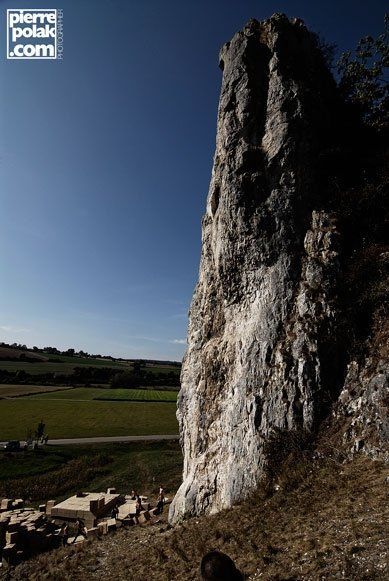
Side view of the Burgsteinfelsen in Dollnstein, Bavaria with the cardboard box landing stack beginning to build at the lower left

Gravity isn’t a suggestion. It is a debt collector. It collects every single time, and it accepts only one currency: physics. If you shortchange the math, it takes the difference out of your bones.


In 2009, a stuntman named Ferdi Fischer stood at the bottom of a limestone quarry in Dollnstein, Bavaria, looking up at a jagged scar of rock called the Burgsteinfelsen. To a tourist, that cliff is a view. To Ferdi, it was a math problem that he had to solve with his body.


The height was 45 meters. That’s 150 feet.

The mission was ostensibly for TV—a "Fake Check" segment for ProSieben’s Galileo to prove if a high-fall into cardboard boxes was possible from world-record heights.


But Ferdi didn’t do this for the fame, and he sure as hell didn’t do it for the money. The production didn’t pay him a fee. They didn’t even pay for lunch. He did it because the internet called him a liar, and to a professional, doubt is an insult to the craft.

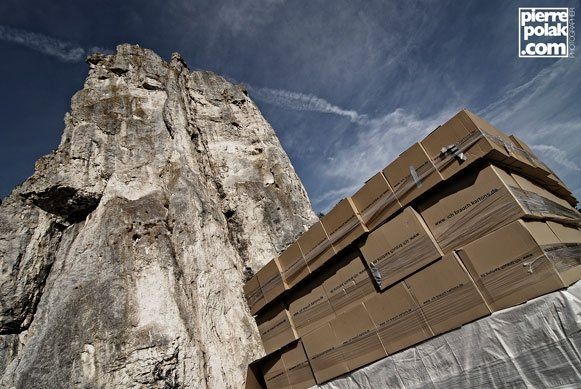
Low-angle view from the box catcher build, looking up at the Burgsteinfelsen in Dollnstein, Bavaria as the cardboard box landing stack takes shape

But standing at the bottom of that quarry, the physics were already turning hostile.

See, this wasn't just a drop. A drop is passive. This was a gainer. A backward gainer. You don’t just step off; you have to jump up to initiate the rotation away from the rock face. That upward trajectory adds time. It adds height. It adds potential energy.


When you do the calculus on a 45-meter gainer, you realize that by the time the body hits the deck, it’s traveling at nearly 107 kilometers an hour (66 mph). At that speed, the ground doesn't just break you; it liquifies you.


The plan was engineering: Build a "deceleration matrix" out of 2,000 cardboard boxes. Specific size, specific density. You stack them in a matrix that creates a progressive braking system. The top layer grabs you, the middle layer absorbs the violence, and the bottom layer tells your brain you’re still alive.

Or it was the plan, until the delivery trucks backed in.


The air brakes hissed—the sound of a disaster arriving.

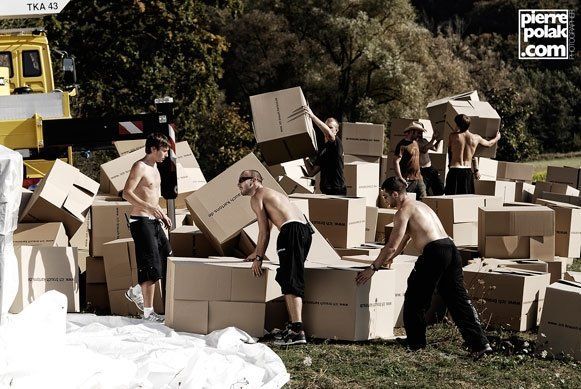
Ferdi opened the back of the truck. In this line of work, precision is the only thing that keeps you out of a wheelchair. If you order 2,000 uniform boxes, you need 2,000 uniform boxes.


What he saw was a garage sale.

He had maybe 800 of the correct size. The rest? A chaotic mix of random garbage. Smaller boxes. Some of them went all the way down to tiny shoeboxes.


You cannot catch a human body traveling at highway speeds with shoeboxes. You catch a pair of Nikes with a shoebox. You catch a corpse with a shoebox.

Detailed infographic explaining Ferdi Fischer’s 45 meter 150 feet Burgsteinfelsen gainer into cardboard boxes, including fall speed, drift risk, jump-out distance, box catcher build, tarp sealed pneumatic hard deck, and key problems and outcome

The producers—the "Suits" with their clipboards and permits—they stood there looking at the mess, and they didn't see the problem. To them, cardboard is cardboard. They saw volume. They thought, "Pile it up, it’ll be soft."


But Ferdi saw the void. He knew that if you mix box sizes, you create uneven density. You create air pockets. If he hit a pocket of small boxes next to big ones, he wouldn't decelerate smoothly. He would torque. The kinetic energy would snap his neck. Or worse, he would punch right through the stack like a 180-pound bullet and hit the hard deck.

And the deck down there? That’s limestone. That’s the planet. The planet is undefeated. It has a record of about a hundred billion and zero against human bodies.


Ferdi cracked a Monster Energy. The can popped like a rifle bolt in the quiet quarry. He took a swig of that battery acid, and he just stared at the mess.

He was doing the recalculations in his head. He realized he had to narrow the landing zone. He had to build a "pyramid" in the center—a kill zone of perfect density, maybe two meters by three meters wide. That was the target.


From 150 feet up, a two-by-three-meter target looks like a postage stamp.

And here is where the math gets mean: Drift.

If he pushed off just 10 centimeters too far to the right at the top—a micro-muscle twitch—geometry amplifies that error over a 45-meter descent. By the time he reached the bottom, that 10 centimeters would become meters. He would miss the pyramid. He would hit the trash. He would die.


He looked at his team. These weren’t Hollywood union riggers with craft services and overtime. These were his boys. They worked with him at a bar called Waranga in Stuttgart. Ferdi wasn't the boss there; he was a runner. He was the guy hauling crates of glass, wiping down sticky tables, sweating through the shift until 4 a.m. Just hard, physical labor.


They looked at the pile of garbage cardboard. They looked at the slope of the terrain, which wasn't even flat. They looked at Ferdi.

One of them asked, "Do we scrub?"

Any sane man would say yes. Any man who loved his life more than his reputation would say yes.


Ferdi finished the Monster. He crushed the can and tossed it.

He said, "We don't scrub. We build the pyramid. We put the good boxes in the center. We use the trash for the perimeter. We make it work."


It wasn't bravery. Bravery is for people who don't know the odds. This was arrogance. Beautiful, professional, suicidal arrogance.

He looked at the producer and said, "Start unloading. And don’t drop a single one. We need every inch of air we can steal."

And so they started building a coffin out of paper, hoping to God it would act like a feather bed.


Chapter 2: The Bureaucracy of Dying

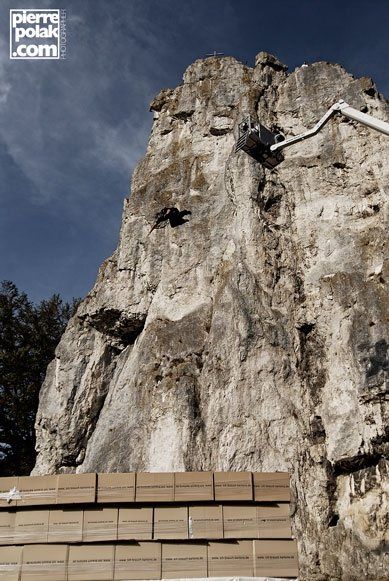
Ferdi Fischer test jump from a cherry picker crane about 15 meters into a half-built cardboard box catcher during setup at Burgsteinfelsen Dollnstein Bavaria

You’d think the hard part was the physics. You’d be wrong. Physics is honest. If you jump from 45 meters, you hit the ground at 100 kilometers an hour. That’s a contract. It doesn’t change because it’s lunchtime or because some suit forgot to file a permit.

The hard part is the people who think they can negotiate with reality.


So, the Waranga boys—the runners, the guys who usually haul crates of beer at 3 a.m.—they were out there in the quarry, sweating through their shirts, taping boxes. Thousands of them. They were building a pyramid of paper in the dirt.


And let’s be clear about the working conditions: There was no catering truck. No craft services table with sliced fruit and iced lattes. The production—this big, fancy TV network gig—didn't even spring for sandwiches. They didn't pay for water. The crew was running on adrenaline and whatever gas station snacks they brought themselves.


They built the landing zone. They compensated for the slope of the ground, which was uneven, forcing them to engineer a foundation out of trash boxes just to get a level surface for the kill zone.


Ferdi went up in a cherry picker. They needed a test. A proof of life before the main event. He dropped from 10 meters. Whump. He climbed out. He dropped from 20. Whump.

The boxes held. The math was working.

For a second, you think, "Okay. We got this. We might actually pull off this suicide pact."


And that’s when the SUVs showed up.

Low-angle 45 degree shot showing the Burgsteinfelsen in Dollnstein on the left and the nearly finished cardboard box catcher on the right before the 45 meter jump

It wasn't the cops. It was worse. It was the Umweltschutzbehörde. The Environmental Authority.


Some guy with a clipboard and a government badge stepped out and said, "Stop." He claimed the stunt was disturbing the nesting patterns of some falcon that probably hasn't been seen in that quarry since the Bronze Age.


Now, a producer—the Suit—is supposed to handle this. That’s his one job. He’s supposed to have the permits, the permissions, the bribes, whatever it takes to keep the stage clear. But the Suit started stuttering. He started apologizing. He folded like a cheap lawn chair.

And then he did the worst thing you can do in a crisis: He hesitated.

He told the crew to stop building. He told Ferdi, "We have to move."

Move? Move where? You have two thousand cardboard boxes taped together in a specific geometric matrix on the side of a mountain. You can’t just put that in a backpack. The semi-trucks that brought them were gone.

But the Suit insisted. He said, "There’s another cliff. We’ll go scout it."


So they piled into cars. They left the boxes sitting there. And this is where the tragedy started to creep in. Because while they were driving around Bavaria looking for a magical second cliff that didn't exist, the sun was moving. And as the sun moves, the temperature drops.


And cardboard… cardboard is a sponge.

While Ferdi was sitting in the back of a car, wasting three hours of his life watching trees go by, those boxes were sitting in the quarry, breathing. They were sucking moisture out of the air. It’s called hygroscopy.


See, paper fibers are thirsty. As the air cools, the dew point rises. The relative humidity spikes. The cardboard absorbs that water at a microscopic level. The fibers swell. They lose their stiffness. They lose their structural integrity.

A dry box crushes progressively—it slows you down. A wet box just folds. It offers zero resistance.


Every minute they spent driving around looking for a phantom cliff, the deceleration curve of that landing zone was flattening. The safety margin was evaporating.

They drove for three hours. Three hours of burning daylight. They found nothing. Because of course they found nothing. You can’t just find a sheer 45-meter vertical drop with a flat landing zone accessible by semi-trucks on Google Maps.


They drove back. Defeated.

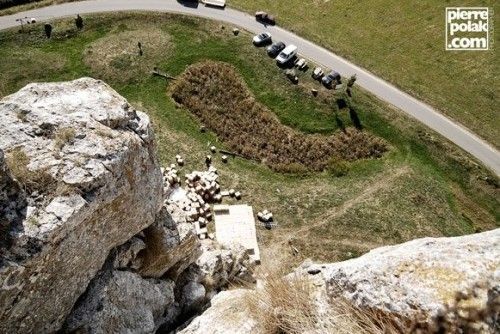
POV from the top of the Burgsteinfelsen looking down at the cardboard box catcher with tiny cars below showing the extreme 45 meter height in Dollnstein Bavaria

They pulled back into the quarry. The shadows were long now. The sun was already dipping behind the ridge. The light was turning that golden color that photographers love and stuntmen hate, because it means you’re running out of time.


The Suit was panicked. He was talking about scrubbing. He was talking about coming back tomorrow.

Ferdi looked at the boxes. He touched one. He could feel it. It was different than it was three hours ago. It was tired.


If they waited until tomorrow, the morning dew would finish the job. Those boxes would be mush. If he jumped tomorrow, he would punch through that stack like a 180-pound bullet and hit the limestone. He would die. It’s that simple.


Ferdi cracked another Monster. He looked at the Suit. He looked at the government guy.

He said, "We aren't coming back tomorrow. The boxes won’t last. We do it now."

He didn't ask. He told.


And then the next problem hit. The camera crew.

The production had hired a camera team. Supposed professionals. But when they looked up at the cliff—that jagged 45-meter tear in the sky—they turned green. They wouldn't go up there. They said it was too high. They said it was unsafe.


So now, Ferdi’s team—the barbacks, the runners, the guys who weren't getting paid a dime—they grabbed the cameras. They grabbed the GoPros. They ran the cables. They climbed to the top of the rock face to rig the angles because the "professionals" were too scared to do the job they were hired for.

Ferdi looked at his watch. The sun was gone from the valley floor. It was only hitting the top of the cliff now.


He looked at his boys. They were exhausted. They were hungry. They had been baking in the sun and now they were shivering in the shade. But they were ready. They nodded at him.

Ferdi walked to the base of the cliff. He looked up at the cross on the summit. It’s a long way up.


He started the climb.


Chapter 3: The Cross, The Coward, and The Silence

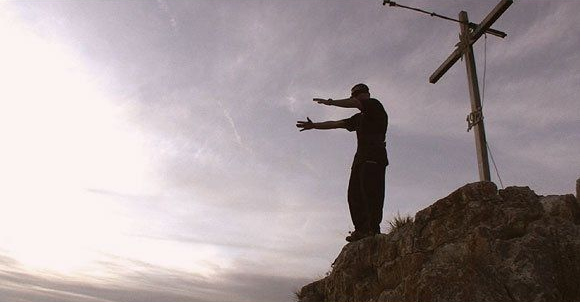
Ferdi Fischer standing seconds before the 45 meter Burgsteinfelsen gainer in Dollnstein Bavaria, positioned under the wooden cross at the cliff edge just before the jump

When you climb 150 feet of limestone, you aren't just gaining altitude. You’re leaving the world of opinions and entering the world of consequences.


Ferdi reached the summit. And up there, waiting for him, was a massive wooden cross—a Gipfelkreuz. It’s a Bavarian tradition, a marker for the heavens. To a religious man, it’s a symbol of faith. To a stuntman about to do something this stupid, it looks a hell of a lot like a tombstone.


The sun was gone from the valley floor. We were in the "Lethal Hour"—that gray twilight where depth perception dies and shadows lie to you.


Down on the ground, the production had set up their "Ace." They hired a specialist High-Speed Camera Operator. An older guy. A supposed "Pro." He had a Phantom camera capable of shooting 1,000 frames per second. His one job—his only job—was to capture the crush. The production needed to see those boxes compress under the impact to prove the physics worked. Ferdi was risking his life to provide that footage. All the guy had to do was pan down.


But up on the rock, Ferdi was alone with his team. Why? Because the network’s camera crew was too scared to make the climb. They froze. So Ferdi’s boys—the runners, the bartenders, the guys earning zero dollars an hour—they strapped in. They rigged the GoPros. They hung off that cross to get the angle.


Ferdi stood on the edge. He looked down.

From 45 meters, that 2-by-3-meter "pyramid" of safety in the center of the boxes looked like a postage stamp.

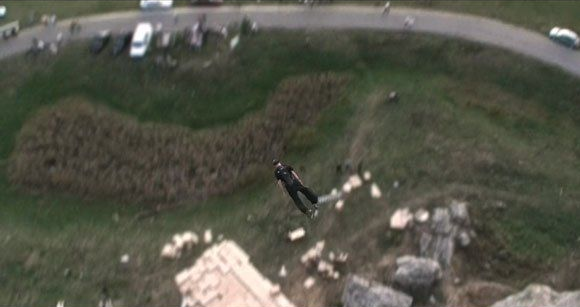
Top-down shot of Ferdi Fischer mid-air halfway through the 45 meter free fall, descending toward the cardboard box catcher at Burgsteinfelsen Dollnstein Bavaria

And here is the cold, hard calculus of a gainer: You don't just fall. You have to jump up. You have to drive your hips forward and launch your body away from the wall to initiate the backflip. That upward trajectory adds time. It adds height. It adds energy.


It meant he wasn't just dropping. He was accelerating for longer than a standard fall. He would be hitting that pile faster than the math on paper predicted.

And the drift? The drift is the executioner. If he pushed off ten centimeters too far to the right—just a twitch, a heartbeat of hesitation—geometry turns that ten centimeters at the top into three meters at the bottom.

Three meters to the right wasn't cardboard. It was rock.


Ferdi didn't wait for a director to call "Action." Directors don't pay the price for a mistake. He checked the wind. He checked the boys.


He said, "Go."


He launched.


He flew up into the darkening sky. The rotation was clean. The air rushed past. The ground rushed up at 66 miles an hour.


BOOM.


All Six Camera Angles Uncut in Real Time


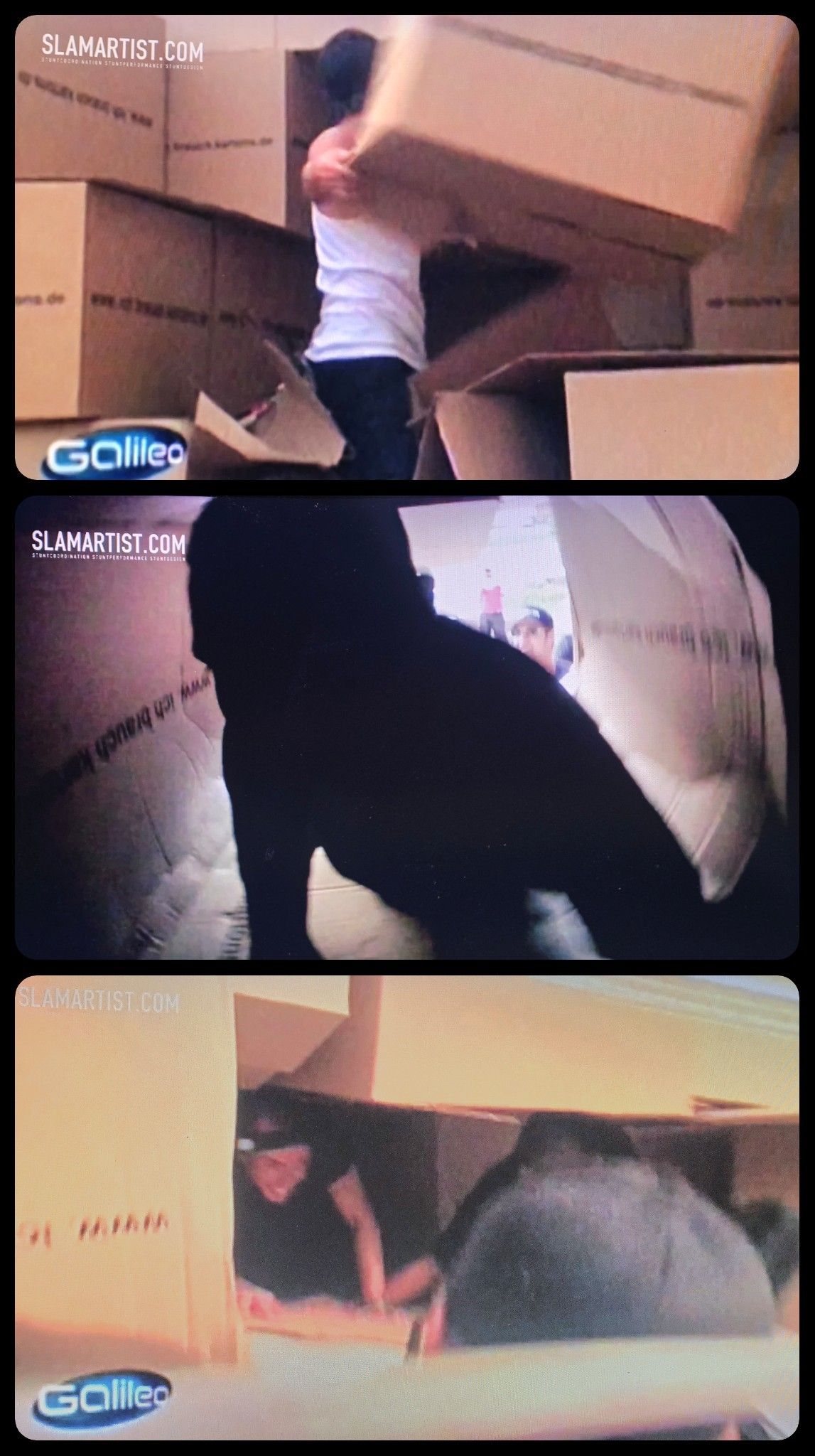
Triple split screen showing the SlamArtist stunt team frantically digging through the cardboard boxes from the side to reach Ferdi Fischer after the 45 meter Burgsteinfelsen jump

And then... darkness.


Ferdi punched through the top layer. He punched through the middle layer. He hit the "Hard Deck"—that bottom layer wrapped in heavy tarp designed to trap air like a pneumatic tire. He hit it so hard he dented it.

And then, the world went silent.


See, corrugated cardboard is an acoustic insulator. It eats sound. Inside that hole, buried under tons of paper, it was pitch black and dead silent. Ferdi was screaming to let them know he was alive—you can see his mouth moving on the onboard camera later—but no sound got out.


He was alive. But he was trapped in a coffin of his own making, waiting for the lights to come back on.

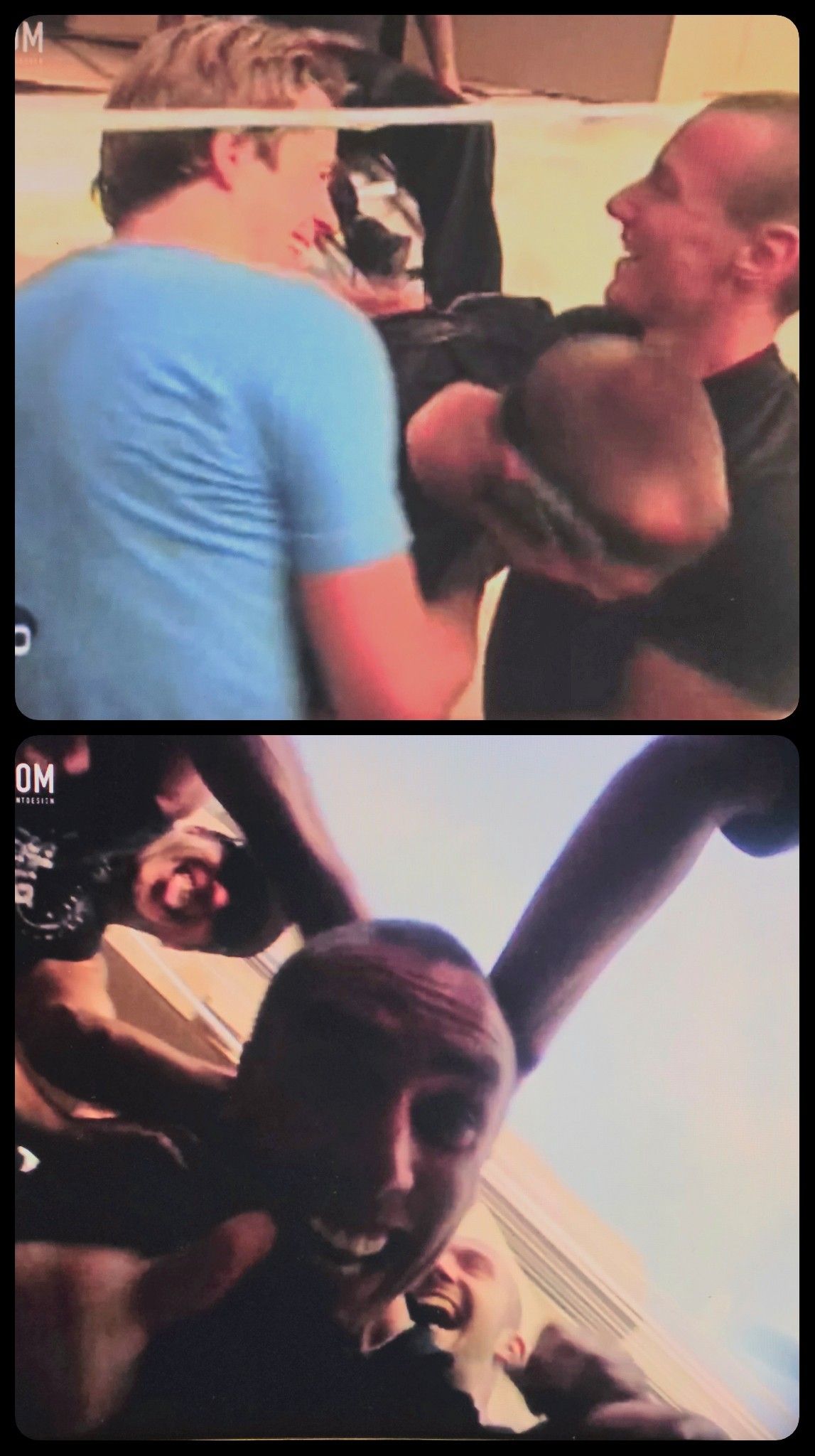
Outside, the crew was frantic. They didn't know if they were digging for a friend or a body. They were tearing at the boxes, throwing them aside, tunneling into the mountain of trash. One minute. Two minutes. Three minutes.


Finally, they broke through. Light hit the bottom of the hole.

And the first thing they saw was Ferdi’s face.

And lying right there, resting gently on his nose, were the soles of his own shoes.

The impact was so violent—the deceleration so sudden—that physics had ripped his shoes clean off his feet, laces and all, and slapped them into his face. For a split second, his friends froze. They thought his legs had been snapped backward and folded over his head. They thought they were looking at a pretzel made of meat and bone.

Split screen of two angles showing the SlamArtist stunt team pulling stuntman Ferdi Fischer out of the cardboard box catcher after the 45 meter Burgsteinfelsen jump

But Ferdi blinked. He spit out paper dust. He grabbed his shoes.

He crawled out of that crater, battered, bruised, but whole.


He limped over to the High-Speed Operator. The "Pro."

Ferdi said, "Show me. Show me the crush."

The guy played back the footage.


It was perfect... until the end. The camera followed Ferdi down, beautiful and sharp. And then, right as Ferdi hit the boxes—the operator froze. He stopped panning.

The frame locked on the top of the stack.

Ferdi fell out of the shot. The impact, the crush, the compression, the entire scientific proof of the stunt—it happened off-camera.

The guy flinched. He missed it.


Ferdi didn't scream. He didn't punch him. He just realized the truth: The amateurs on the cliff did their job. The professional on the ground failed.


ProSieben didn't pay him a dime for the stunt. They paid for the boxes, some equipment, and gas money, but absolutely no fee for the jump itself. They didn't pay for lunch. They blocked the video worldwide to stop him from using it. They tried to bury the achievement just like those boxes tried to bury him.


But they couldn't.


Because the Waranga boys, the friends, the team—they beat the bureaucracy, they beat the sunset, and they beat the gravity.


Ferdi walked away with his shoes in his hand and a lesson in his gut:

Trust the people who sweat with you. Fuck the people who just sign the checks.


And never, ever trust a producer to understand physics.


(FADE TO BLACK)

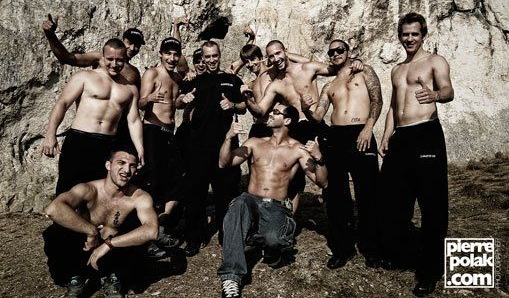
Team photo after completing the 45 meter Burgsteinfelsen stunt in Dollnstein Bavaria with everyone giving thumbs up in front of the cliff
Action Director Ferdi Fischer with stunt team on Jawan set, using WarpCam® prototypes and FPV drone
By slamartist January 27, 2026
Indian press covered Jawan BTS featuring Ferdi Fischer and the WarpCam® ecosystem: WarpCam® prototypes, WarpSpeed® FPV drone shots, Mumbai and Aurangabad.
HyperWarpCam® operated by SlamArtist.com on set, showcasing pole-mounted high-speed action
By slamartist January 20, 2026
SlamArtist.com introduces HyperWarpCam®, a high-speed pole-mounted cinematic system engineered for ultra slow-motion action filming in real stunt environments.
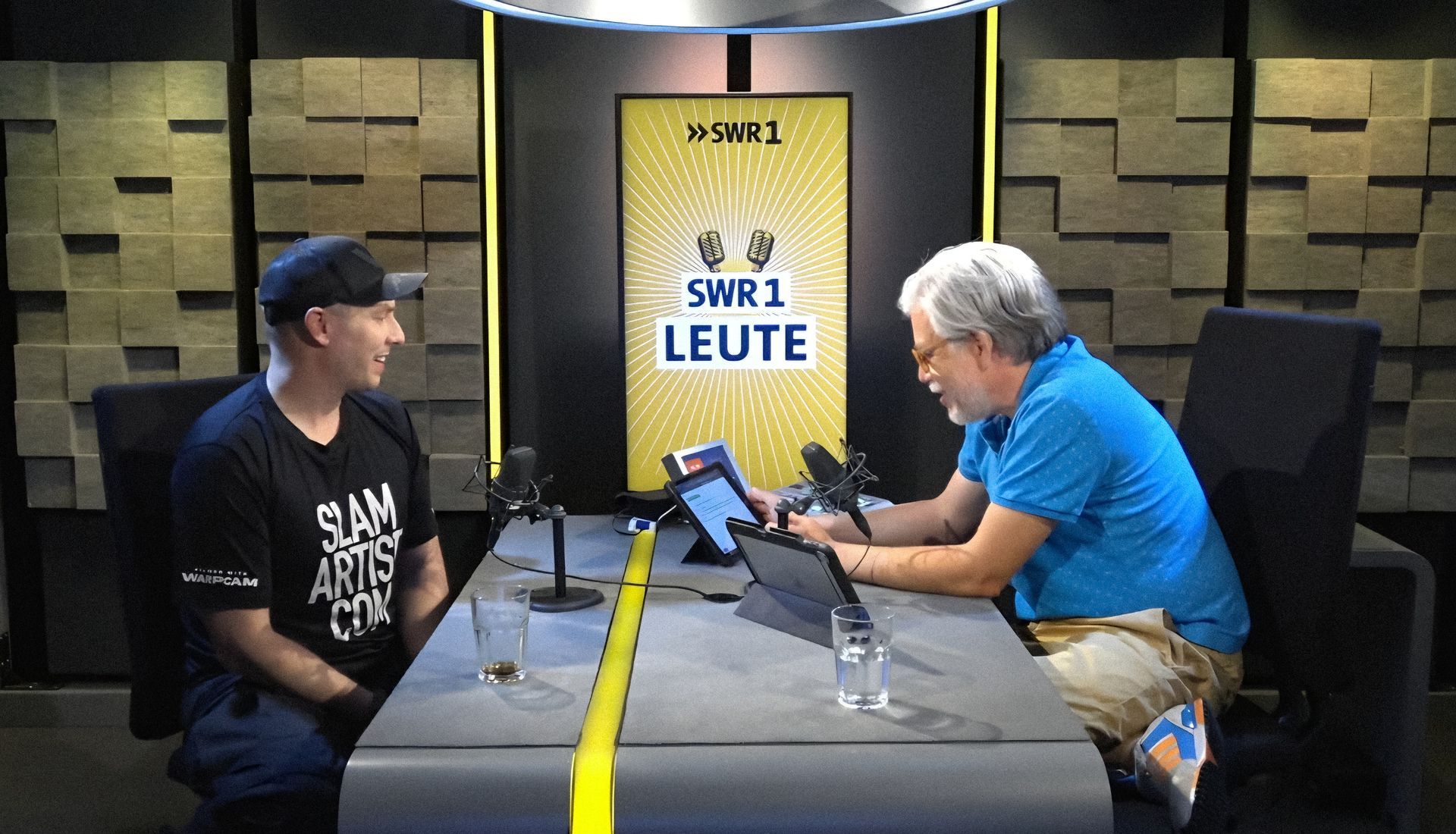
Ferdi Fischer and Jens Wolters in the SWR1 studio, during the SWR1 Leute interview recording
By slamartist December 15, 2025
Long-form SWR1 Leute interview with Ferdi Fischer on stunt work and Hollywood blockbusters. Watch the full video with English subtitles plus official ARD links.
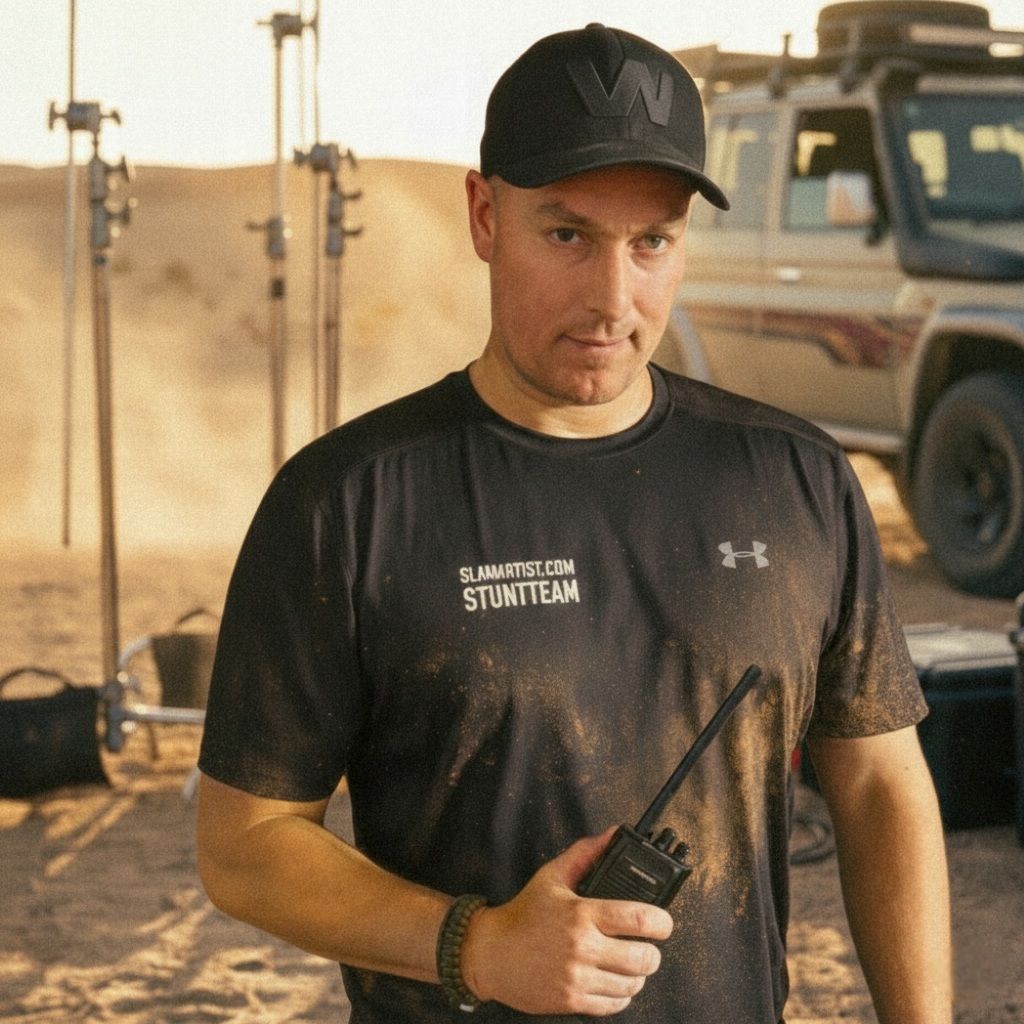
Ferdi Fischer sitting on a chair, holding a camera remote control for WarpCam®
By slamartist July 18, 2024
Ein Interview mit Ferdi Fischer
the oscar in shiny gold
By slamartist June 19, 2024
Interview with Ferdi Fischer on the Oscars Adding a Stunt Category: A Revolutionary Step for Action Filmmaking