Asphaltgorillas
Case Study · Action Direction
Ferdi Fischer · Action Director & Supervising Stunt Coordinator
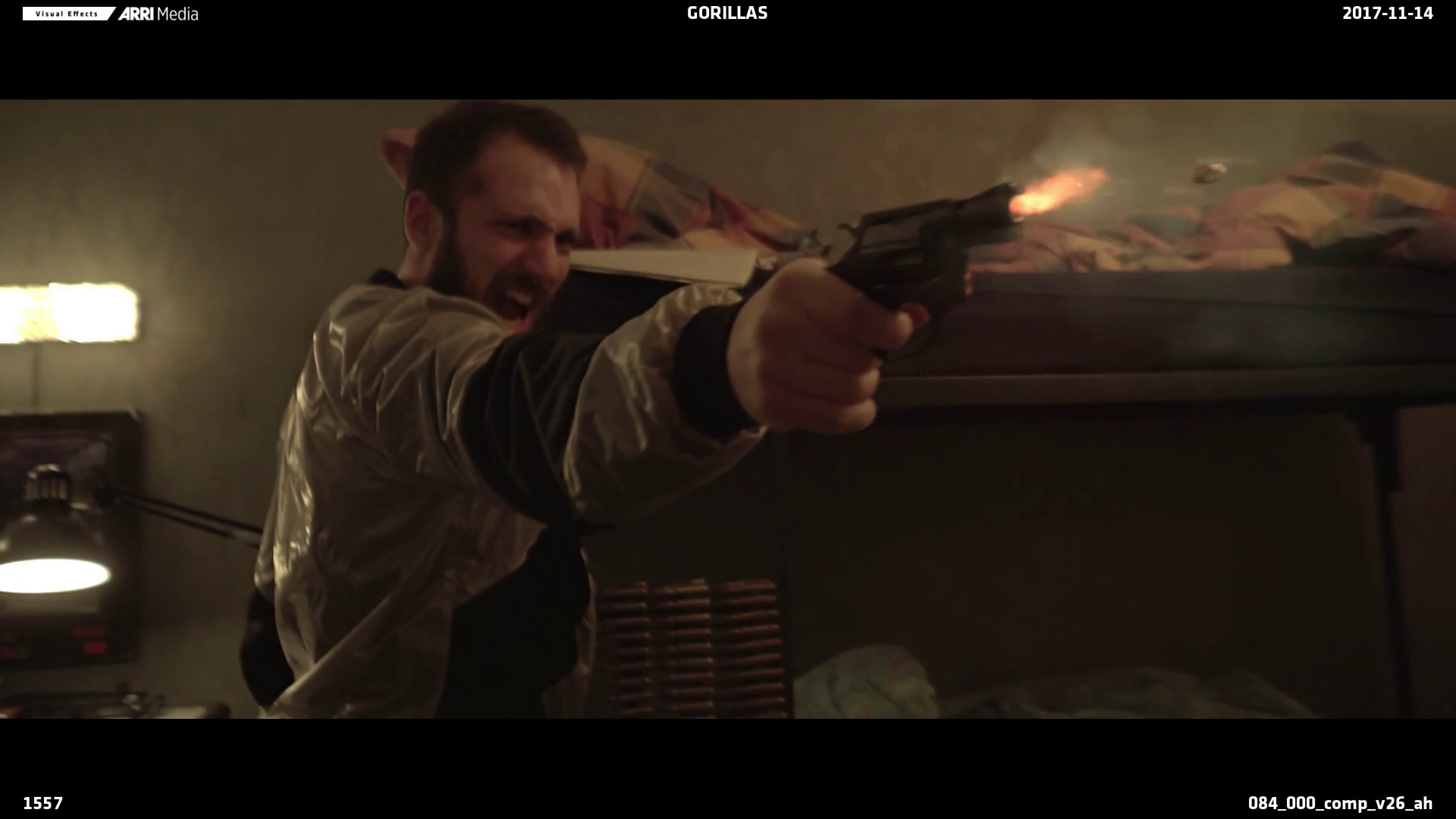
Two fights. Two opposing character intentions.
Stunt Design · Previs · WarpCam® · Creative control of action edits · Creative VFX Direction
The assassin demonstrates absolute control. Jannis Niewöhner’s character gives up control and meets his own defeat with arrogance. For Asphaltgorillas, I translated those opposing intentions into Stunt Design, space, movement and camera. Both fights were staged with WarpCam® and appear to unfold in a continuous movement. I carried their creative design through to the action edits and VFX development.
Constantin Film released Asphaltgorillas in German cinemas. This case study focuses on two sequences from my work across the entire film.
Action Direction across the film
As Action Director and Supervising Stunt Coordinator, I was responsible for the action throughout the film. The scope included precision driving and braking, Lamborghinis through Berlin, motorcycle riding and motorcycle doubles, chases, additional street fights and shootouts, safety measures and character training. Detlev Buck, the film’s director, trusted me to direct a full action unit of my own that could shoot independently of the main unit.
Scope: Action Direction · Supervising Stunt Coordination · Stunt Design · own fight and stunt team · Previs · actor and character training · vehicle action and safety measures · WarpCam® · creative control of action edits · creative VFX direction with ARRI Munich
The work brought together different kinds of movement and production requirements. The central question remained what the action says about a character: How do they assert themselves? When do they lose control? How do they behave under pressure?
The Stash House Fight and the Barfight make that approach particularly visible. Each has its own dramatic purpose, rhythm and relationship between performers and camera. Their design starts with character intention and continues through to the finished image.
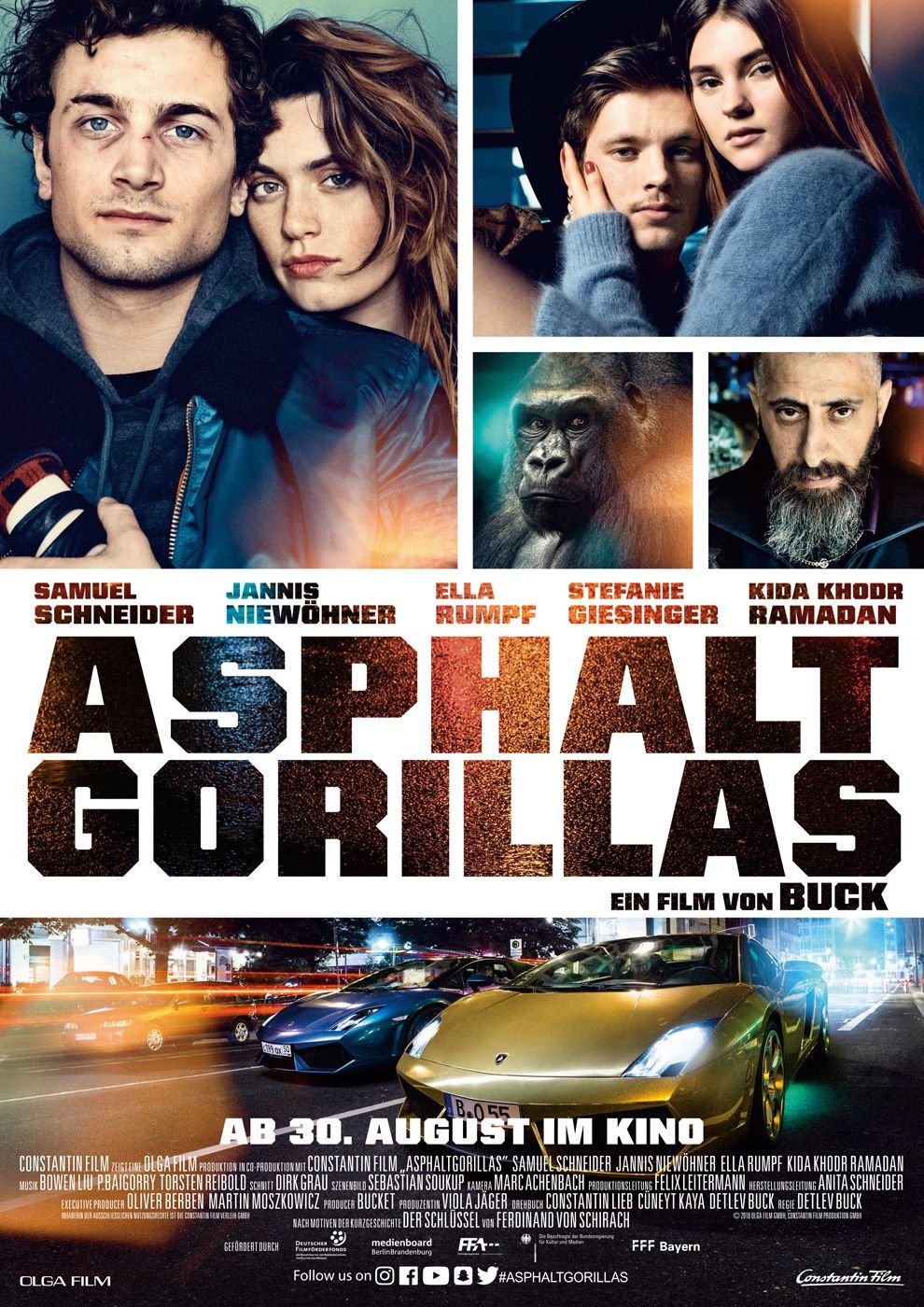 Original theatrical poster · Constantin Film
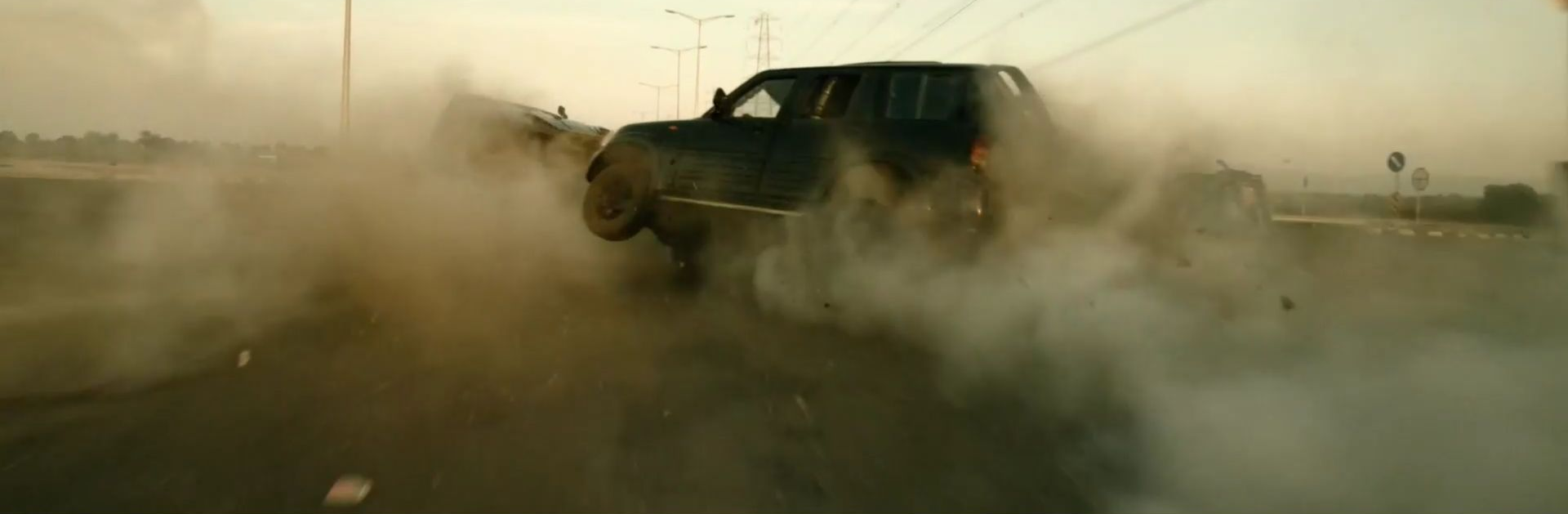
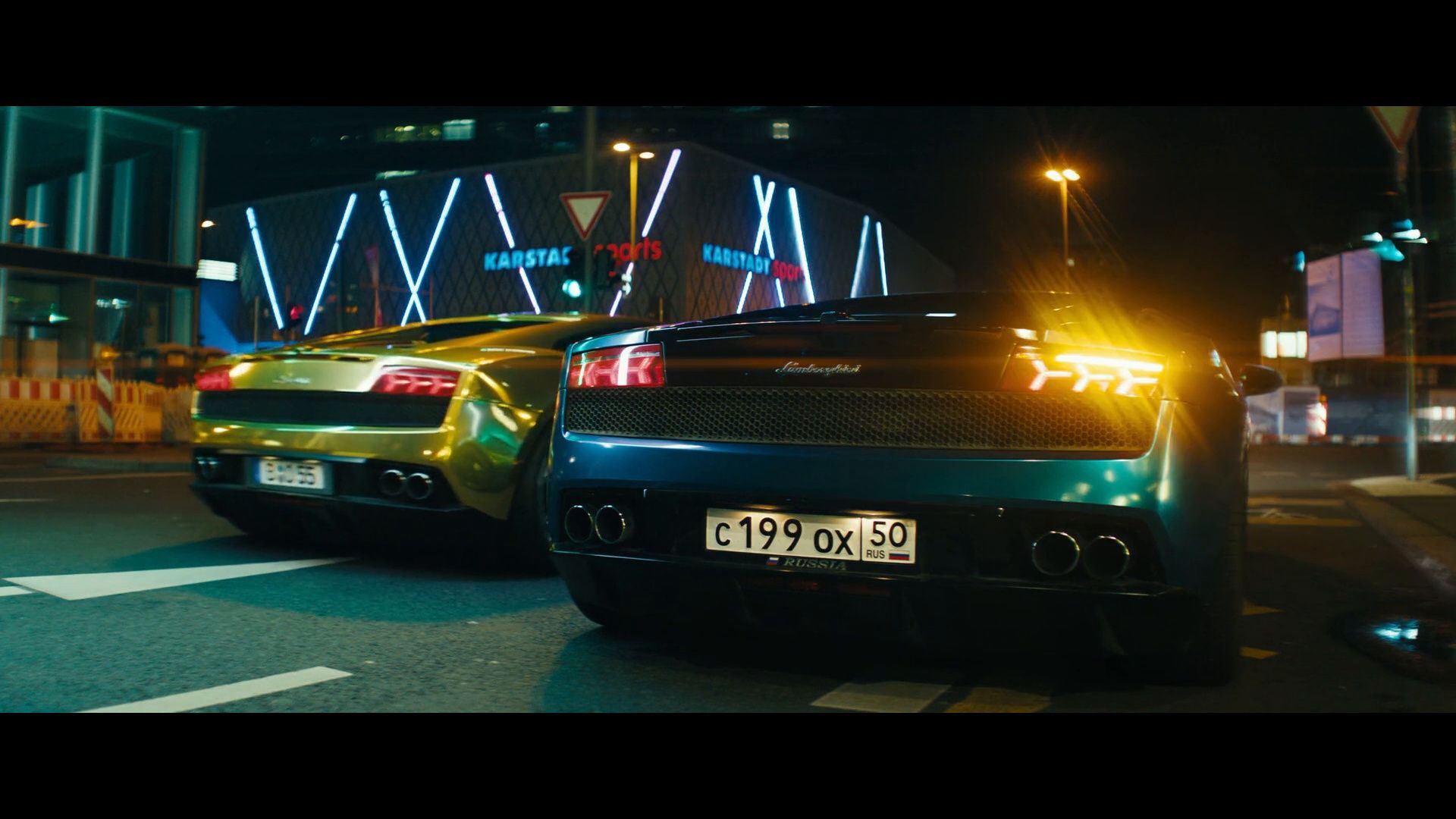 The Berlin night drive in the finished film.
Stash House: Establishing dominance
Detlev Buck wanted an extremely heightened, stylised sequence. The assassin from the Mongolian group had to appear superior, cold and completely competent. Her appearance midway through the story establishes a dominance that can later be communicated by her presence alone. The audience should believe in her superiority even when she barely needs to fight.
I was given an empty apartment. As Stunt Designer, I developed the spatial foundation of the scene: the functions of the bedroom and living room, the stash cabinet, and the positions of props and people. The space was organised around the action according to my specifications.
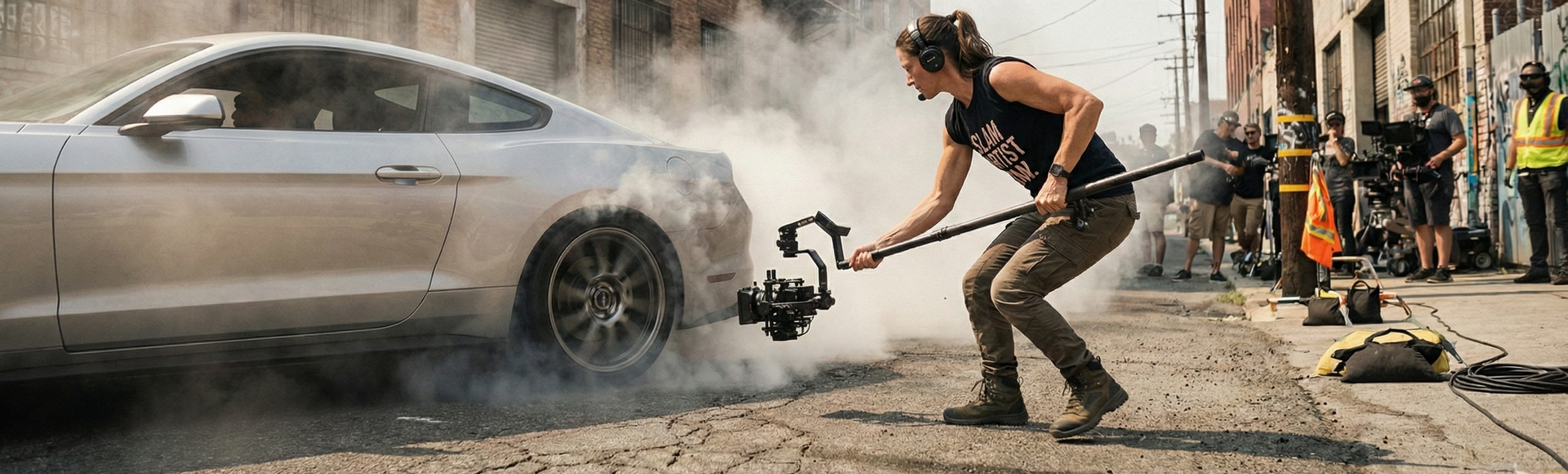
The route had to feel like a flying one-take through the apartment, almost as if a miniature drone were moving through it. It was shot with WarpCam®. The camera connects the rooms and actions into one flowing sequence. Its movement makes the assassin’s composure as tangible as her opponents’ agitation.
The core concept, structure and signature moves came from me, particularly the weapon action. My fight choreographer and my own team developed the transitions and movements within that structure, building the choreography around the scene’s intended effect.
We began with rehearsal hall sessions to develop the choreography. We then filmed the previs in the same original location while the apartment was still empty. We also prepared the actress for this precisely coordinated sequence. What we developed in preparation carries through into the finished film: the spatial layout, route and action all serve the same creative intention.
Barfight: Arrogance in defeat
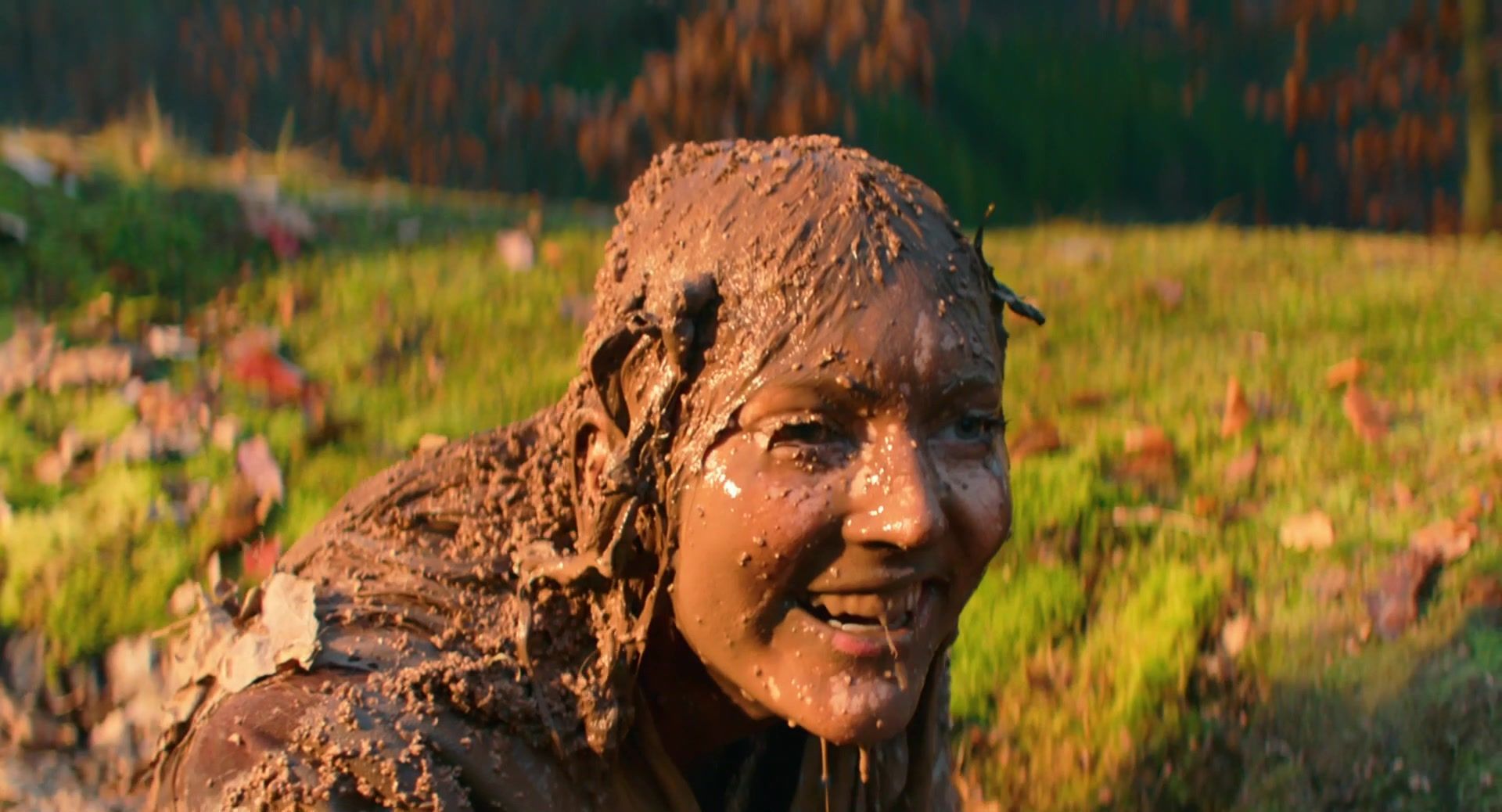
The Barfight moves in the opposite direction. Problems with love and money, together with the consequences of his own decisions, have accumulated around Jannis Niewöhner’s character. He gives up on himself. He seeks a confrontation in which he will be overwhelmed and wants to be beaten to death. Yet he laughs and remains arrogant in defeat.
I approached it as a stylised dance towards self-destruction. The opponents and other characters move within that dance as well. The fight follows the protagonist’s state of mind: he hands over control while continuing to provoke.
Music played on set. Both actors, the camera movement and the individual beats were coordinated with its rhythm. The location had been prepared through previs, and the actors had trained. The actors themselves performed the action and the table falls.
As Stunt Designer, I wanted the particular character of the bar to become part of the movement. One of my signature moments brings a pole dancer’s leg and high heel into the protagonist’s path. The impact breaks his movement and sends him crashing through a table. Dance, body, camera and space become a single cinematic action.
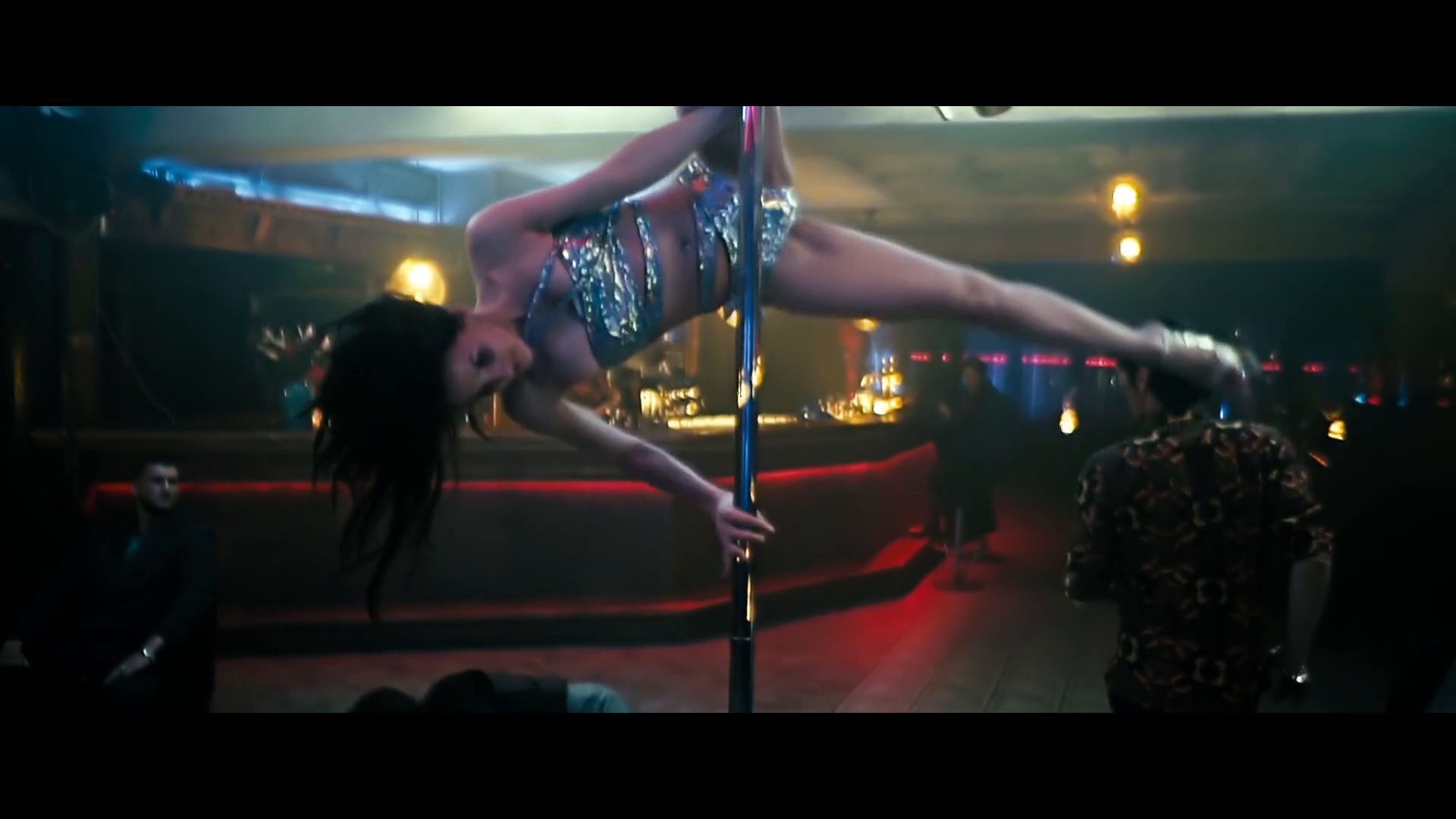 The Barfight in the finished film.
WarpCam® and editing: Creating continuity
Both fights were filmed with WarpCam®. Their apparently uninterrupted movement also relies on concealed wipe and morph cuts. Transitions between shots are embedded in the movement of the image, allowing each sequence to appear continuous.
I retained creative control of the action edits. That carried the rhythm, spatial clarity and impact of individual movements through to the finished sequences. Editing belongs to the same staging process as choreography and camera: it determines when movement becomes readable, how long a moment holds and how much energy leads into the next action.
VFX: Carrying the intention into the final image
In the Stash House Fight, the assassin throws a special Kunai Ninja Dart. WarpCam® follows the throw. Midway through the movement, extreme slow motion and a speed ramp reveal the object and its rotation. The movement then accelerates into a hard impact. The dart pins the opponent’s hand to the table as he reaches for his weapon. He reaches for a machete with his other arm. Her precise control of the distance makes the subsequent machete swing futile; she barely needs to evade it.
The live-action high-speed material had already been filmed. ARRI Munich had to match the CG object’s movement, timing and physical behaviour to the speed ramp in that footage. The work included the dart, blood on the hand and the sequence’s VFX.
I gave ARRI Munich precise creative instructions for that implementation. I reviewed the variants and guided the work through calls until the effect matched the intended action. The speed of the throw, the readability of the rotation and the transition into the impact had to work together. Those VFX decisions carried the staging I had developed through to the finished image.
My own fight and stunt team
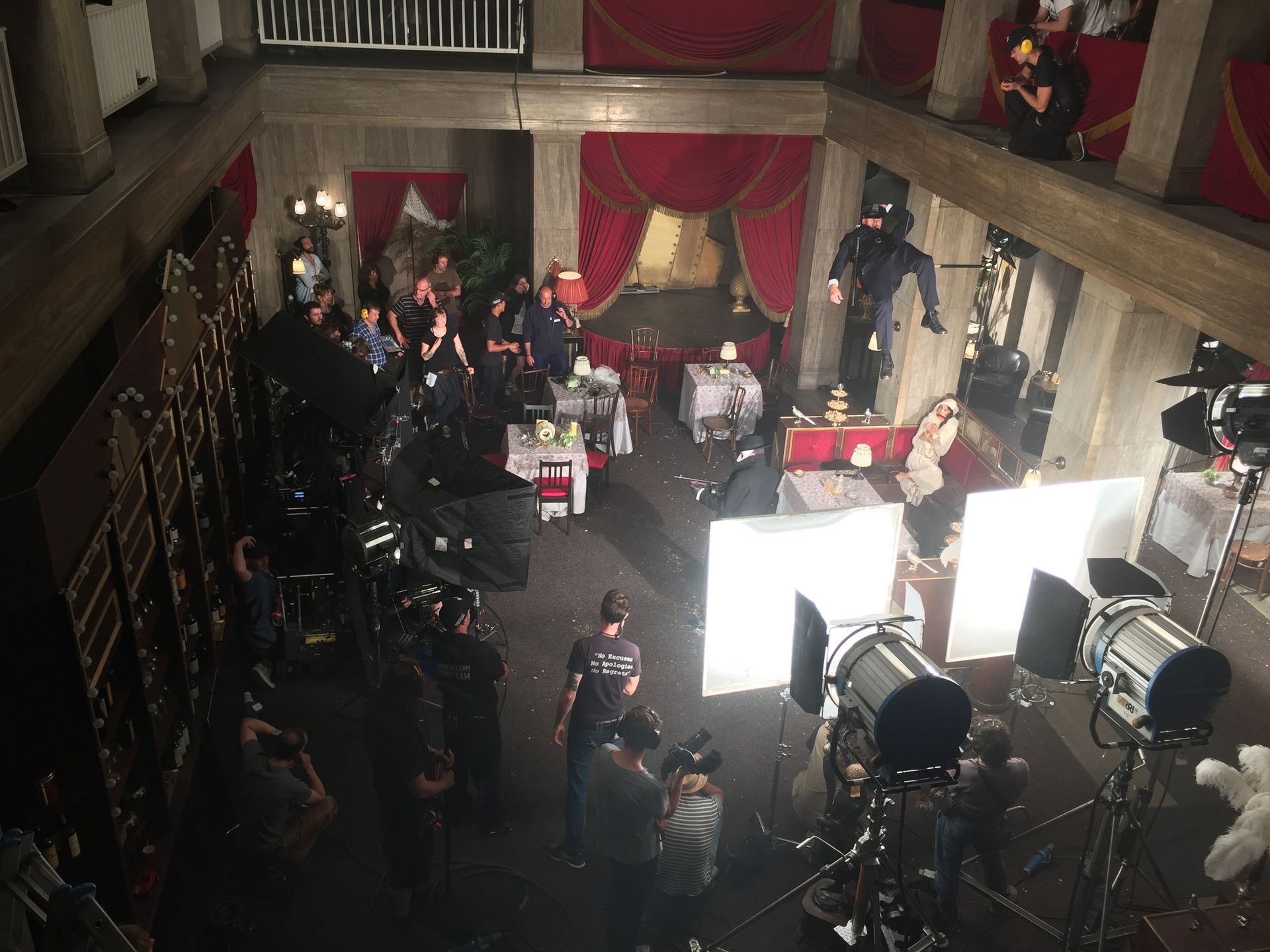
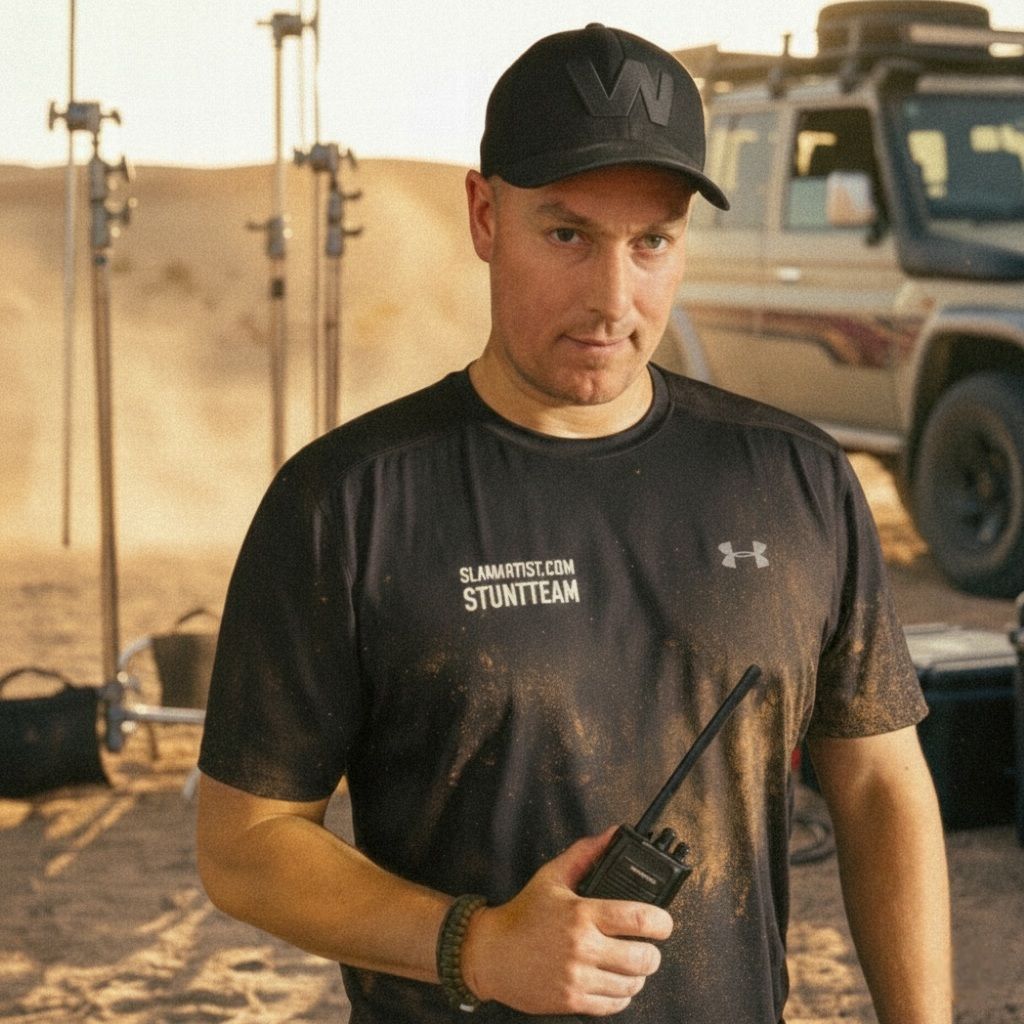
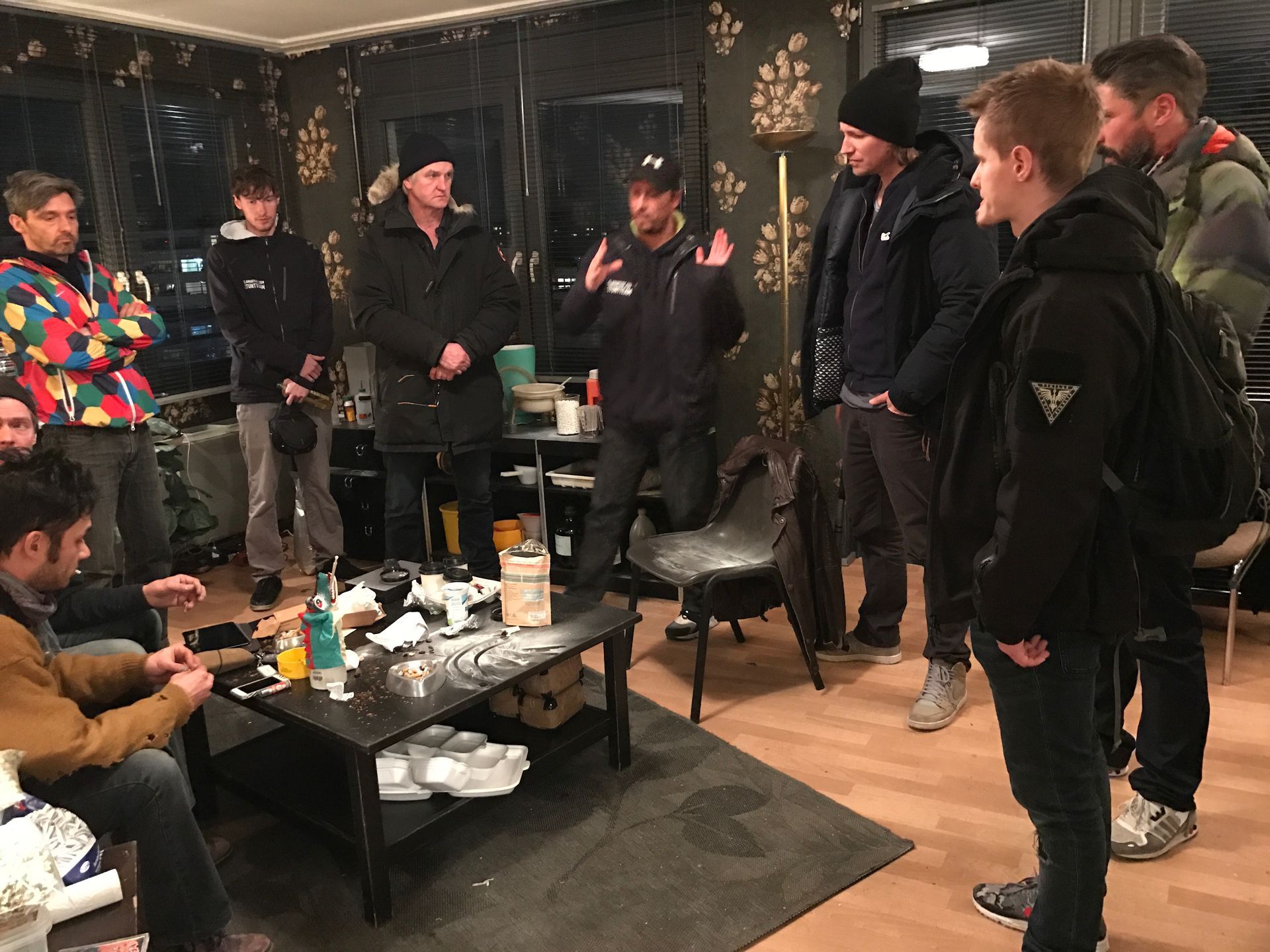 The team on the Stash House set.
I worked with my own fight and stunt team to deliver the action. My creative direction established the structure, spatial concept and signature moves. My fight choreographer and the team contributed the transitions, movement development and detailed choreography.
That collaboration is part of my Stunt Design: a clear creative direction, developed physically by a team. Previs, actor training and the shoot built on that shared foundation.
From character intention to the finished image
For producers, Asphaltgorillas demonstrates how I lead an action assignment. Character intention, spatial design, choreography, previs and actor training develop as part of one coherent staging process. WarpCam®, control of the action edits and creative VFX direction carry that process through to the final image.
The scope can be a single sequence or the action across an entire film. This project combined both: responsibility throughout the film and the detailed development of two fights that express their characters in entirely different ways.
Planning a film or a sequence with a clear dramatic purpose for its action? Let’s talk about the characters, the spaces and the images you want to create.
Official trailer (German audio)