Feature film · 2012 / 2013
Robin Hood
Pioneering Action Cinematography
Ferdi Fischer · Action Director · Stunt Coordinator · Fight Choreographer · Second Unit Director · Aerial Supervisor
2012. One of the most intense productions of my career. Early gimbal-stabilized drone cinematography, uncompromising action, specialist stunt technology — and twelve screws in my shinbone.
- Format / year
- Feature film · 2012 / 2013
- Ferdi Fischer
- Action Director · Stunt Coordinator · Fight Choreographer · Second Unit Director · Aerial Supervisor
- Creative responsibility
- Second unit, fight choreography and aerials
- Film director
- Martin Schreier
Director’s approach
Two distances from the same story
The overhead views give the city a scale the street-level camera cannot see. The moving camera in the descender sequence brings the audience back to a single body. Fischer directed both sides of that change in perspective, working with the action and aerial teams.
A production that demanded everything
Looking back at Martin Schreier's Robin Hood, I remember one of the most intense, demanding and emotional productions of my career. It was 2012, and many of the tools we now take for granted in action filmmaking did not yet exist in their present form. We had to rethink, develop and explore new approaches.
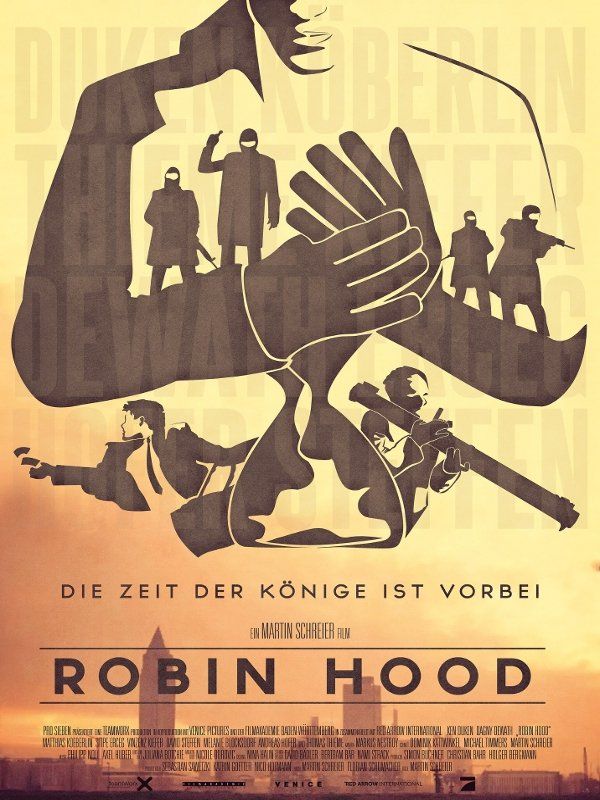
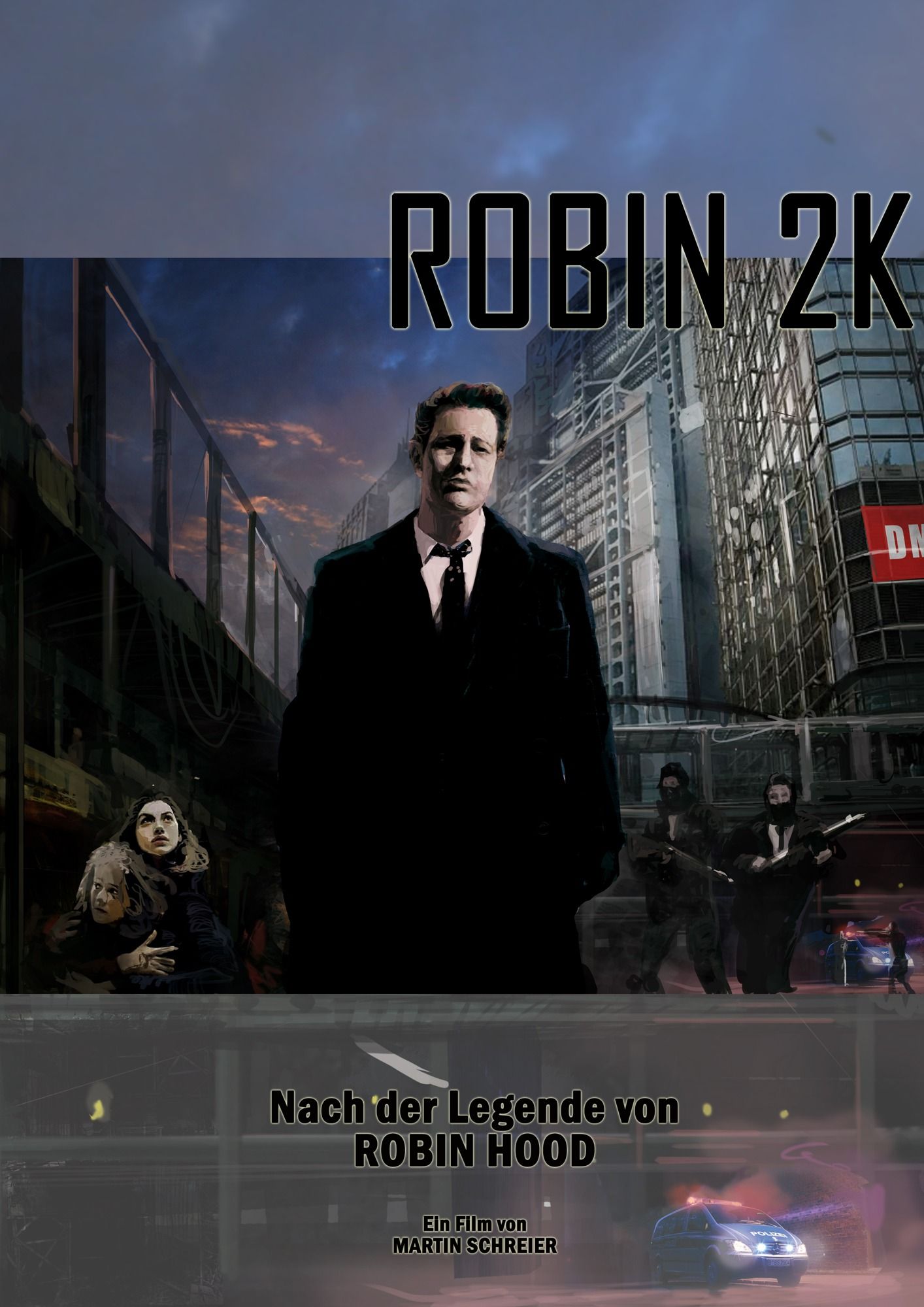
That was exactly what made the film so interesting to me. Martin brought the Robin Hood legend into contemporary Germany, with Ken Duken playing Alexander Scholl, a police officer confronting a powerful financial institution. The production brought together TeamWorx, Venice Pictures and the Filmakademie Baden-Württemberg. We shot in spring 2012; the film premiered at the Max Ophüls Preis festival in January 2013.
As Action Director and Stunt Coordinator, I was concerned not only with the physical action but also with the camera's role in it. How could we create perspectives the audience had not seen before? How could we make the movement itself tangible on screen, rather than simply recording an elaborate stunt from the outside?
On Robin Hood, we were able to explore several of these ideas on a substantial scale.
2012 — Among the world's pioneers of gimbal-stabilized drone cinematography
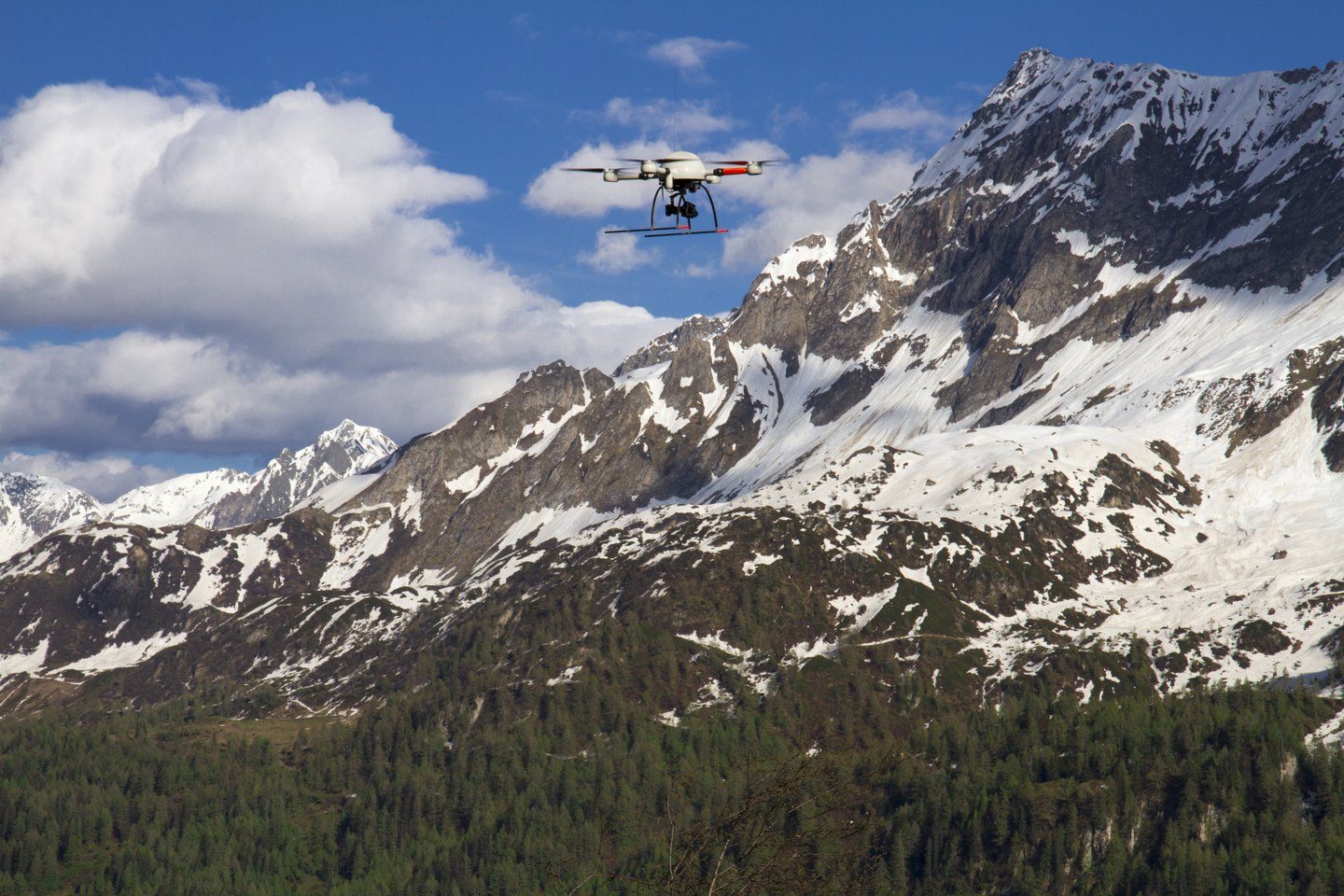
Our team was among the first in the world to use gimbal-stabilized drone cinematography in a film production. We worked with the Microdrones md4-1000, equipped with a camera gimbal system specifically developed by Microdrones. These were extremely expensive professional aircraft, from a completely different era of aerial filmmaking.
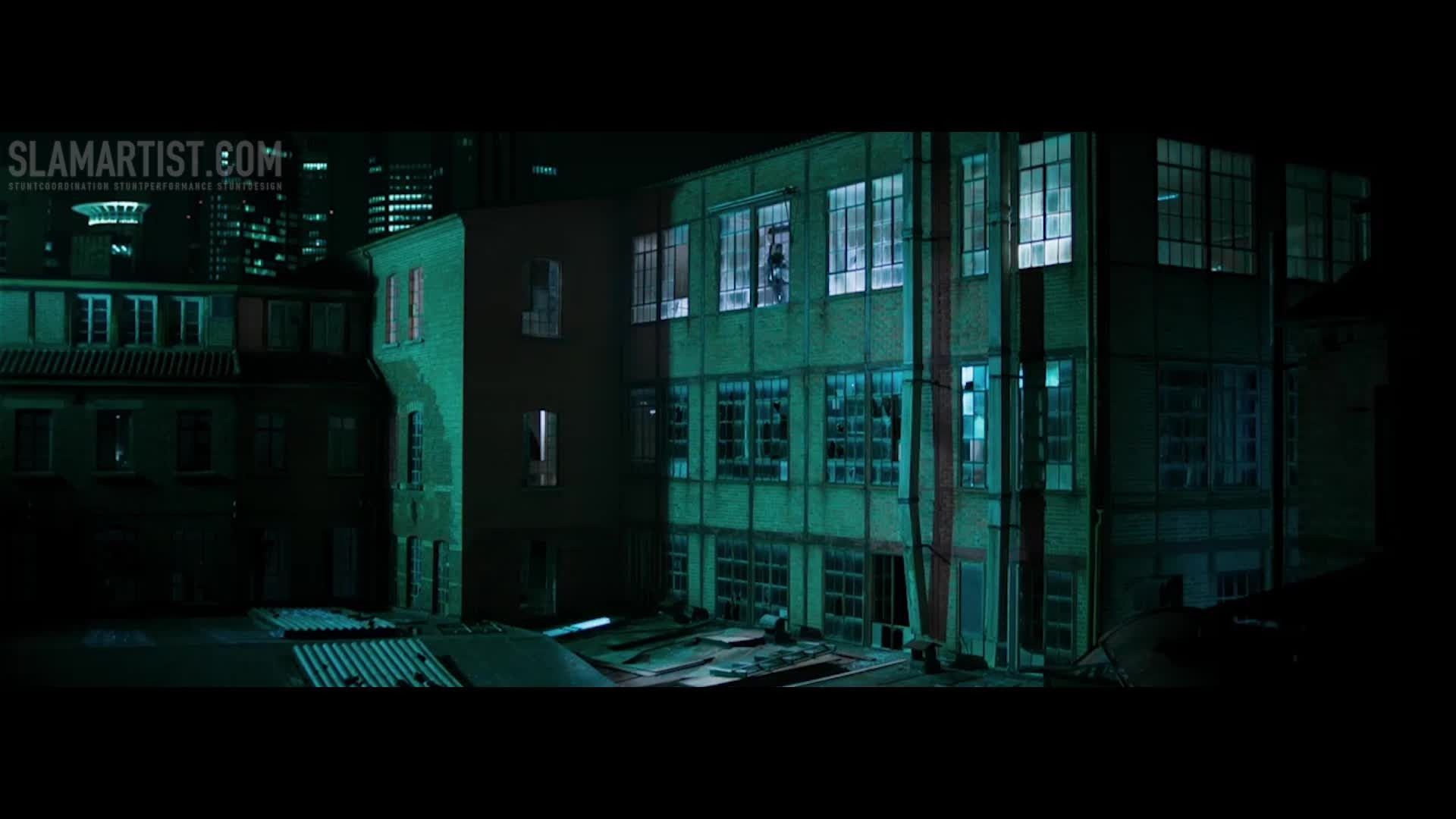
What fascinated us was the quality of those stabilized images. We could produce aerial perspectives with the visual character of helicopter shots. The overhead shots of the tannery, the street shots in Frankfurt and the aerial views throughout the film opened up a new visual dimension. We could reveal the scale of a location, establish spatial relationships and give the action a much broader cinematic context.
The additional production value was extraordinary at the time. Looking at the original footage and photographs now, it is striking how much of the technology we take for granted today was still pioneering work in 2012.
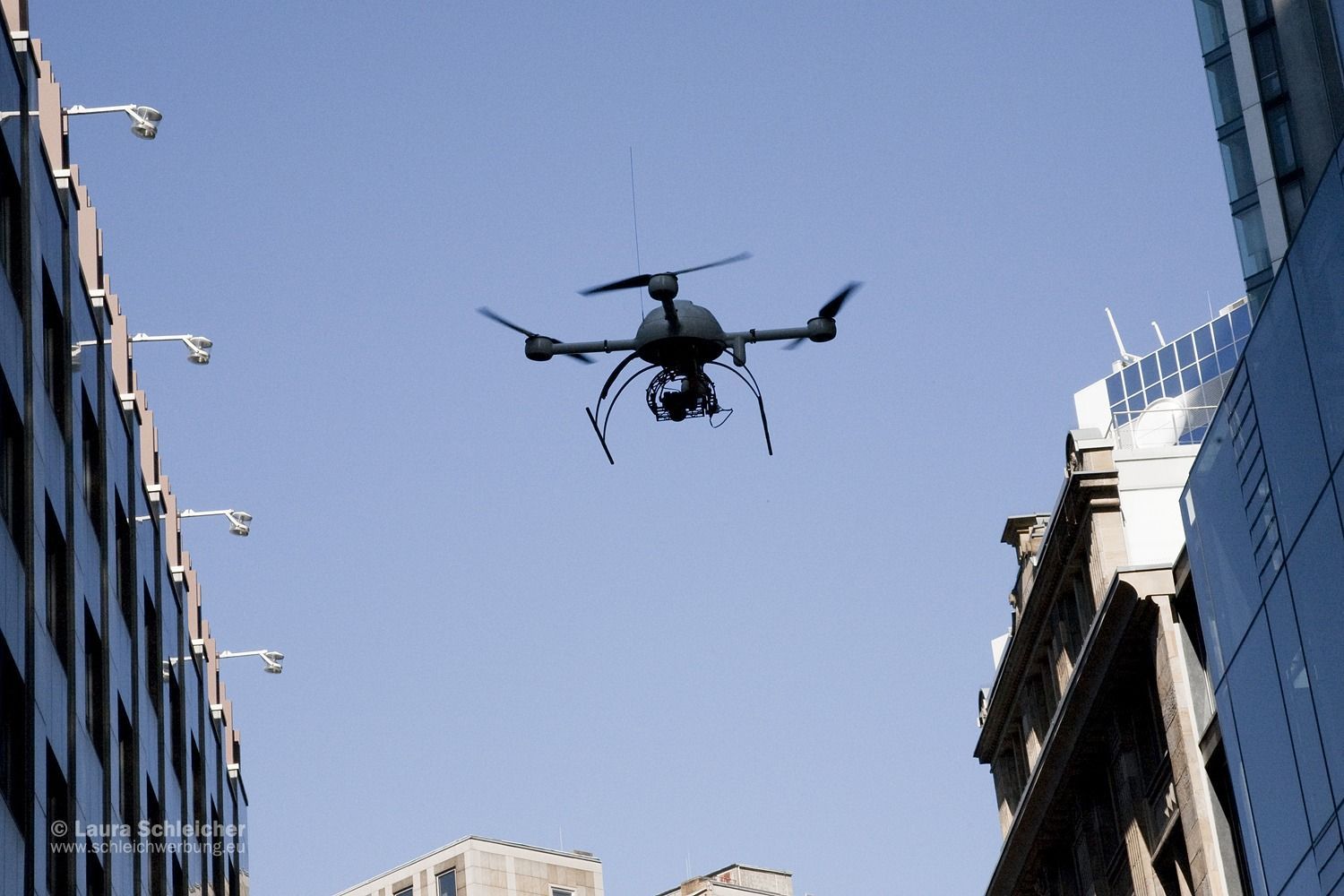
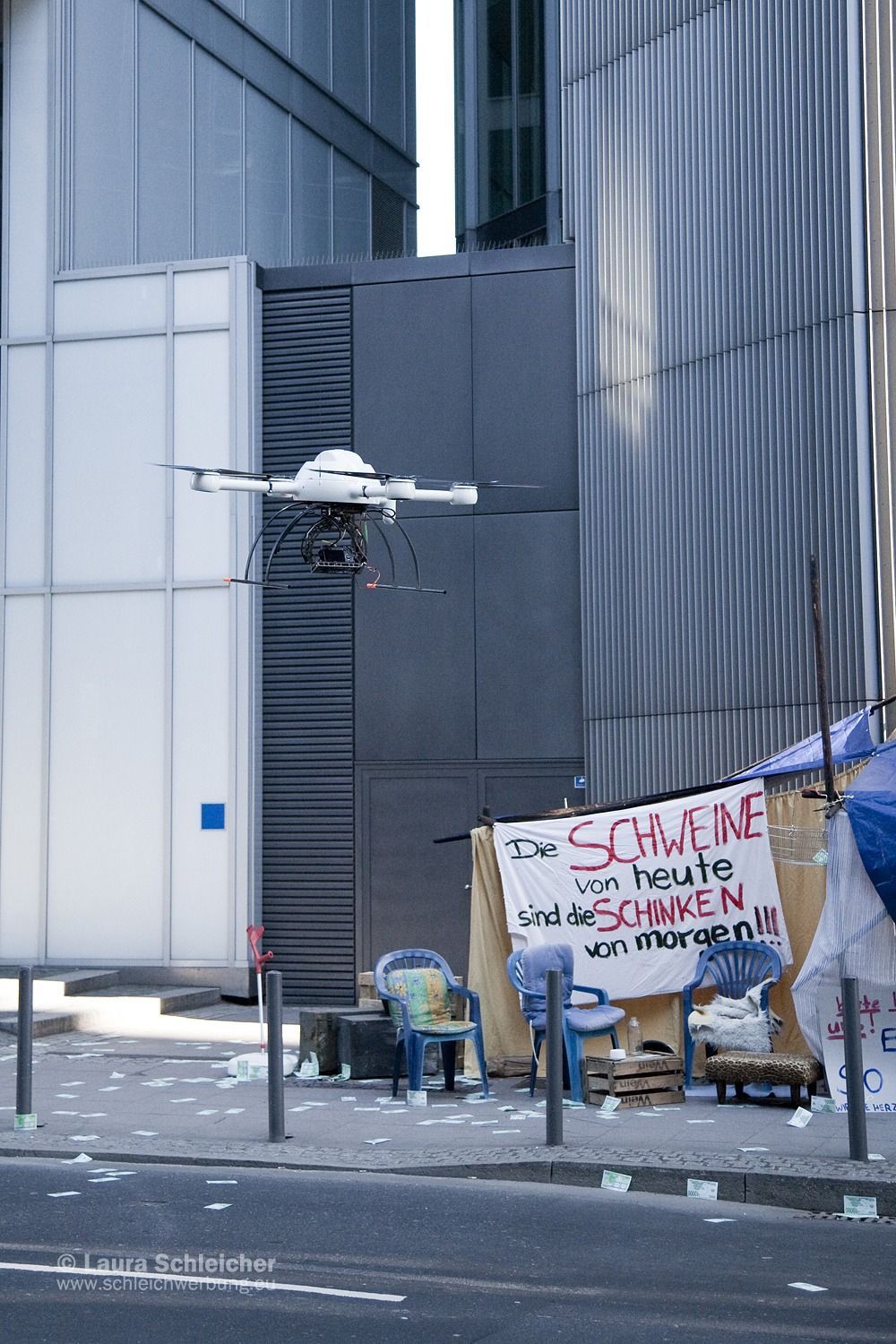
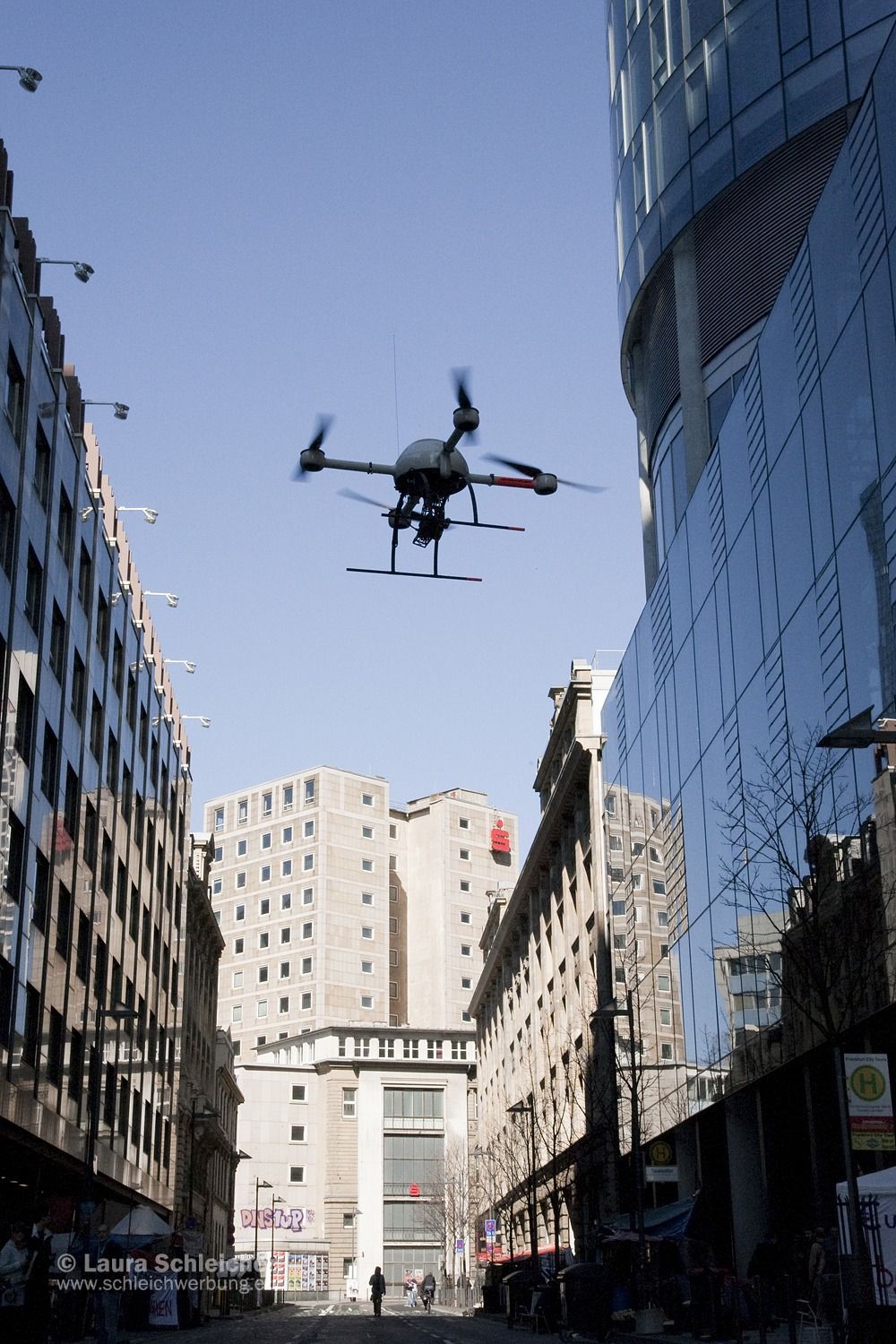
The collaboration grew into a long-term relationship. I went on to work as a brand ambassador for Microdrones over the following years, including further projects such as the 2013 Alps Crossing campaign.
A very special thank you to Sven Juerss, the founder and then managing director of Microdrones, and to Daniel Knoche and Tobias Matschke. Together, we were exploring genuinely new territory. My original credit submission from October 2012 lists me as Aerial Supervisor.
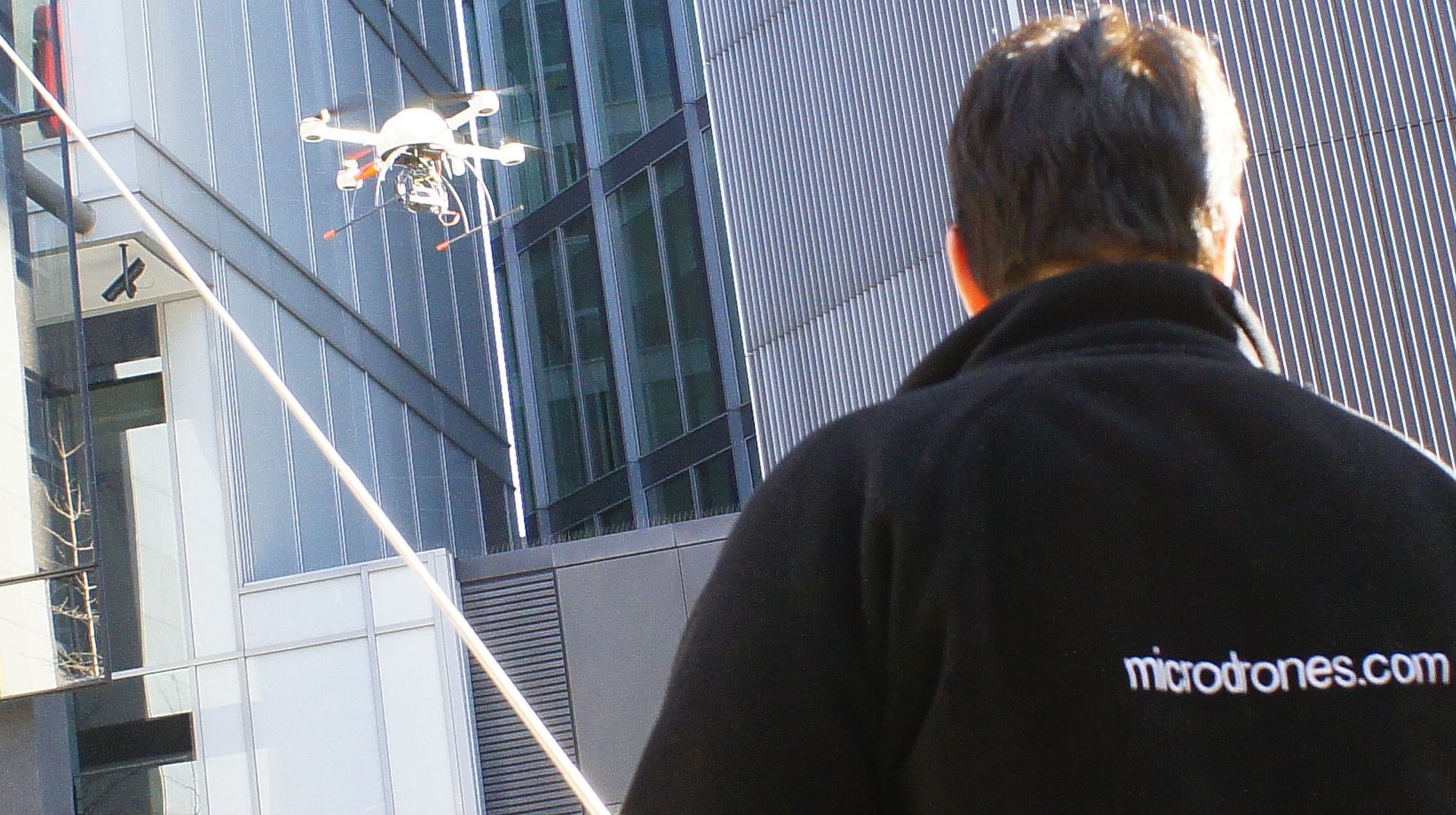
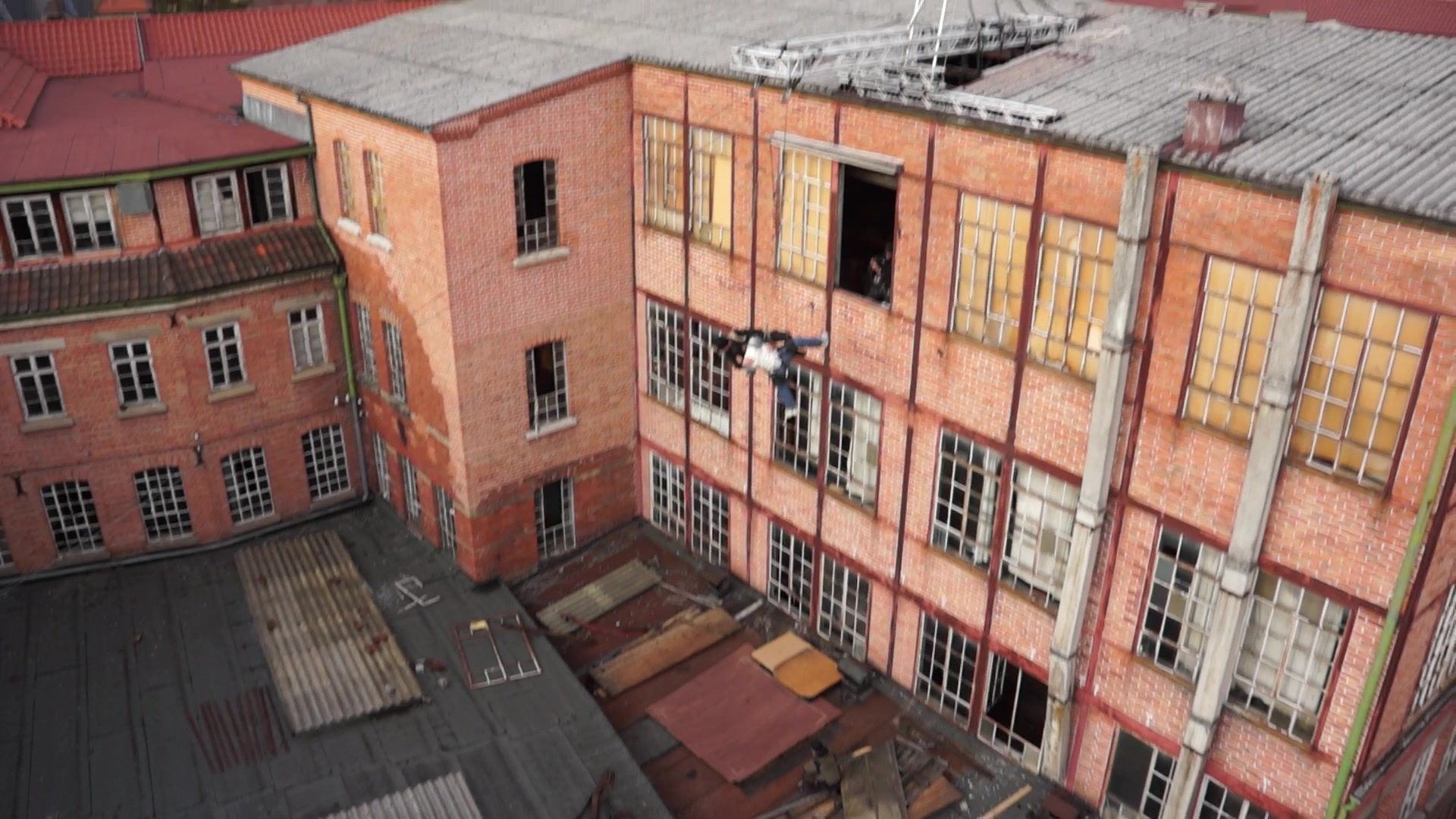
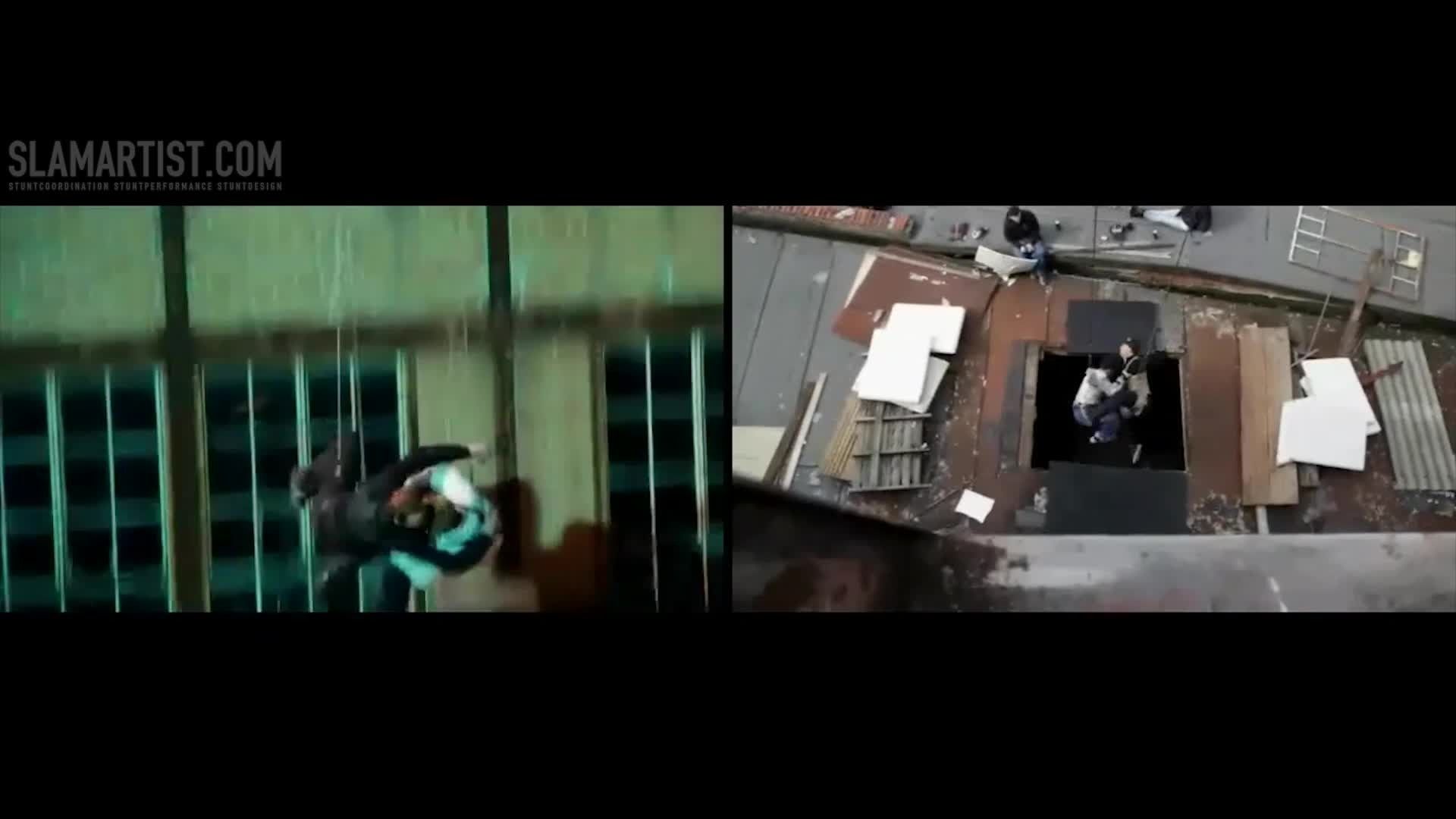
The Descender Shot — when the camera becomes part of the action
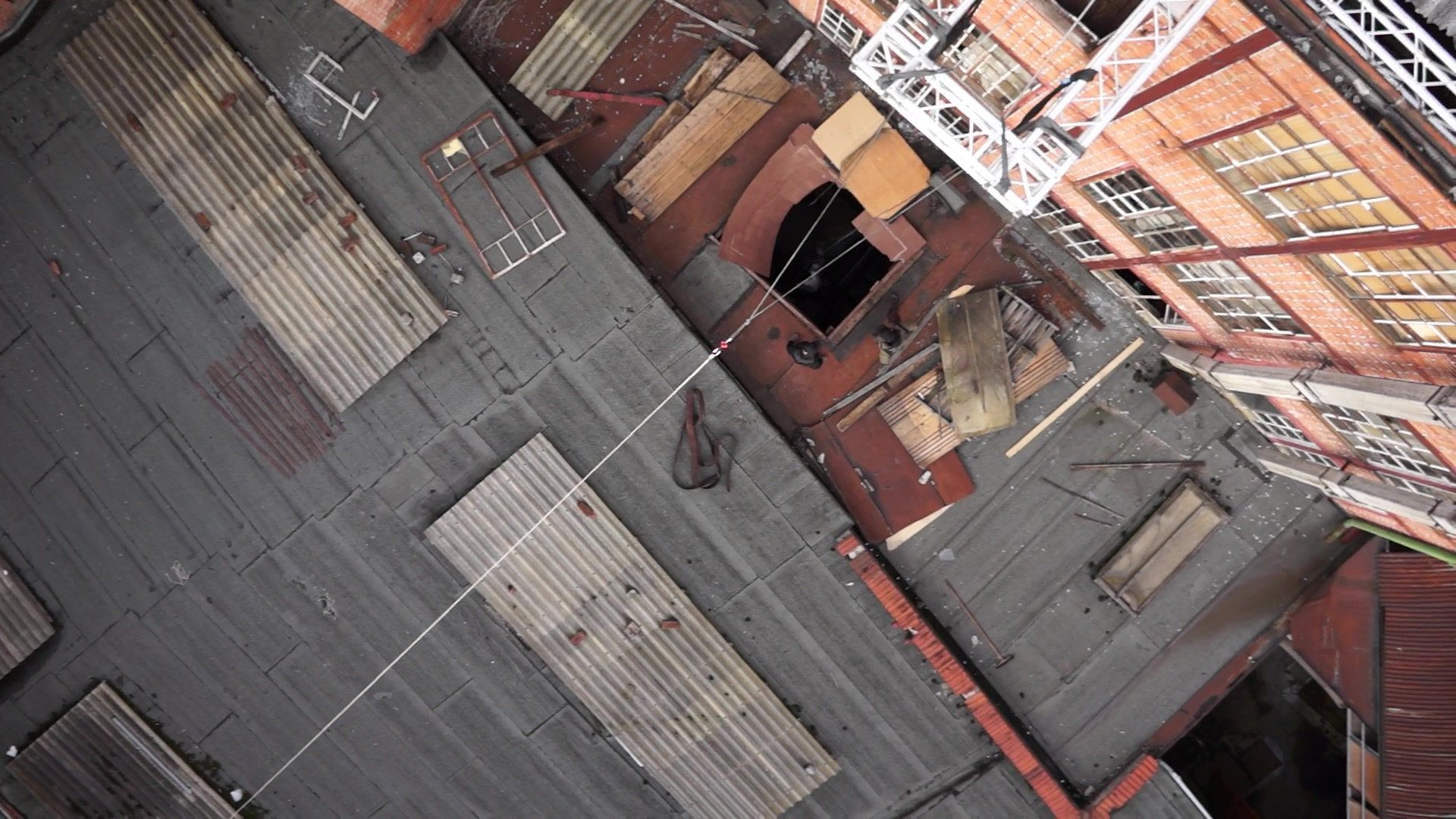
One of the most interesting shots in the film involved a descender from Lane Leavitt in Los Angeles. In the sequence, the stunt doubles fall from an upper-floor window, through a canopy and down to the ground.
For me, the creative opportunity was not just the stunt itself. I wanted the audience to experience the movement. My idea was to have a camera follow the performers and capture the fall from an overhead perspective. Instead of observing the action from outside, the camera would become part of the movement.
That shot made it into both the trailer and the finished film. It is a good example of an idea that still drives my work today: action and camera movement should be developed together from the beginning, as a single creative problem.
Fight choreography — training with Ken Duken
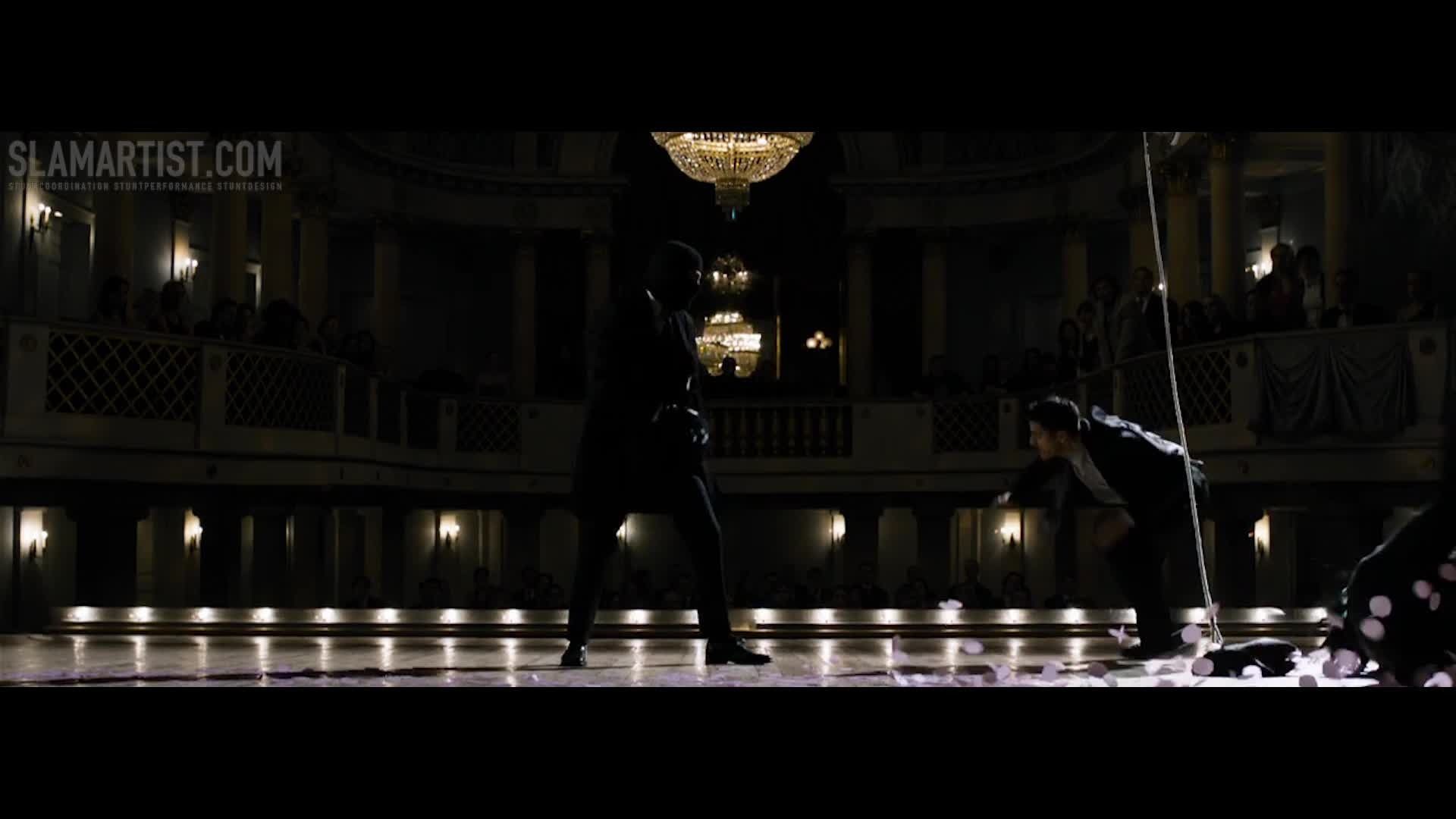
An essential part of our work was the intensive fight training with Ken Duken. I also worked as Ken's stunt double. The different rehearsals, choreography versions and original training videos preserved in the archive reveal how much work went into these sequences long before shooting.
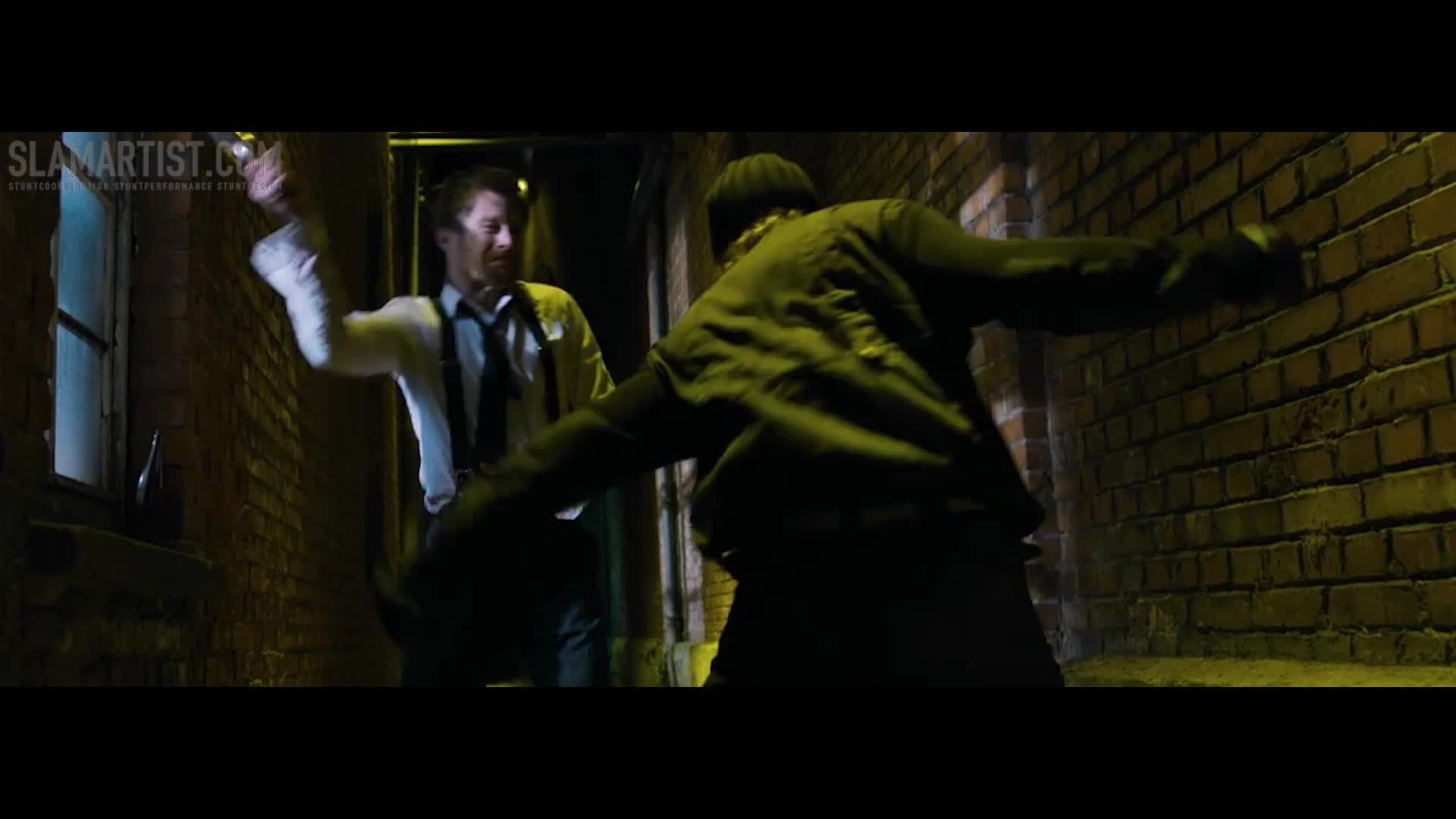
The narrow-corridor fight was one of my personal highlights from a choreography perspective. In a confined space, timing, movement, performance and camera work have to fit together with great precision. The theatre fight was another part of that extensive preparation.
What the audience eventually experiences as a coherent action sequence comes from a series of individual creative decisions, rehearsals and refinements. The quality of a fight scene begins long before the camera rolls.
The tannery showdown
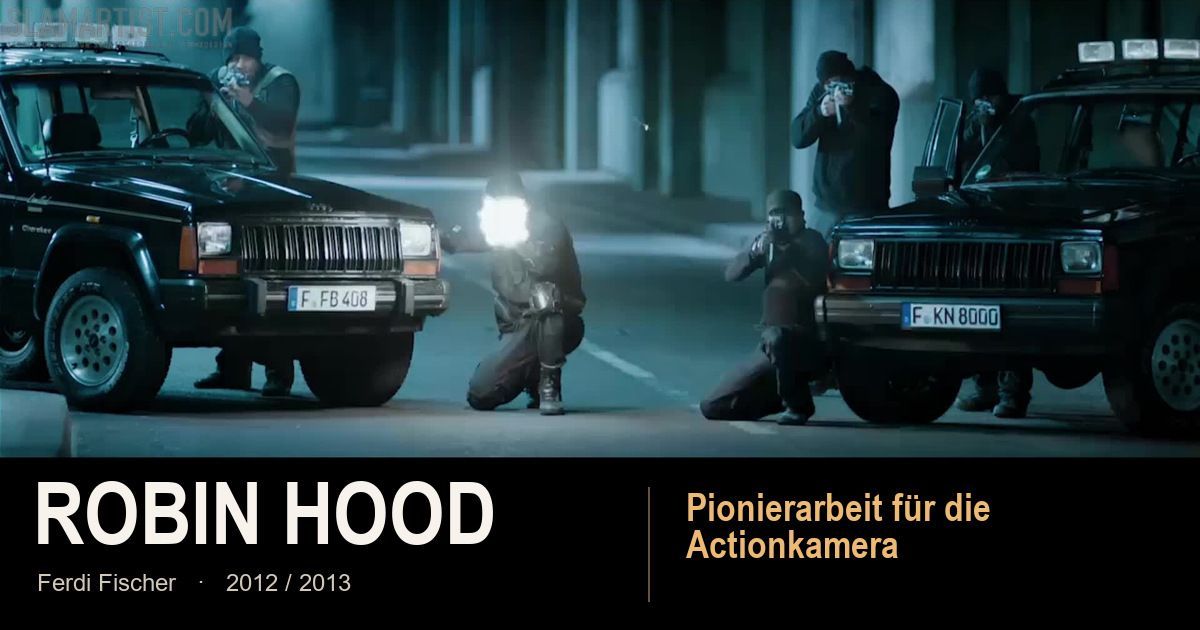
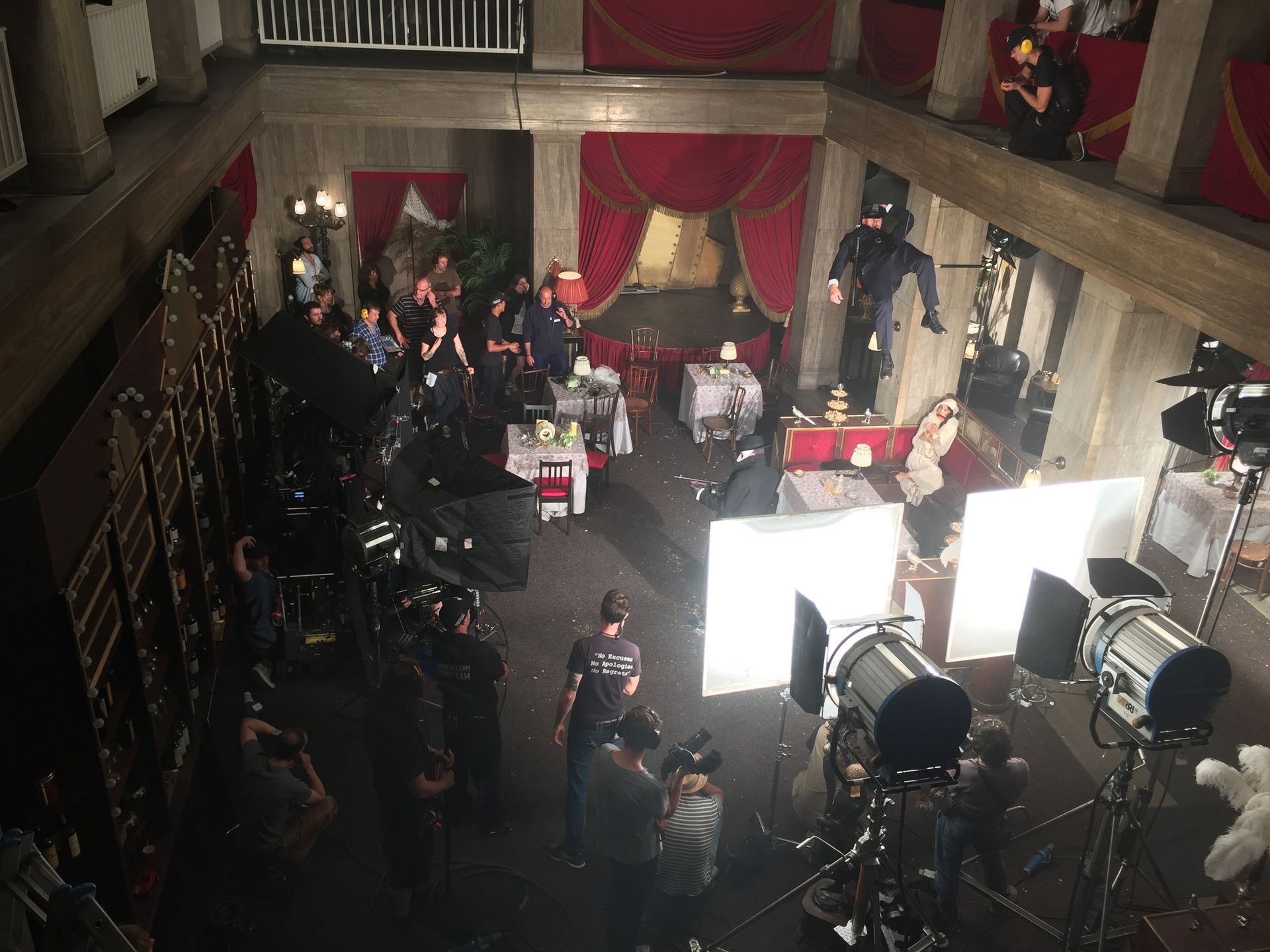
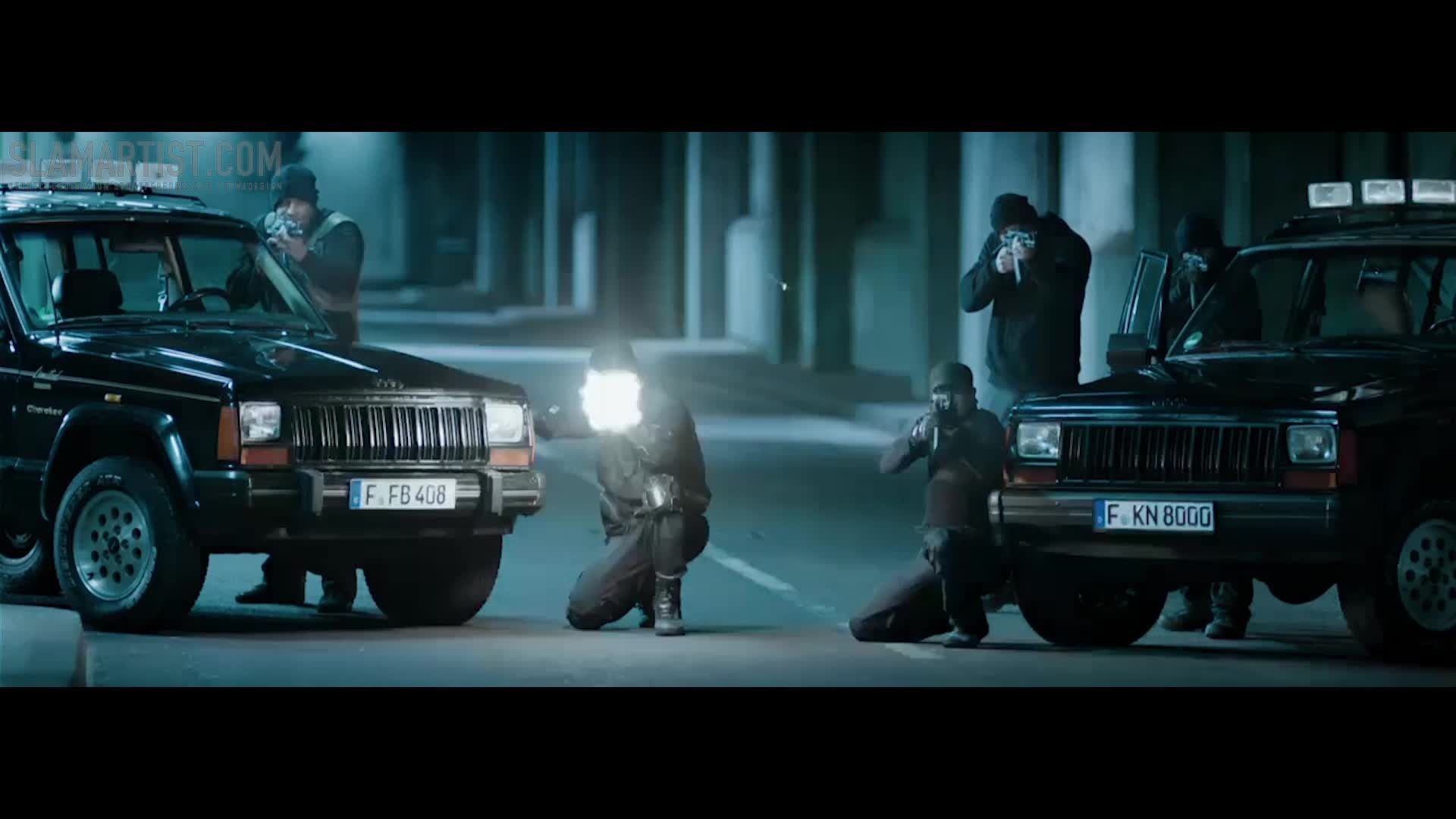
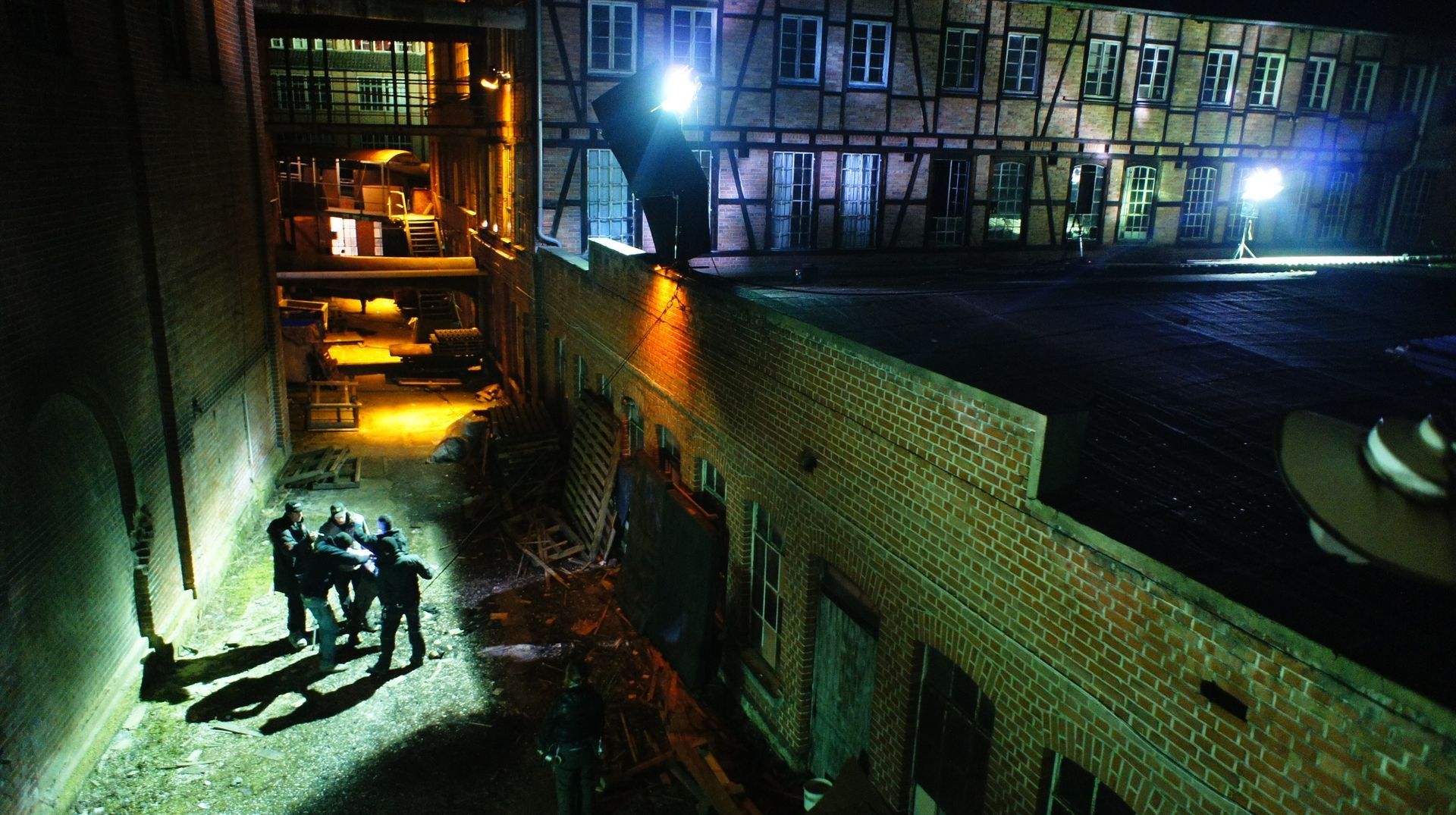
The absolute highlight of the production for me, however, was the large showdown at the tannery. An extraordinary industrial location, a great deal of action, multiple units, extensive additional shooting and an extremely tight schedule. Under normal circumstances, this alone would have been an enormous challenge.
Twelve screws, crutches and a wheelchair
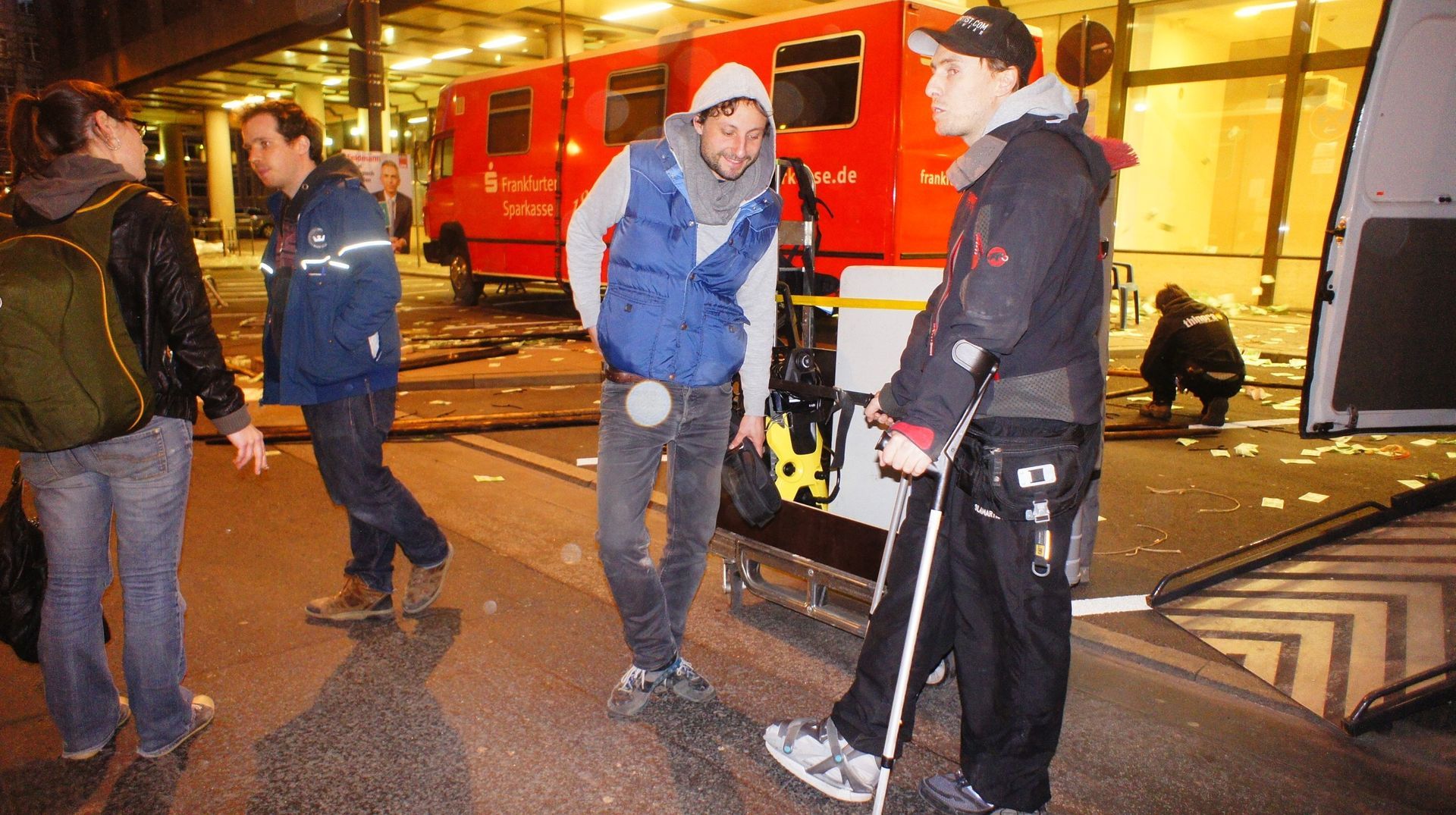
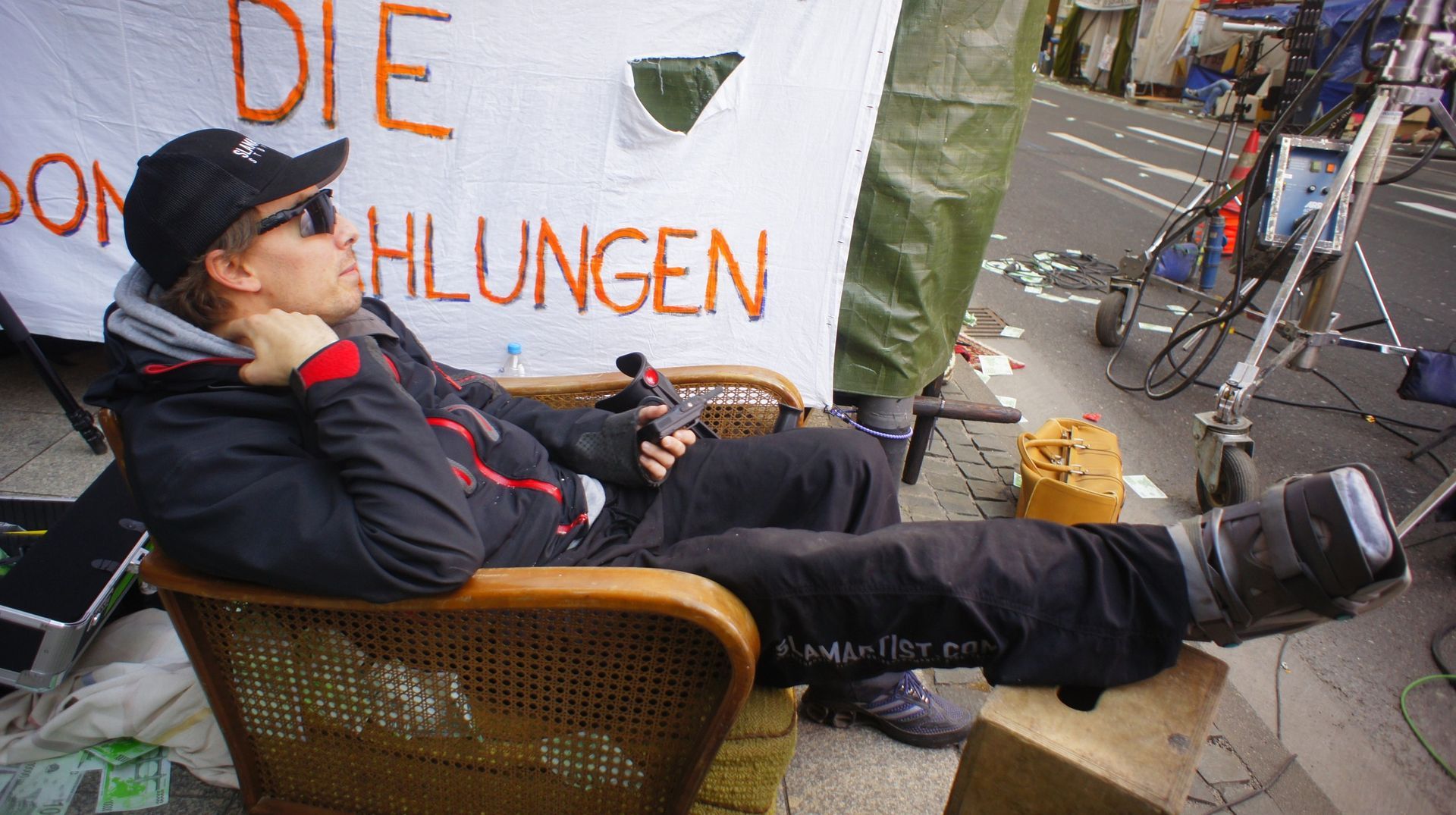
But there was something else. While performing stunts myself during the production, I suffered a serious leg injury. My tibia was fractured and had to be surgically fixed with twelve screws.
The following day, I left the hospital and returned to the production. Given the complexity of the action and how tight the schedule was, it was practically impossible to replace me at that point. I continued directing the action on crutches and in a wheelchair.
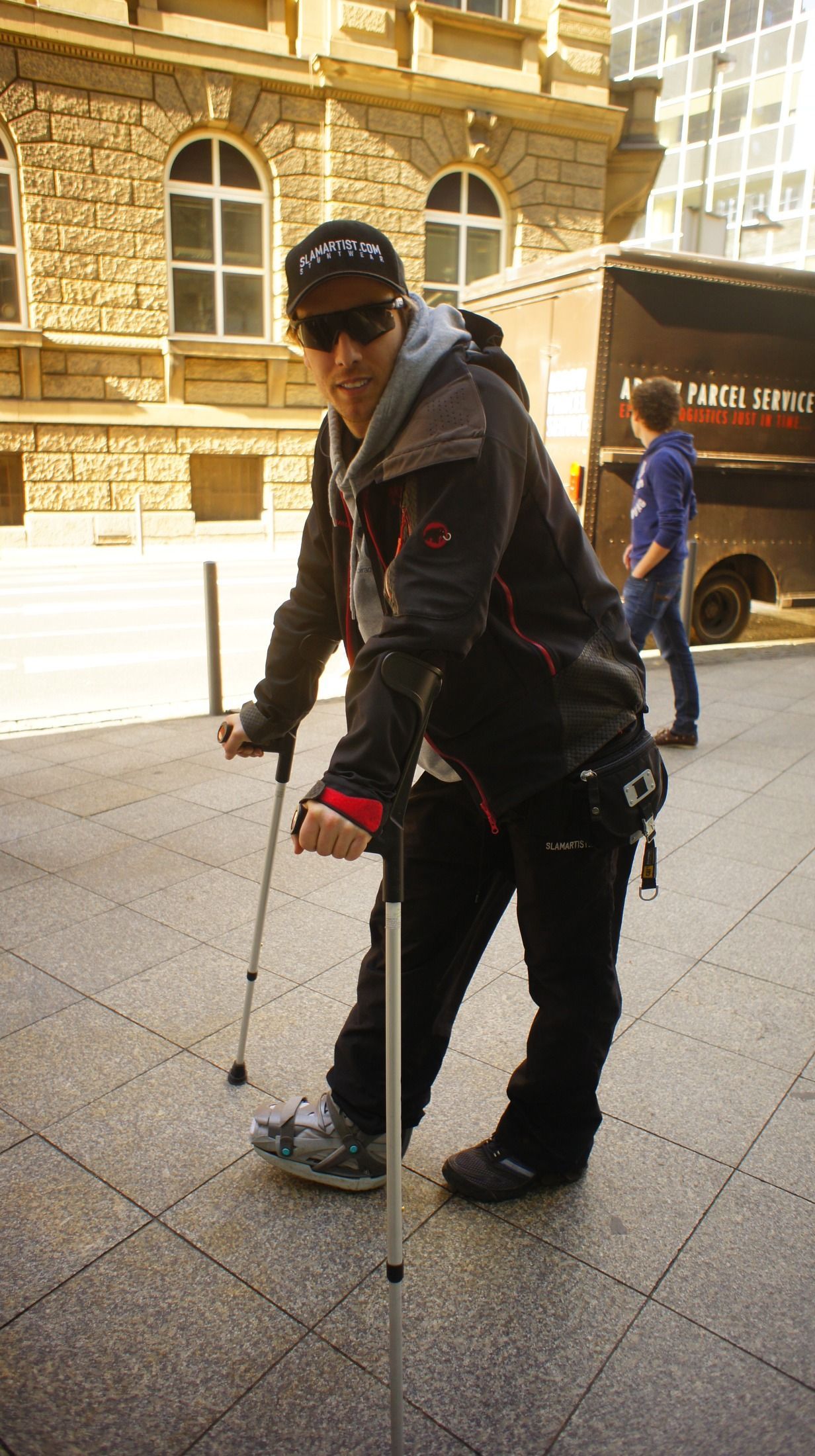
Anyone who knows the tannery or sees the photographs can imagine what this meant: stairs, different levels, rooftops, long distances and multiple units whose work needed to be coordinated. It was an enormous physical and mental effort. At the same time, the creative decisions still had to be made, the action directed and the images realized.
I will never forget that phase of the shoot. Not just because of the injury, but because of the intensity of the entire production, the emotions involved and, above all, the people I worked with. The showdown at the tannery was extraordinary.
A production that shaped my approach
Robin Hood was exhausting, intense, ambitious and a tremendous amount of fun. There were so many action scenes, so much preparation and additional shooting, and so many different challenges to overcome together. It remains one of the most demanding shoots I have experienced.
The common thread connecting the aerial shots, the descender sequence and the fight choreography was the idea that stunt work and camera work belong together. It is a principle that would later become central to my development of WarpCam®: design the camera approach around the action. Robin Hood was an early chapter of that development, long before WarpCam® itself.
The people behind the action
No production of this scale is the work of one person. I want to thank every member of my stunt team for their skill, commitment and the enormous amount of work they put into this film.
Assistant Stunt Coordinator / Stunt Rigger: Christian Gneißl.
Stunt team: Marcel Stucki, Urs Inauen, Mathis Landwehr, Andy Long (Andreas Nguyen), Matthias Schmidt, Ulrik Bruchholz, Cyrill Barmettler, Theresa Hoffmann, Jereth White, Jimmy Hock, Gregor Eichhorn and Marcus Graf.
Ulrik Bruchholz also contributed previs and additional fight choreography; Matthias Schmidt also worked as a stunt rigger.
Thank you to Lane Leavitt for his contribution to the world of stunt technology, to Sven Juerss and the Microdrones team for their pioneering collaboration, and especially to my good friend Martin Schreier for his trust in me and my team. This was a film that demanded a great deal from all of us. I am proud of what we created together.
Ferdi Fischer · Action Director & Stunt Coordinator · SlamArtist.com
Production and department credits
- Director
- Martin Schreier
- Screenplay
- Martin Schreier · Florian Schumacher
- Cinematography
- Markus Nestroy
- Producers
- Nico Hofmann · Sebastian Sawetzki · Katrin Goetter
- Production
- TeamWorx Television & Film GmbH · Venice Pictures · Filmakademie Baden-Württemberg
- Alexander Scholl
- Ken Duken
- Action Director · Stunt Coordinator · Fight Choreographer · Second Unit Director · Aerial Supervisor
- Ferdi Fischer
- Stunt double for Ken Duken
- Ferdi Fischer
- Assistant Stunt Coordinator · Stunt Rigger
- Christian Gneißl
- Stunt team
- Marcel Stucki · Urs Inauen · Mathis Landwehr · Andy Long (Andreas Nguyen) · Matthias Schmidt · Ulrik Bruchholz · Cyrill Barmettler · Theresa Hoffmann · Jereth White · Jimmy Hock · Gregor Eichhorn · Marcus Graf
- Previs and additional fight choreography
- Ulrik Bruchholz
- Stunt rigger
- Matthias Schmidt
- Microdrones founder and then managing director
- Sven Juerss
- Microdrones
- Daniel Knoche · Tobias Matschke
- Specialist descender technology
- Lane Leavitt, Los Angeles
Watch the film
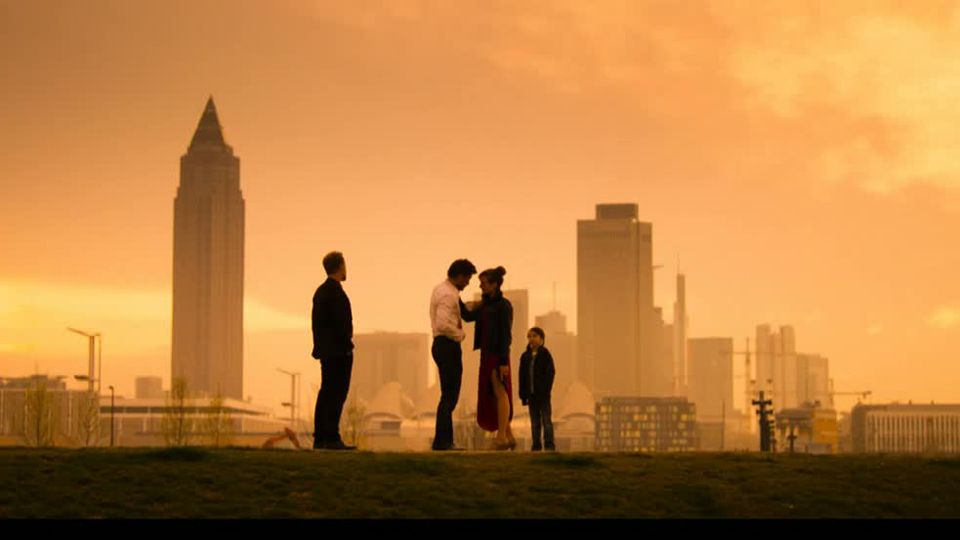
The English TV cut
SlamArtist.com · Ferdi Fischer
Action and second-unit direction
Through SlamArtist.com, Ferdi Fischer works as a Director, Action Director and Second Unit Director. He can guide an Action Unit from a rehearsal room to a second-unit location and into the edit. His Action Design connects camera and character, informed by his experience in Stunt Design, Stunt Coordination and Stunt Performance. Robin Hood shows what that range meant on one production.