




PRECISION DRIVING
CHARACTER. CAMERA. TIMING. CONTROL.
IN ONE TAKE
Precision Driving at SlamArtist is vehicle performance created for the camera—not a search for lap time. Ferdi Fischer connects character, route, timing and camera movement from first rehearsal to final take. The job may be a slow reverse onto a precise mark, a repeatable hero-car pass, synchronised movement with other picture vehicles or a high-energy action beat. Across that range, the standard remains the same: understand the shot, communicate clearly, respect the vehicle and deliver controlled, repeatable movement that serves the story.
DRIVE FOR THE FRAME, NOT THE LAP TIME
A Precision Driver works with the scene, the camera and every other moving element. Unlike racing, the objective is not the fastest line or the quickest time. The objective is a usable image with the right speed, position and dramatic intention.
That can mean creeping a hero car backwards onto a narrow mark, holding a constant gap to a tracking vehicle, crossing frame on a specific cue or placing several picture vehicles as one composition. The line may be deliberately unusual because it has been designed for the lens rather than the racetrack. At low speed, even a small change in steering, braking or timing can become clearly visible.
Repeatability gives direction, camera and editorial meaningful options across takes and angles. Entry speed, path, screen direction, stop position and wheel angle all contribute to continuity. Precision is not defined by spectacle; it is defined by control in relation to the shot.
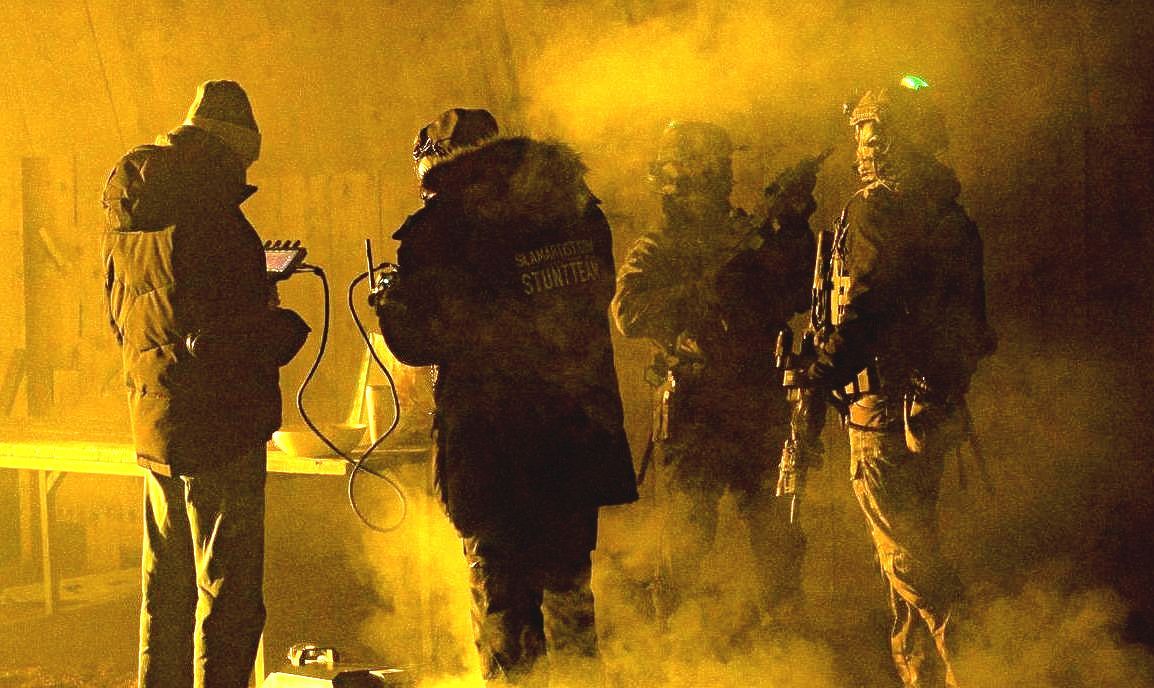
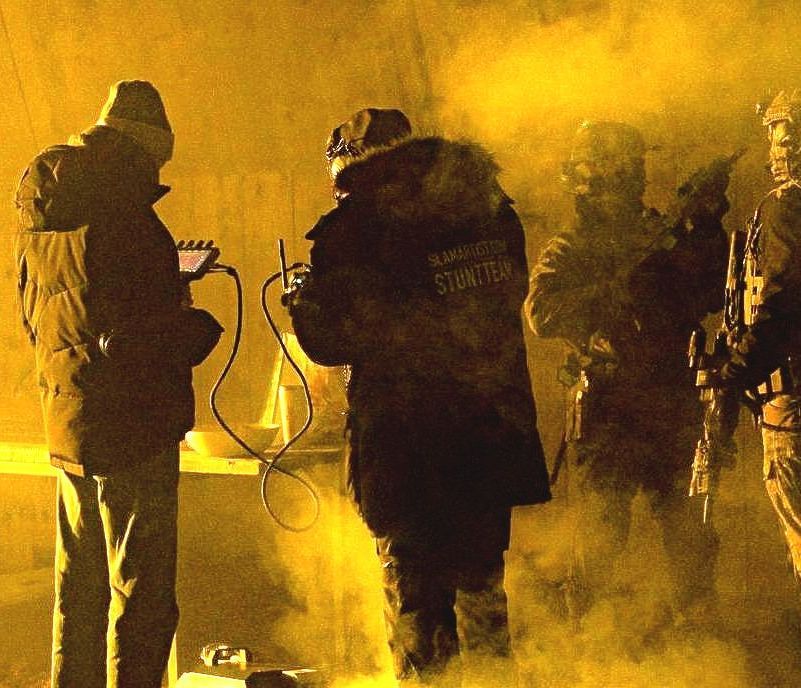
Tactical Precision in Action
This photograph subtly captures the precision of three special operations soldiers as they clear a room. The focus is on both their coordinated movements and the methodical way the scene is shot, highlighting the simplicity and effectiveness of their teamwork in a high-stress environment.
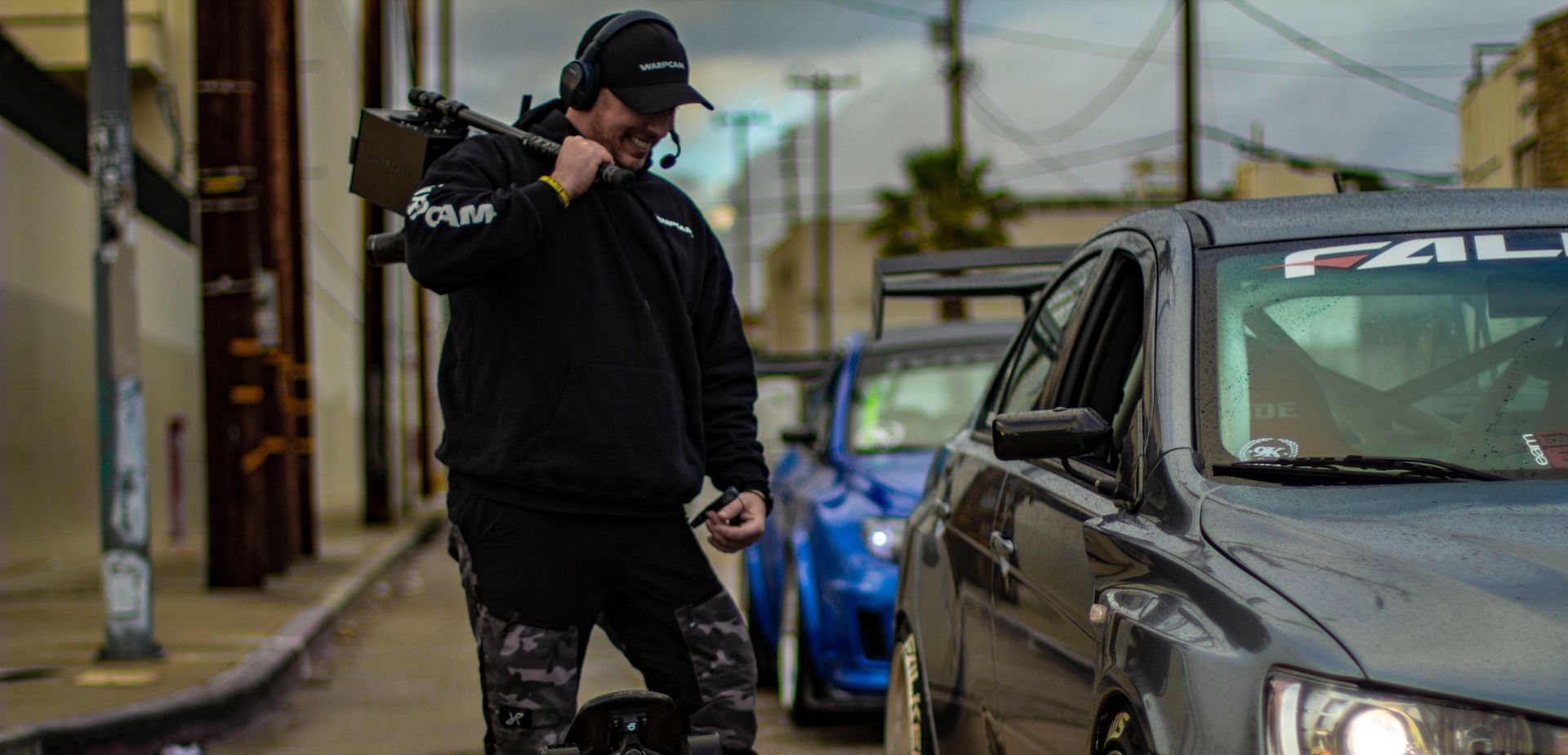
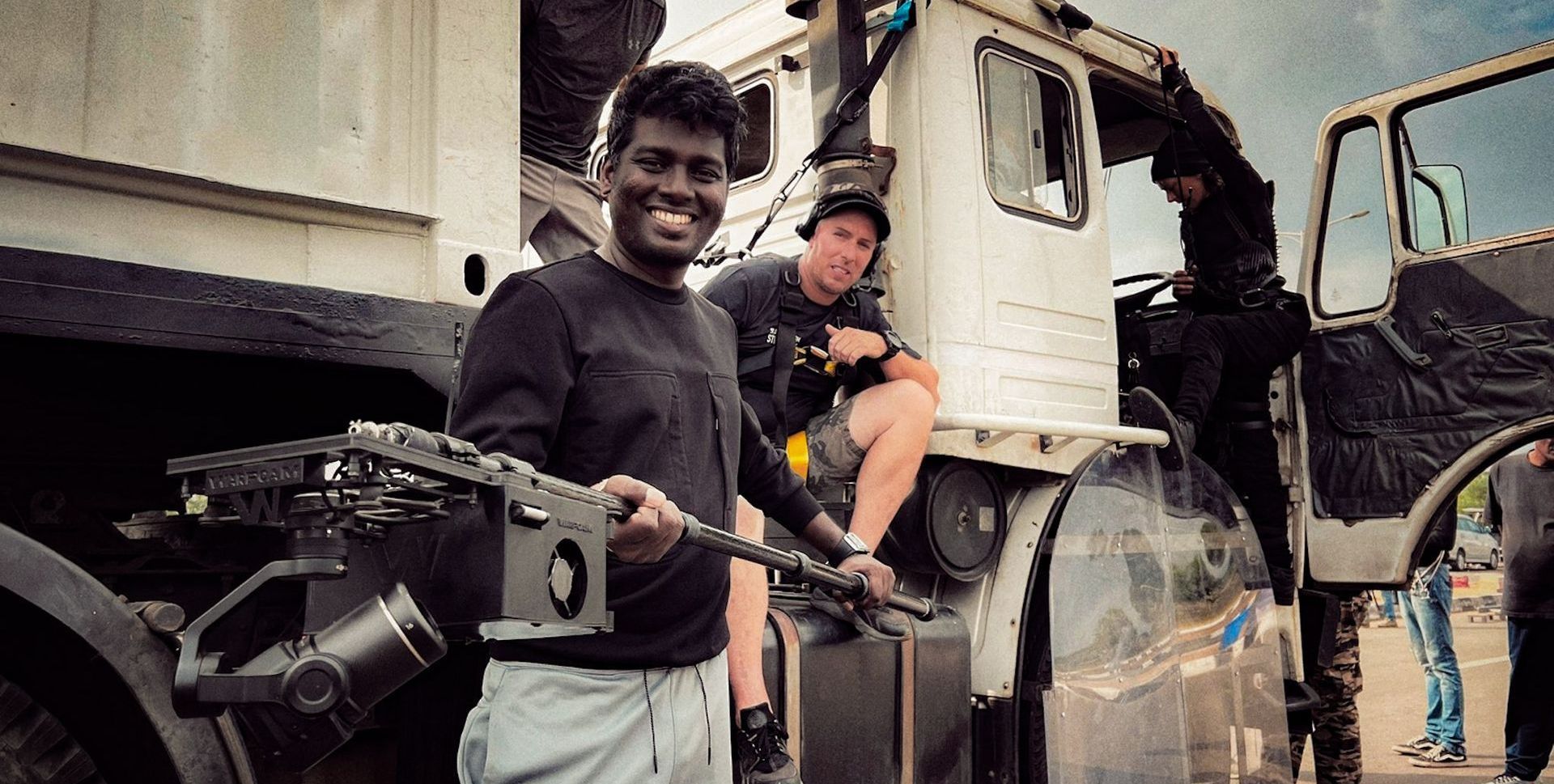
Directing on the Frontlines
This image showcases Ferdi Fischer in action, both directing and operating the WarpCam® alongside special operations soldiers. It captures the dual expertise of Ferdi as he blends cinematic technique with tactical operations, emphasizing the collaborative effort required to achieve authentic and impactful scenes.
THE VEHICLE PLAYS THE CHARACTER
The way a vehicle moves can reveal confidence, urgency, hesitation, aggression, fatigue or loss of control before a line of dialogue is spoken. Strong Precision Driving therefore begins with the character and the dramatic beat, not with a catalogue of manoeuvres.
When doubling an actor, posture, head movement, hand position, costume, tempo and driving behaviour help preserve the character inside the vehicle. The performance must connect with what happens before and after the driving shot, so the audience follows the person rather than noticing the technique.
Hero-car continuity is equally important. Repeating a pass may require matching speed, road position, braking point, wheel angle and final placement while remaining attentive to the vehicle’s condition. Ferdi approaches the car as both a performance tool and a valuable production asset, collaborating with the responsible departments so character, continuity and mechanical sympathy remain connected.
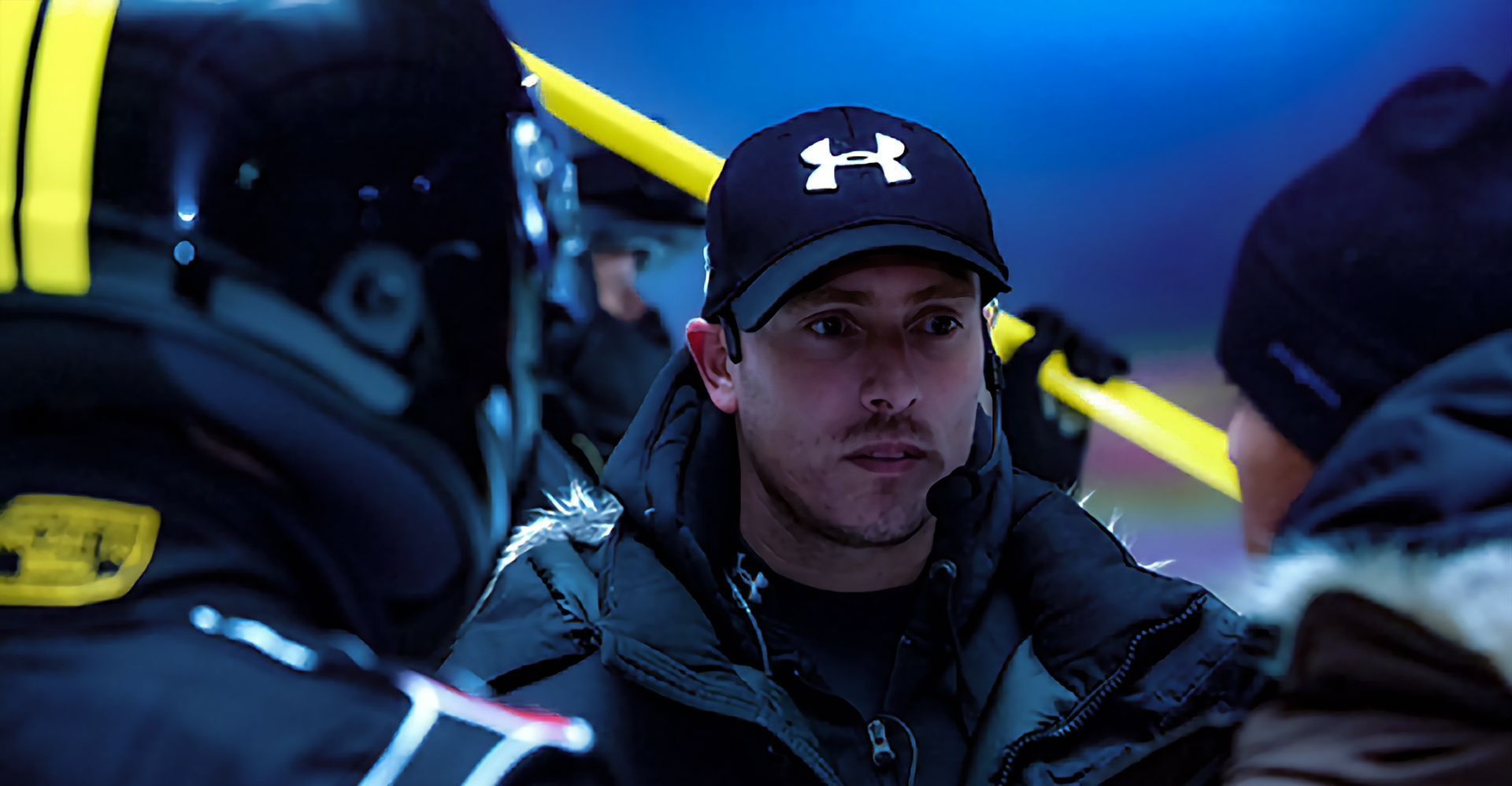
Stunt Coordinator Ferdi on a Dunlop Commercial
Over the shoulder view of two precision drivers listening as action director Ferdi Fischer briefs them on the next stunt for a Dunlop commercial, his face framed in a portrait style shot on a cold outdoor set.
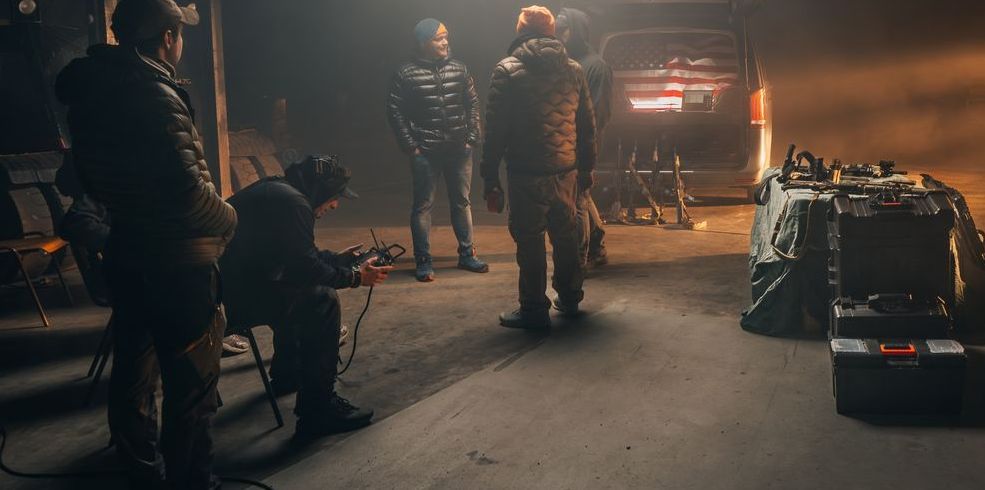
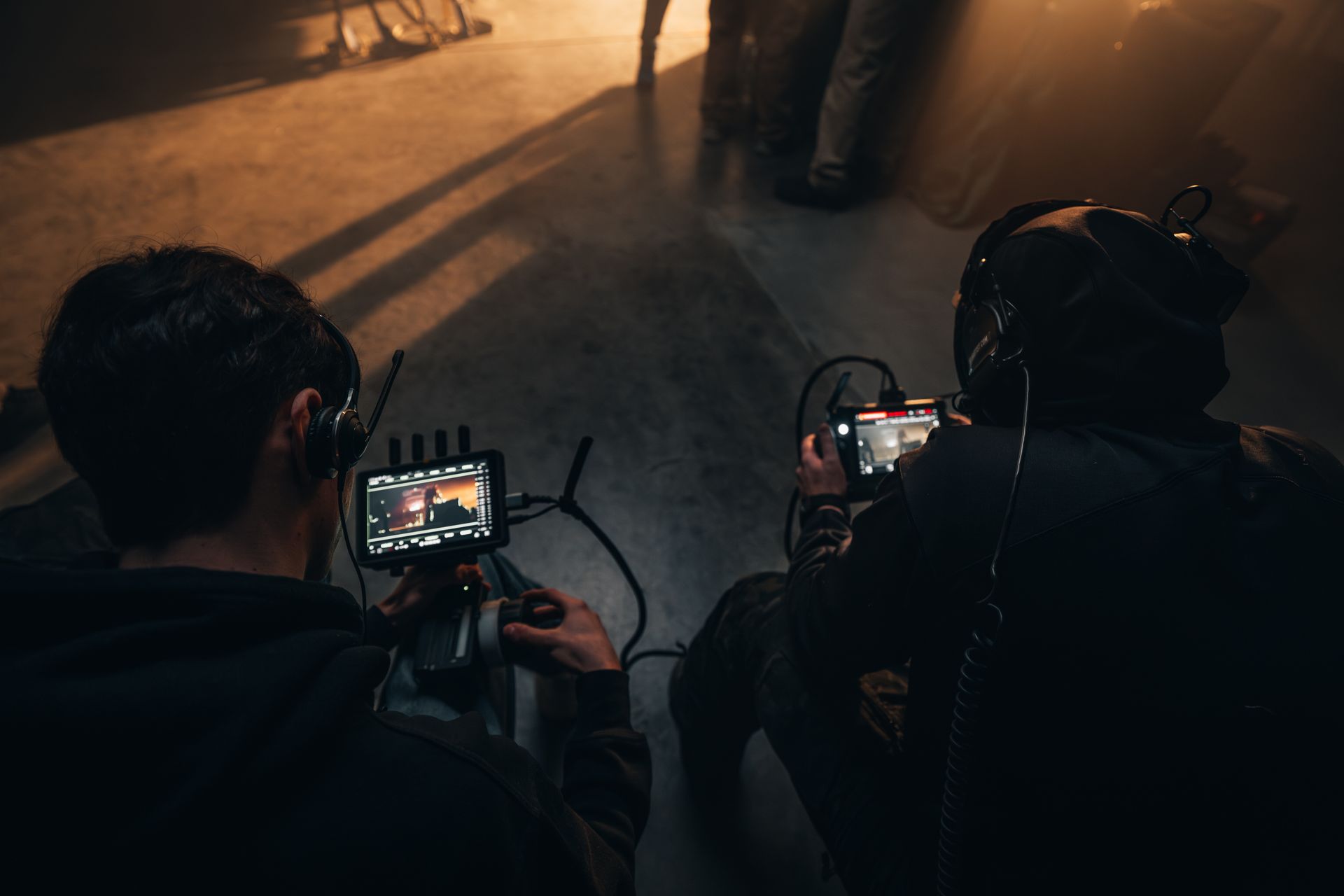
Ferdi setlife
Stunt coordinator Ferdi is captured in a side view, holding a monitor in one hand while he intently watches the action displayed on the screen.
FROM QUIET CONTROL TO VEHICLE ACTION
Precision Driving covers a much wider spectrum than crashes and rolls. It includes slow reverse work, controlled arrivals and departures, tracking passes, formations, convoy movement, actor doubling and synchronisation with other picture vehicles. At the dynamic end, it can extend into performance driving, including controlled slides, demanding routes and higher-speed action.
Crashes, jumps, near misses, rollovers and specialist techniques such as cannon rolls belong to vehicle-stunt work; they are not the definition of Precision Driving as a whole. These actions require task-specific expertise, suitable vehicles, detailed preparation and the responsible stunt and vehicle team. Precision and spectacle are not opposites: as the action grows, clear routes, cues, rehearsals and contingency planning become even more important.
When WarpCam® is involved, the vehicle path and camera path can be developed as one moving composition. Ferdi’s understanding of both performance and camera movement helps align speed relationship, working distance, timing and dramatic emphasis so the technology follows the action instead of competing with it.
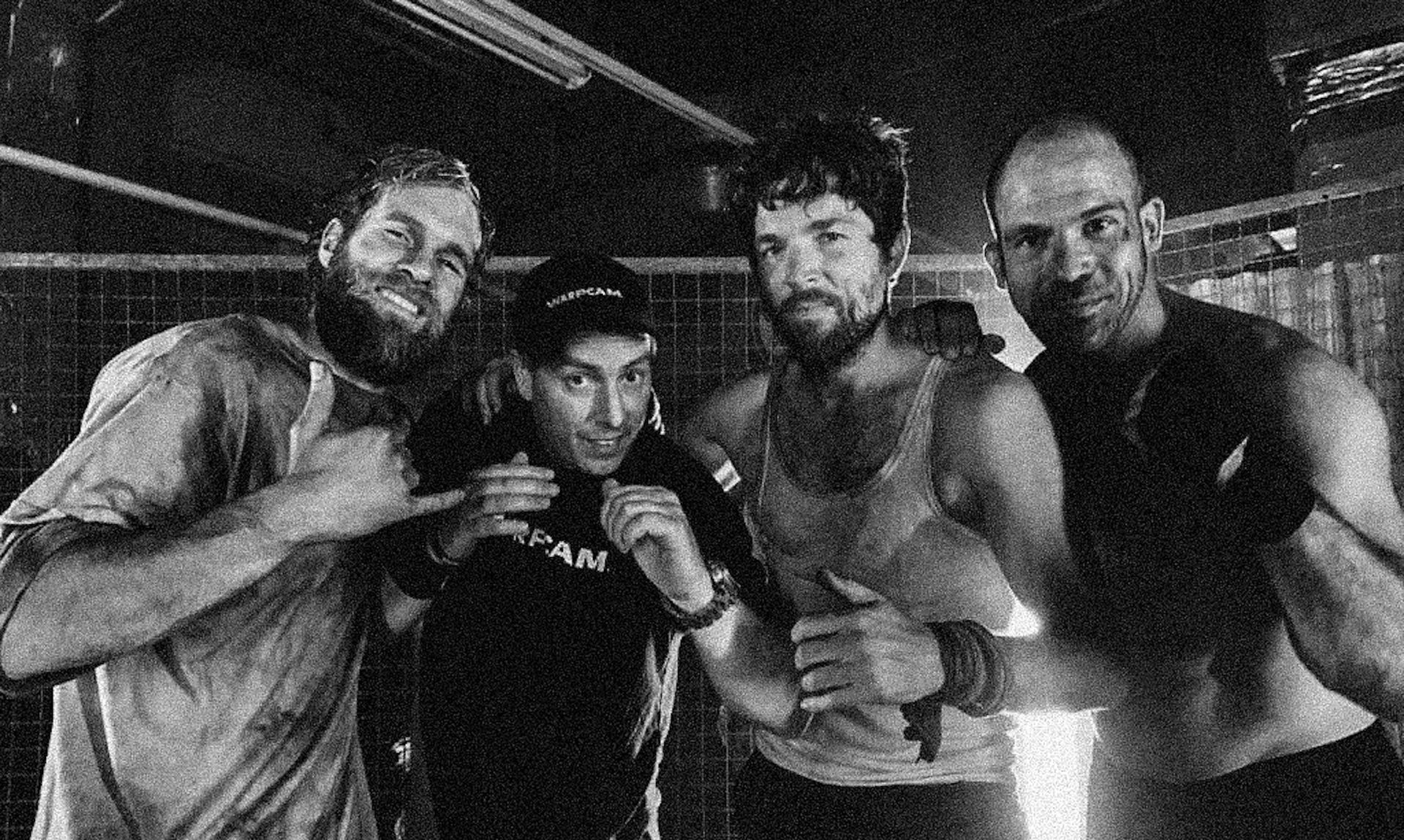
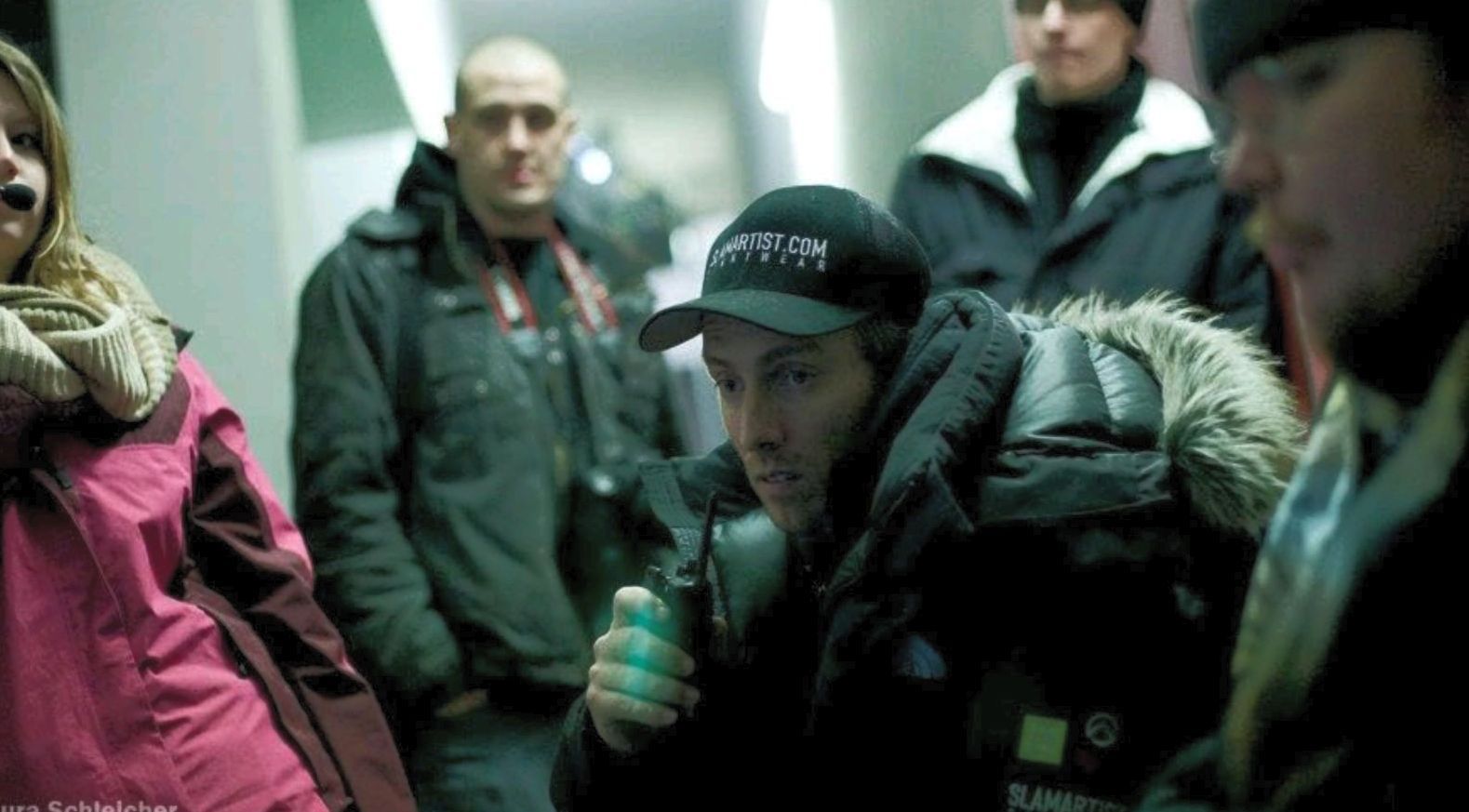
SoKo Stuttgart – Ferdi Fischer with Cast after Fight Choreography
Ferdinand Fischer with Peter Ketnath, Mathis Landwehr and Wanja Götz on the SoKo Stuttgart set, after choreographing and coordinating their fight scene.
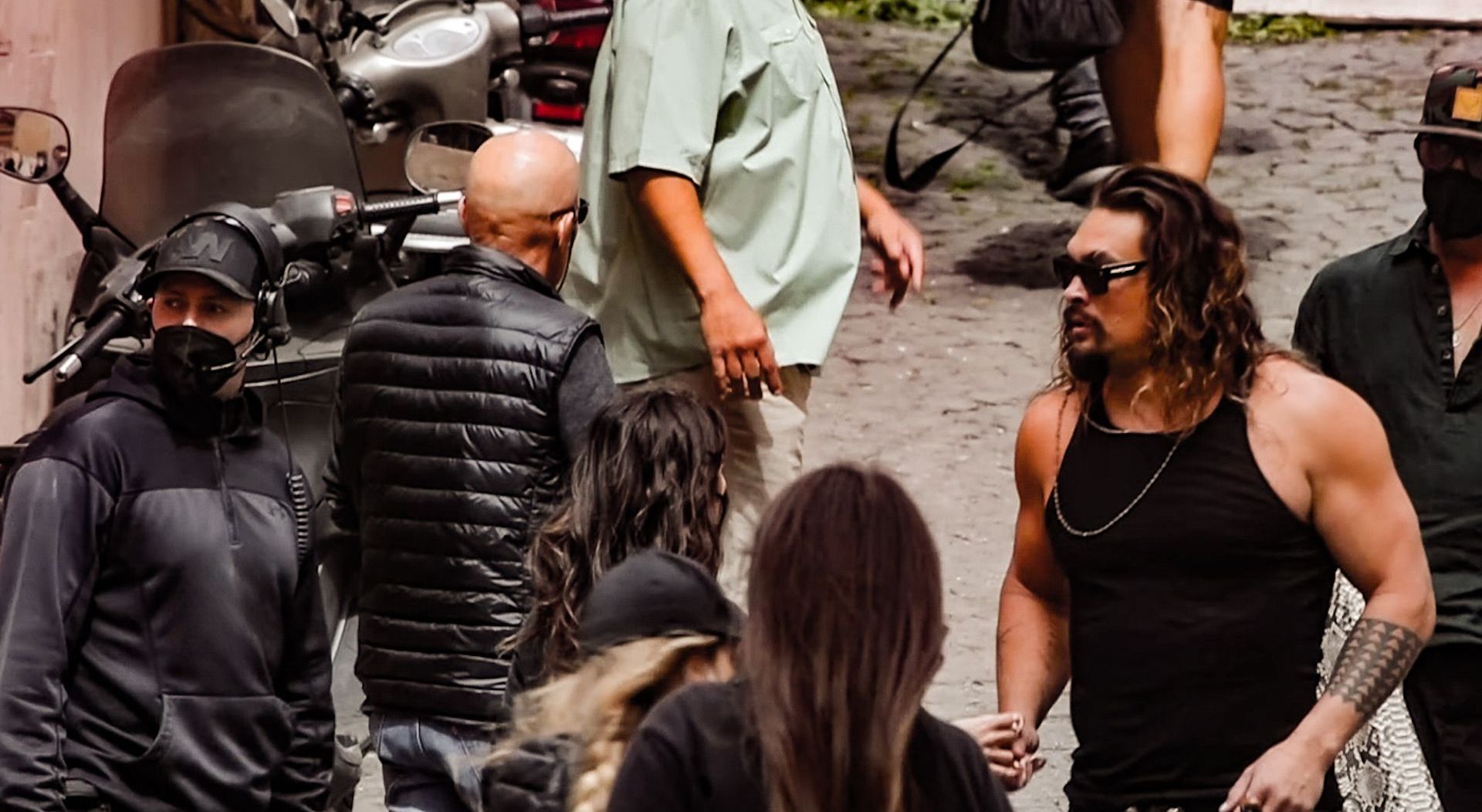
Fast X – Ferdi Fischer and Jason Momoa on Set
On the Fast X set with action camera operator Ferdi Fischer and Jason Momoa.
PRECISION DRIVING / VEHICLE ACTION FAQ
What is Precision Driving?
Precision Driving is the professional movement of vehicles in front of the camera for film, television and advertising. It combines vehicle control with timing, repeatability, production awareness and an understanding of how movement will appear through the lens.
The assignment may be visually quiet or highly dynamic. What defines the work is the ability to place and move the vehicle according to the needs of the scene, in coordination with the camera, other drivers and the responsible production team.
Is Precision Driving the same as racing or stunt driving?
No. Racing is organised around competition, lap time and an efficient racing line. Precision Driving is organised around the planned image and may require slow speeds, unconventional lines or repeated synchronisation with a camera vehicle.
Performance driving can describe advanced vehicle control such as higher-speed work and controlled slides. Stunt driving involves a specific vehicle stunt such as a crash, jump, near miss or rollover. A cannon roll is specialist vehicle-stunt work—not shorthand for Precision Driving. Skills can overlap, but the driver’s qualifications must match the individual assignment, and professional classifications vary by country and contract.
Does Precision Driving always have to be fast?
No. Some of the most demanding work is deliberately slow. Reversing onto a precise mark, passing close to a composition point, holding a constant distance or stopping with the correct wheel position can leave very little room for variation.
The camera may magnify small differences that would be irrelevant in everyday driving. A slow manoeuvre can therefore demand exceptional concentration, throttle and brake control, spatial awareness and repeatability.
How does Precision Driving support character and story?
Driving behaviour is part of performance. A character escaping in panic should not necessarily drive like a calm professional, while an experienced driver may reveal control through economical, deliberate movement.
A Precision Driver translates those choices into speed, rhythm, steering input, braking and reactions inside the vehicle. When doubling, the aim is to continue the actor’s character through the driving shot rather than display the driver’s personal style.
What makes a vehicle movement repeatable on camera?
Repeatability comes from understanding the complete shot: starting position, entry speed, path, cue, braking point, relationship to the camera and other vehicles, and the required finishing position.
Marks and reference points help, but the driver must also respond to surfaces, vehicle behaviour, visibility and changing production conditions. The target is not mechanical sameness; it is consistent movement that still feels alive within the scene.
How is a Precision Driving sequence prepared?
Preparation begins with the dramatic intention and the planned image. The team then considers the vehicle, route, surface, speed, visibility, weather, camera configuration, other moving elements, working areas and communication method.
Suitable rehearsal establishes routes, cues, timing and the procedure for stopping the action. Unfamiliar, modified, overpowered, underpowered or partially dressed vehicles require appropriate familiarisation and assessment. If the choreography or conditions change, the sequence must be reviewed with the responsible team before continuing.
What does hero-car continuity require?
A hero car is a featured picture vehicle, often seen across several shots or takes. Continuity can involve matching its position, speed, direction, wheel angle, lighting state and relationship to performers, camera and surrounding traffic.
The driver also needs mechanical sympathy and an understanding that each vehicle behaves differently. Close communication with the picture-vehicle, camera, props and continuity departments helps preserve both the intended image and the condition of the production asset.
How do moving cameras and WarpCam® affect Precision Driving?
Camera movement changes how the audience perceives speed, distance and proximity. A modest vehicle speed can feel highly dynamic when camera and car converge, while a fast pass may appear flat if their relationship is not designed clearly.
With WarpCam®, performer, vehicle and camera paths can be considered together during preparation. Ferdi can help connect timing, lens relationship and movement so the driver is not merely following a mark—the vehicle and camera are performing the same visual idea.
Plan the vehicle movement before the camera rolls
Send the vehicle, route, speed range, camera configuration and intended dramatic beat. We can assess driver, stunt, vehicle and camera requirements as one sequence.