

Tactical Authenticity for Film

From Battlefield to Film Set

Global Expertise in Tactical Gear & Military Equipment for Film and TV

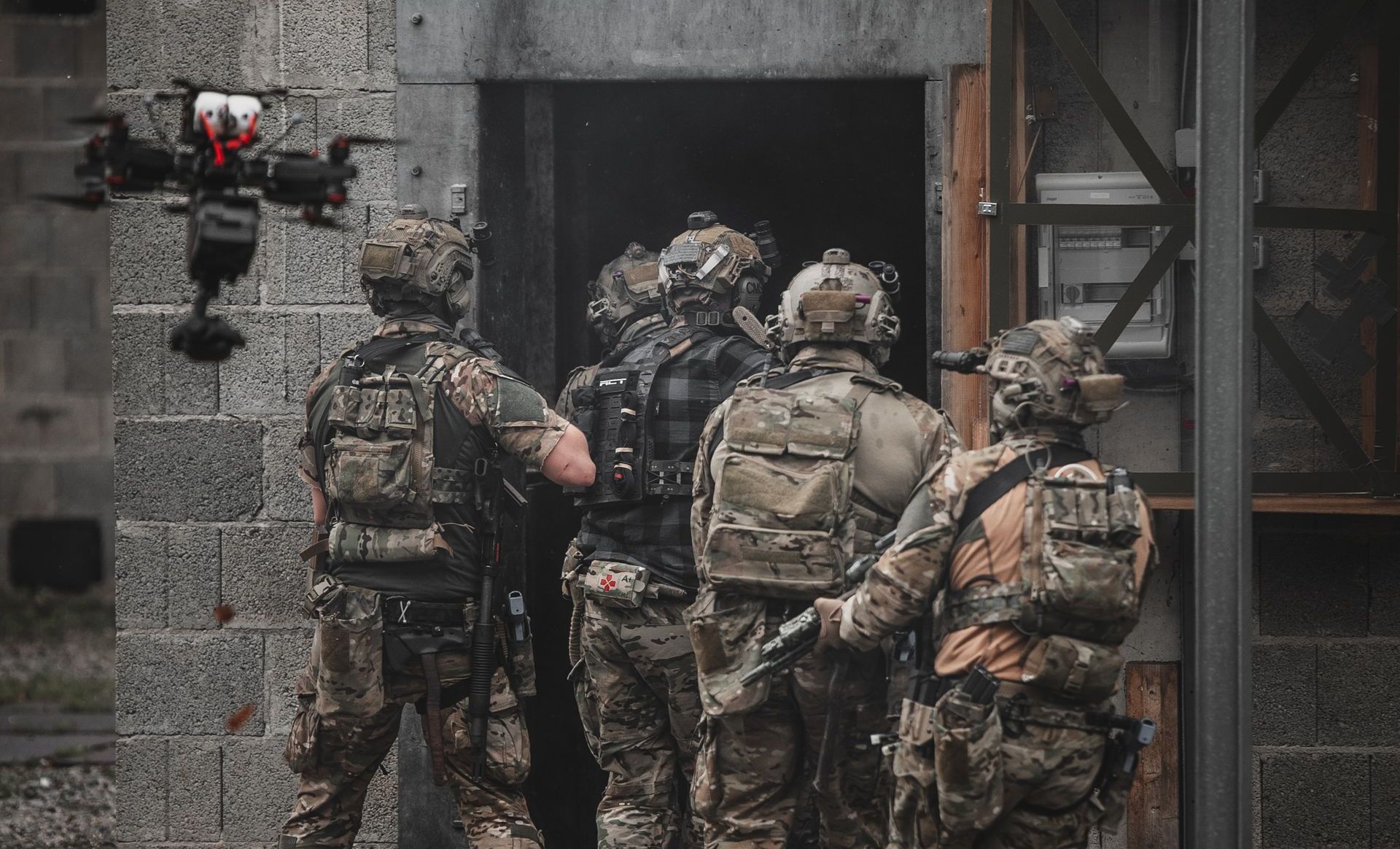
Military operators breaching a dor with explosives and a warpcam fpv drone is filming

Step into a world of unmatched authenticity with our premium tactical gear and military equipment. Our global presence, with bases strategically located across international hotspots, gives us a unique edge. While competitors may be confined to a single city like Berlin, our expansive network allows us direct access to elite units like the GSG 9, Navy Seals, Delta Force, and URNA operators, right at their actual locations.


This direct connection ensures that our offerings are not just authentic; they're the real deal. Our team of tactical operators is not only trained but is also in active service, infusing unparalleled realism into your production. Beyond equipment, we provide tailored actor coaching, ensuring your cast mirrors the essence and expertise of real-life special forces. Our personalized kits are meticulously curated, ensuring every piece of equipment is as genuine as the narrative demands.


With our international reach, expertise, and unwavering commitment to authenticity, we promise more than just a story. We deliver an experience that resonates with reality.

Everything you need, all in one place

  • Tactical Personnel Gear & Comms

    Every operator on screen – hero, stunt double, or background extra – is built as a complete, believable unit. We supply full loadouts (armor, helmets, uniforms, comms and medical) that mirror current Tier‑1 and European special forces, tuned for camera movement and stunt safety and coordinated with our network of active‑duty advisors from German, Czech and French units.


    Level IV Operator Ballistic Protection Systems


    • Crye Precision JPC 2.0 plate carriers with Level IV SAPI plates – lightweight, “jumpable” carriers widely used in U.S. SOCOM, fitted with ceramic/composite Level III/IV plates (ESAPI‑equivalent) that can be swapped to lighter polyethylene plates when you need more mobility than protection on screen. Colors and camo (MultiCam, Ranger Green, etc.) are matched to unit, era and environment. 

    • Lindnerhof Taktik LT042 plate carriers (German KSK / GSG‑9 style) – laser‑cut laminate carrier with the distinctive Lindnerhof hook‑buckle quick‑release system on shoulders and cummerbund, giving a very flat, modern European silhouette. We pair these with UF PRO Striker X Gen 2 combat pants in Flecktarn or Tropentarn for authentic German SOF looks. 

    • NFM THOR modular armor sets (French BME era) – scalable plate carrier used by French forces, from slick CQB setups to full “turtle” armor with throat, shoulder and groin protection. Matching BME (Bariolage Multi‑Environnement) camouflage uniforms and NFM/Leo Minor garments allow you to show both classic CE camo and the new multi‑environment pattern accurately for Legion / COS storylines. 

    • Ops‑Core FAST SF / Maritime high‑cut helmets – current‑gen SF helmets with NVG shrouds and ARC rails, designed to integrate large comms headsets like Peltor ComTac under the cut‑out sides. These are the standard visual language for modern NATO Tier‑1 units and give your lead team an immediately recognisable “real” silhouette. 

    • Team Wendy Exfil & Galvion Caiman helmets (NATO & SWAT) – high‑cut ballistic helmets used widely across NATO SOF and police tactical units. We use them to differentiate police CT units from military teams – same real‑world brands, different cover colors and accessory setups, so the audience instantly reads “urban police raid” vs “SOF overseas deployment”. 

    • MSA Gallet TC 800/500 with ballistic visor (GIGN signature look) – the iconic French police counter‑terror helmet with thick ballistic visor and optional neck protection. These are supplied with correct harnessing and visor hardware; we coordinate with camera and lighting to manage reflections so the visor feels heavy and real without ruining shots. 

    • Combat uniforms with integrated protection (Crye G3/G4 & UF PRO) – Crye G3/G4 combat uniforms with built‑in knee pad pockets and stretch panels for U.S./NATO operators, and UF PRO Striker X Gen 2 pants and tops for European units. Both offer correct pocket placement, knee protection and flame‑resistant materials, so actors can slide, kneel and hit the ground without looking or moving like cosplay. 

    Integrated Operator Comms & Situational Awareness Gear


    • Multi‑channel handheld radios (U.S. & European standards) – 
    1. L3Harris AN/PRC‑163 multi‑channel handhelds for U.S.‑aligned units (dual‑channel voice/data, typical for modern SOCOM kits). 
    2. Thales AN/PRC‑148C IMBITR for German/European setups (slimmer, taller form factor with dual‑channel capability and distinctive Thales side connector). We rig antennas, cables and PTT boxes to match real doctrine, not airsoft. 

    • 3M Peltor ComTac series headsets (active hearing protection) – ComTac VI / XPI headsets with boom mics that amplify voices and cut gunshots, connected directly into the radio network. This is standard kit for modern SF and SWAT; on camera it shows operators talking normally while firing at full volume, with real ear pro that actually works on set. 

    • Helmet‑integrated comms platforms – high‑cut helmets (Ops‑Core, Team Wendy, Galvion) are configured as full “gear platforms”: NVG shrouds, side rails with cable‑managed Peltor headsets, counterweight pouches and IR strobes. The result: close‑ups show a believable, tidy cable layout and correct mounting hardware instead of random Velcro chaos. 

    • Night vision & mounting hardware – binocular NVG systems like Theon Sensors NYX or L3Harris BNVD, mounted on Wilcox G24 mounts – the current standard in German and NATO units. We adjust tube type and housing style so your “German night raid” doesn’t accidentally look like a 2008 U.S. Army helmet cam. 

    • Identification & IR marking – helmet‑mounted Hel‑Star 6 or MS‑2000 IR strobes, reflective IR glint tape patches and colored smoke / VS‑17 panels for daytime air recognition. These are small details that tactical viewers instantly recognise and that help DPs stage night shoots with clear “friend vs foe” language on screen. 

    • Battle belts & load‑bearing layouts – battle/gun belts from Ronin Tactics, Crye (MRB), High Speed Gear, etc., set up with Safariland holsters, pistol and rifle mag pouches, multitools and dump pouches in realistic positions. This distributes weight off the shoulders and gives actors natural reload and draw movements that match real operator body mechanics. 

    • CBRN & respirator options (when the story needs it) – Avon M50 / C50 style gas masks and Ops‑Core SOTR‑type respirators for chemical/biological threat sequences, with appropriately lightweight protective garments where needed, so you can push into more specialized counter‑WMD visuals without inventing gear. 

    Field‑Ready Medical Simulation & Trauma Gear


    • Authentic IFAKs (Individual First Aid Kits) for every operator – tear‑off pouches mounted on the back of belts or vests, loaded to real TCCC standards with:
    1. Tourniquets: C‑A‑T Gen 7 / SOFTT‑W, staged on the front of the kit for quick grabs. 
    2. Hemostatic dressings: QuikClot Combat Gauze. 
    3. Pressure bandages: “Israeli” style trauma bandages. 
    4. Airway & chest items: nasopharyngeal airway and chest seals for sucking chest wounds (e.g., NAR HyFin). 

    • Visible packaging for macro shots – where the camera goes close, we stage real branded packaging (QuikClot, HyFin, etc.) and color‑correct tactical gloves (black/coyote mix) so the medic’s hands, tools and wrappers look like real deployment footage, not generic hospital props. 

    • Medic loadouts vs regular operator kits – we differentiate the combat medic from the rest of the squad: extra IV kit, trauma shears, more advanced pouches and a slightly different packing logic, reflecting how real medics carry higher‑end gear while every operator still has a self‑aid/buddy‑aid IFAK. 

    • Utility tools and cutting gear – Leatherman / Gerber multitools, robust folding knives (Benchmade‑type) and dedicated trauma shears mounted on belts or vests so actions like cutting clothes, tape or gear can be shot practically and safely. 

    • Marking and scene management in medical chaos – chem lights, markers and IR strobes can be used to code “treated / untreated” casualties or mark danger areas in night scenes, matching practices seen in modern SOF and helping continuity maintain clear visual logic across multiple camera angles. 

    • Film‑safe execution – all invasive actions (needles, NPAs, etc.) are done with training versions and controlled choreography, coordinated with your on‑set medic and stunt team. You get the full realism of TCCC procedures on camera without putting anyone at actual medical risk.
  • Heavy Field Rigging & Deployment Infrastructure

    • Armored stunt SUVs and pickups with welded roll cages, door bars and roof bracing, configured as camera safe platforms for ramming, side impacts and controlled rollovers while keeping the stunt team protected and insured production ready.

    • Vehicle hardening kits with external bumpers, skid plates and reinforced mounting plates that allow replica weapon turrets, shields or camera rigs to be bolted to civilian chassis, so the same picture car can play everything from soft convoy to full combat patrol without structural damage.

    • Integrated hard points on roofs, hoods, rear beds and interior frames that are pre engineered for high load clamps, remote heads and safety lines, so aggressive driving, handbrake turns and contact hits do not tear mounts out of the car.

    • Modular roof racks, running boards and ladder systems sized for operators in full kit, allowing safe mounting, riding and dismounting on moving vehicles while keeping three points of contact and clean sight lines for the camera.

    • NFPA grade harness and line systems paired with dedicated anchor beams and spreader bars for winch pulls, vehicle drags and balcony jumps, giving stunt performers and military advisors full arrest capability even when they are carrying plates, rifles and radios.

    • Portable fast rope and rappel rigs that attach to cranes, rooftops or industrial structures, complete with controlled descent devices and backup lines, so helicopter style insertions and building assaults can be staged on urban locations without aviation costs.

    • High load cable runs, trolleys and zip line systems designed to carry a fully equipped operator or double across streets, courtyards or open ground, enabling lateral sweeps, window entries and trench crossings that match modern special forces playbooks.

    • Breach ready door and wall frames built on steel bases, designed for repeated mechanical breaching with rams and shotguns and for integration with controlled special effects charges, keeping debris direction, stand off distances and reset times under tight control.

    • Battlefield cover infrastructure including modular Jersey barriers, sandbag walls, HESCO style barricades and vehicle hulks mounted on skid frames, allowing the art department and stunt team to re shape streets and backlots into believable conflict zones between takes.

    • Redundant remote trigger networks for squibs, vehicle gags and tactical pyrotechnics, combining wired firing lines and coded wireless controllers so that every detonation, spark hit or fuel pop is launched from a safe position with frame accurate timing and clear chain of custody.

    • Containerised rigging kits packed in flight cases and pallet modules, with color coded sets for street chases, convoy work and battlefield builds, ready to clear customs and roll straight onto stages, airfields or training grounds anywhere your production lands.

    • On site heavy rigging supervision by stunt riggers and ex military advisors who speak both the film set and special forces language, coordinating with local grips, SFX and safety officers to adapt all infrastructure to regional laws, union rules and insurance requirements.
  • Practical Armory & Ordnance Control

    • Hero rifle platforms for firing scenes: SIG XM7 / MCX-SPEAR hero rifles in 6.8×51, set up with modern boxy optics, compact laser units, and flow-through suppressors that match 2025 US special operations builds. The rifles are configured for reliable blank fire with tuned gas systems, so you get aggressive recoil impulse, realistic muzzle flash, and stable cycling that holds up over multiple takes.

    • Legacy M4A1 URG-I and HK416 options: updated M4A1 URG-I carbines with Geissele MK16 rails in the characteristic desert dirt finish, plus HK416 and G95K builds for German and mixed NATO teams. Barrel lengths, rail geometry, and color tones are matched to current unit practice, so weapon profiles instantly read as “present day” rather than older GWOT-era setups.

    • Compact carbines and PDWs for CQB and vehicles: SIG MCX Rattler and Spear-LT short-barrel configurations in 300 Blackout, plus compact SMG/PDW platforms like MPX, APC9, MP7, and P90 to cover VIP protection, aircraft, and confined-space sequences. Folding stocks, ultra-short handguards, and high-capacity magazines allow for realistic vehicle deployment, bag pulls, and tight hallway choreography.

    • Sidearm packages for special operations characters: Glock 19 Gen 5 MOS / Mk27 Mod 2 builds with dedicated slide cuts for mini red dots, suppressor-ready barrels, and high-output pistol lights in coyote or tan finishes. Alternative setups include P320/M17 service pistols and classic metal-framed SIG P226 / Mk25 or European duty pistols for KSK and GIGN, so each unit on screen gets a distinct national handgun identity.

    • Blank-fire weapons and training weapon tiers: tiered armory structure combining real-steel semi-automatic rifles and pistols converted for blank fire with high-end training weapons from professional manufacturers for non-firing scenes. This allows you to push realistic recoil and muzzle blast on hero angles while switching to lighter, lower-risk replicas for background action and high-density crowd work.

    • Certified blank adapters and caliber coverage: dedicated blank adapters and tuned systems for 5.56, 7.62, and 9mm platforms, managed within a unified inventory. Each adapter and barrel configuration is documented against a specific host weapon, so armorers always know exactly which combination is safe to run on set and which loads are authorized for interior, exterior, day, or night work.

    • Suppressor and signature management packages: modern suppressor inventory that reflects the move from traditional baffle-stack cans to low-back-pressure, flow-through designs. These units reduce gas blowback into the shooter’s face and control muzzle flash for night shoots, which keeps actors from blinking or flinching and gives VFX a consistent, modern “gas mitigation” look around the muzzle.

    • Complete optics and laser ecosystem: rifle builds are delivered with current primary optics, flip-to-side magnifiers, and compact laser aiming modules that match what Tier 1 units actually run today. Boxy, armored red dots, compact magnifiers with smart brightness features, and low-profile laser/IR illuminators create a dense, layered sight picture that reads as up-to-date to military audiences and prop masters.

    • Integrated weapon light and low-light packages: long guns and pistols are rigged with high-output white lights tuned for night fighting and tunnel sequences, using modern narrow-beam “turbo” heads on key hero guns. The setups are chosen so that in-camera contrast, spill, and bounce feel like genuine tactical illumination rather than generic film lights bolted on for show.

    • Ordnance and tactical pyrotechnics integration: armory planning includes the interface to tactical pyrotechnics such as muzzle flash enhancers, debris hits, and controlled directional charges, all run under licensed specialists. The weapons and pyro plan are designed together so that magazine counts, reload timings, and shot continuity line up with squibs, hits on vehicles, and environmental effects.

    • Armory master oversight and chain-of-custody control: every live weapon, training replica, magazine, and blank round is assigned to a central armory log with check-in and check-out procedures tailored to European and international productions. This provides a documented chain of control for blanks and ordnance on set, keeps insurance and legal departments aligned, and reassures producers that high-end hardware is managed by professionals.

    • International flavor with consistent safety framework: US, German, and French special units each have their own hero inventory templates (XM7/URGI-based builds, HK-based carbines, CZ Bren and national sidearms), but all of them sit inside the same safety, legal, and documentation framework. That means you can switch between nations or units across episodes or sequels while keeping armory procedures, blank-fire rules, and on-set safety standards fully consistent.

Still have a question?