




Stunt COORDINATOR
Orchestrer le ballet du risque
Crafting Adrenaline
In the dynamic field of stunt and action coordination, Ferdi's seasoned expertise shines through a distinguished history. With a filmography exceeding 100 credits on IMDb and Crew United, he has become a cornerstone in the action choreography world. His humble beginnings evolved into grand collaborations on global blockbusters like the Fast and Furious franchise, weaving the fabric of adrenaline into cinematic history, along with the magnetic action in Bad Boys, illustrating the pinnacle of stunt performance.
Ferdi's illustrious path has crossed with some of the most eminent personalities in the film industry, including the iconic director Quentin Tarantino, where his role in Inglourious Basterds highlighted his multispectral stunt skills. His ability to architect intense, captivating scenes without sacrificing safety is reflected across the spectrum of German and European cinema, where his name became synonymous with premium stunt coordination and action design.

Précision tactique en action
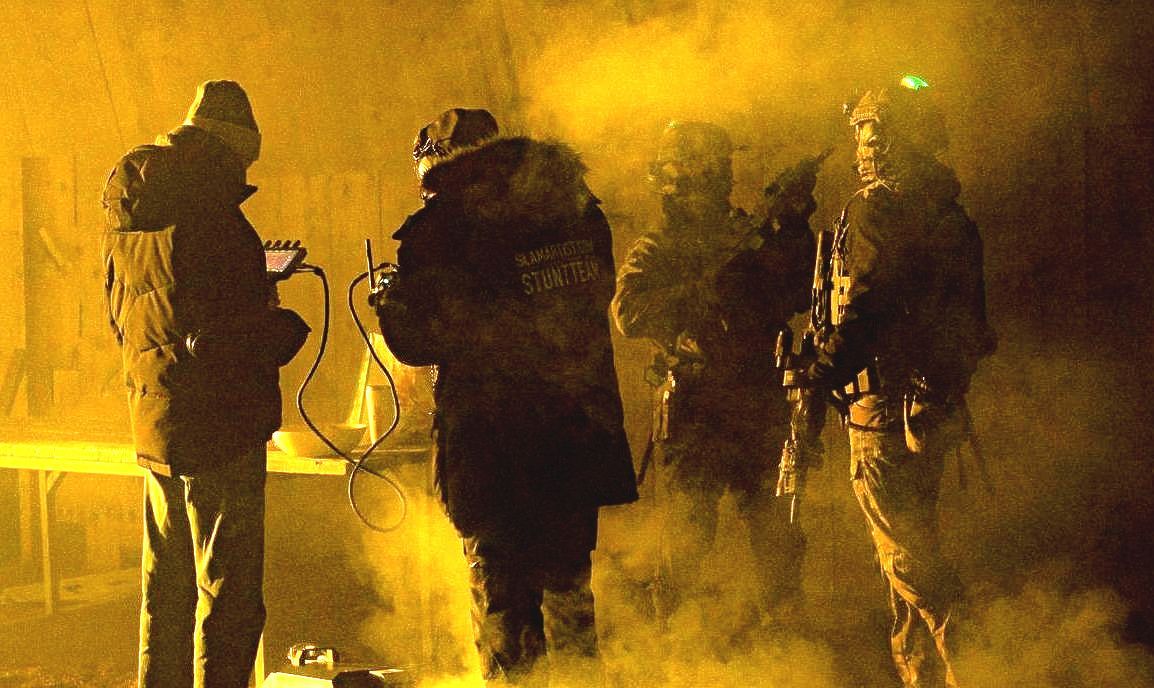
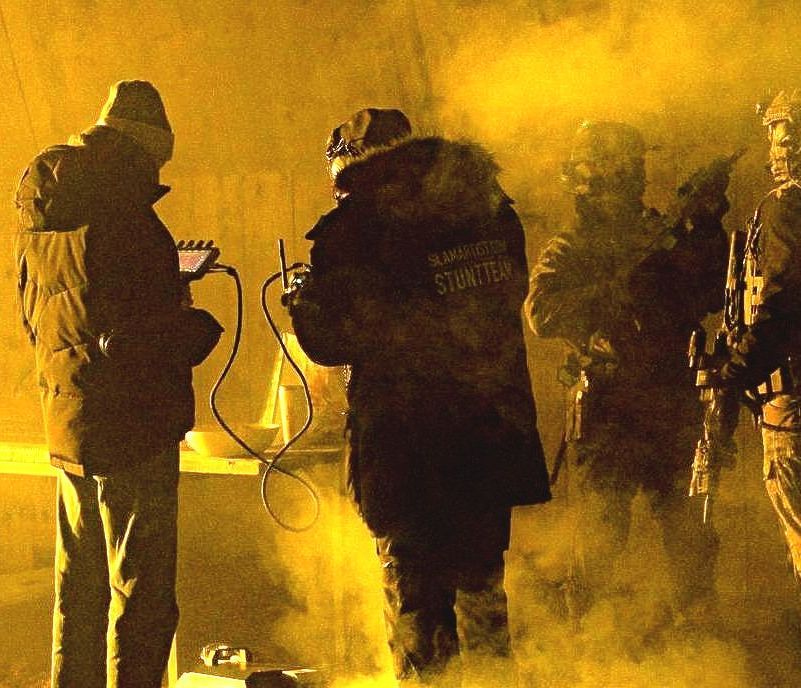
This photograph subtly captures the precision of three special operations soldiers as they clear a room. The focus is on both their coordinated movements and the methodical way the scene is shot, highlighting the simplicity and effectiveness of their teamwork in a high-stress environment.
Directing on the Frontlines
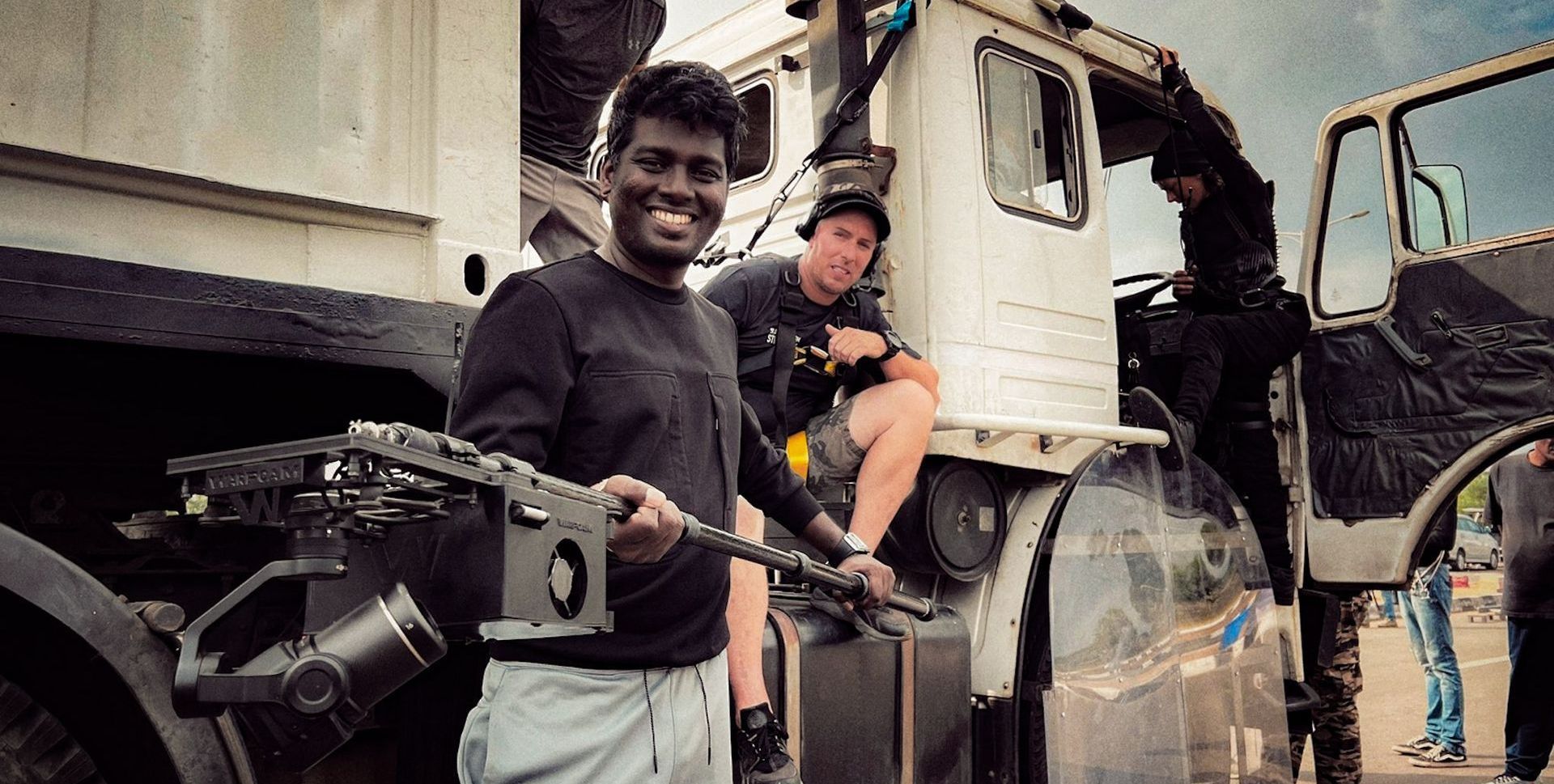
This image showcases Ferdi Fischer in action, both directing and operating the WarpCam® alongside special operations soldiers. It captures the dual expertise of Ferdi as he blends cinematic technique with tactical operations, emphasizing the collaborative effort required to achieve authentic and impactful scenes.

Warping Reality
Embracing technology as an integral part of storytelling, Ferdi's innovative use of WarpCam® alongside the charismatic Shah Rukh Khan in Bollywood's biggest blockbuster in history: "Jawan" has not only set a new bar for stunt and action cinematography but has also bridged the gap between visceral action and intimate character moments. His work demonstrates a profound blend of traditional craftsmanship and digital innovation, reflecting a deep reverence for both the art and the audience.
L'engagement de Ferdi dépasse le cadre du grand écran et se manifeste à travers la télévision, les clips musicaux, les publicités, les documentaires, le théâtre et l'opéra. Cette riche palette d'expériences nourrit son approche unique de la conception et de la coordination des scènes d'action, plaçant toujours l'essence même du récit au premier plan. En tant que concepteur de combats et chorégraphe de scènes d'action, il crée des moments aussi dramatiques qu'authentiques, à l'image de l'imprévisibilité et de la vigueur de la vie.
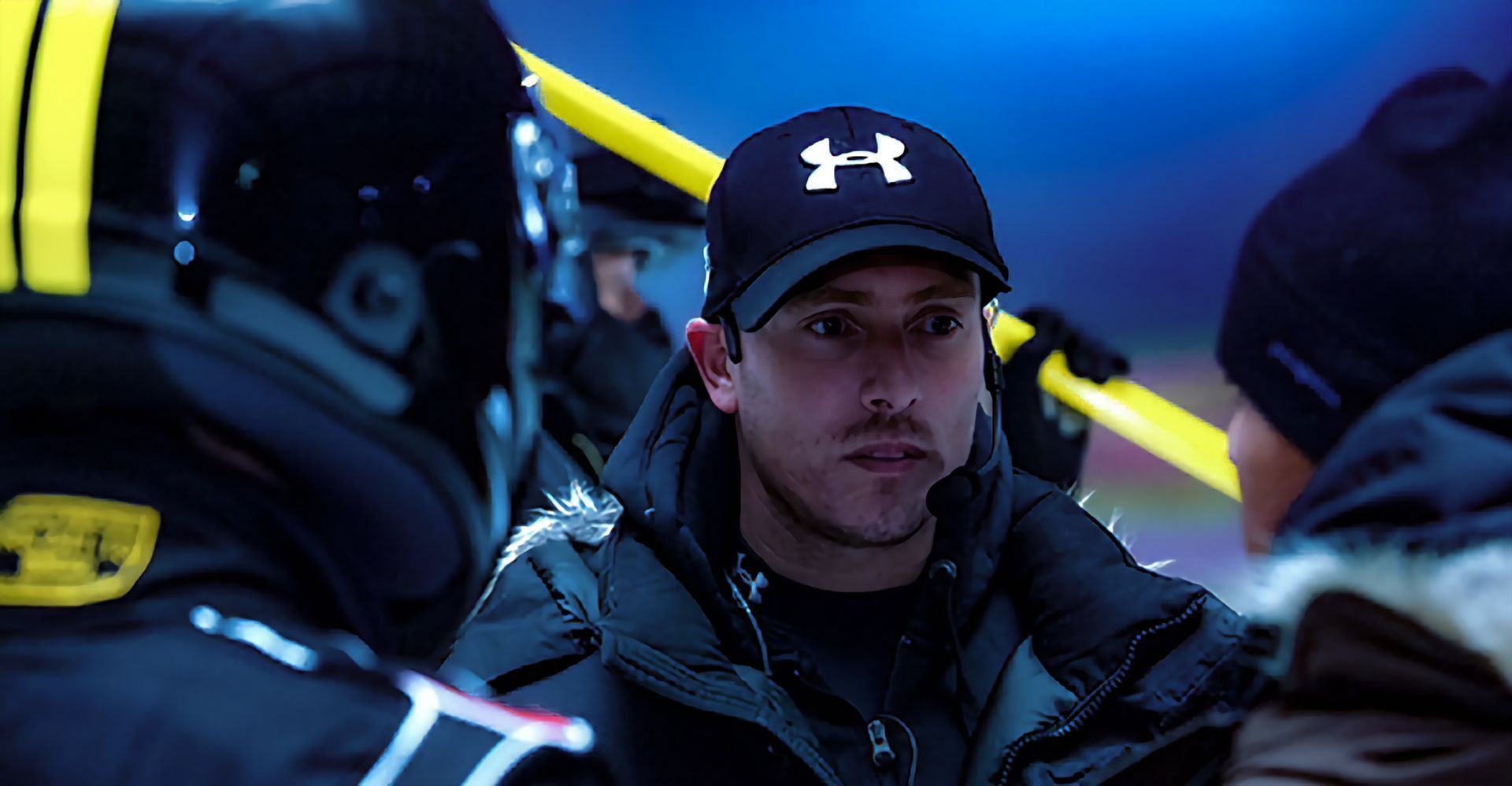
Stunt Coordinator Ferdi on a Dunlop Commercial
Over the shoulder view of two precision drivers listening as action director Ferdi Fischer briefs them on the next stunt for a Dunlop commercial, his face framed in a portrait style shot on a cold outdoor set.
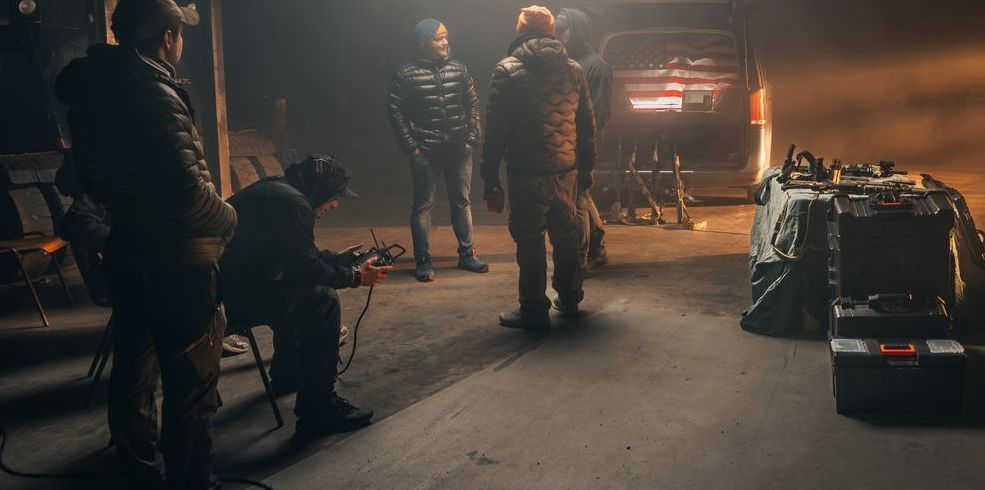
Ferdi setlife

Un langage d'action
Ferdi's world record gainer from a 150-foot cliff wasn't just about the thrill. It taught him vital lessons in planning and safety—lessons that make him the seasoned stunt coordinator he is today. With each fearless leap and precise land, he sharpened his skills for guiding action scenes and ensuring every stunt is as safe as it is spectacular.
Fluent in English, German, and Portuguese, Ferdi can smoothly run a stunt team anywhere in the world. Good communication is key in stunt coordination, and his language skills mean clear instructions and better teamwork on an international scale.
Ferdi also has a knack for quickly adapting to different places and cultures. He knows that understanding the local ways is crucial when working on international sets. Whether it's a bustling city in Asia or a quiet town in Europe, he blends in, respects the local customs, and gets the job done. His global experience doesn't just make him versatile—it makes him a better action designer, ready for any challenge the set might bring.
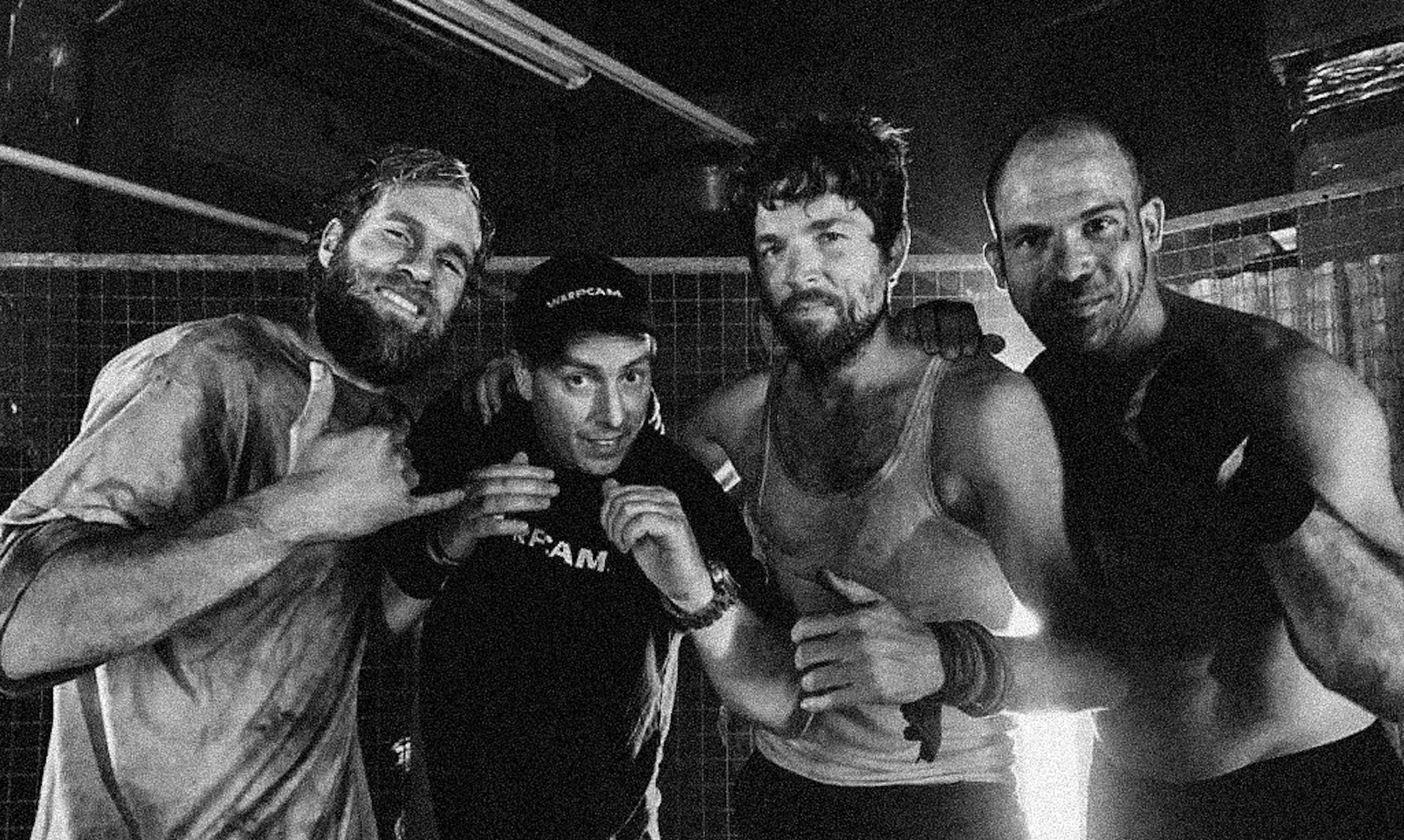
SoKo Stuttgart – Ferdi Fischer with Cast after Fight Choreography
Ferdinand Fischer with Peter Ketnath, Mathis Landwehr and Wanja Götz on the SoKo Stuttgart set, after choreographing and coordinating their fight scene.
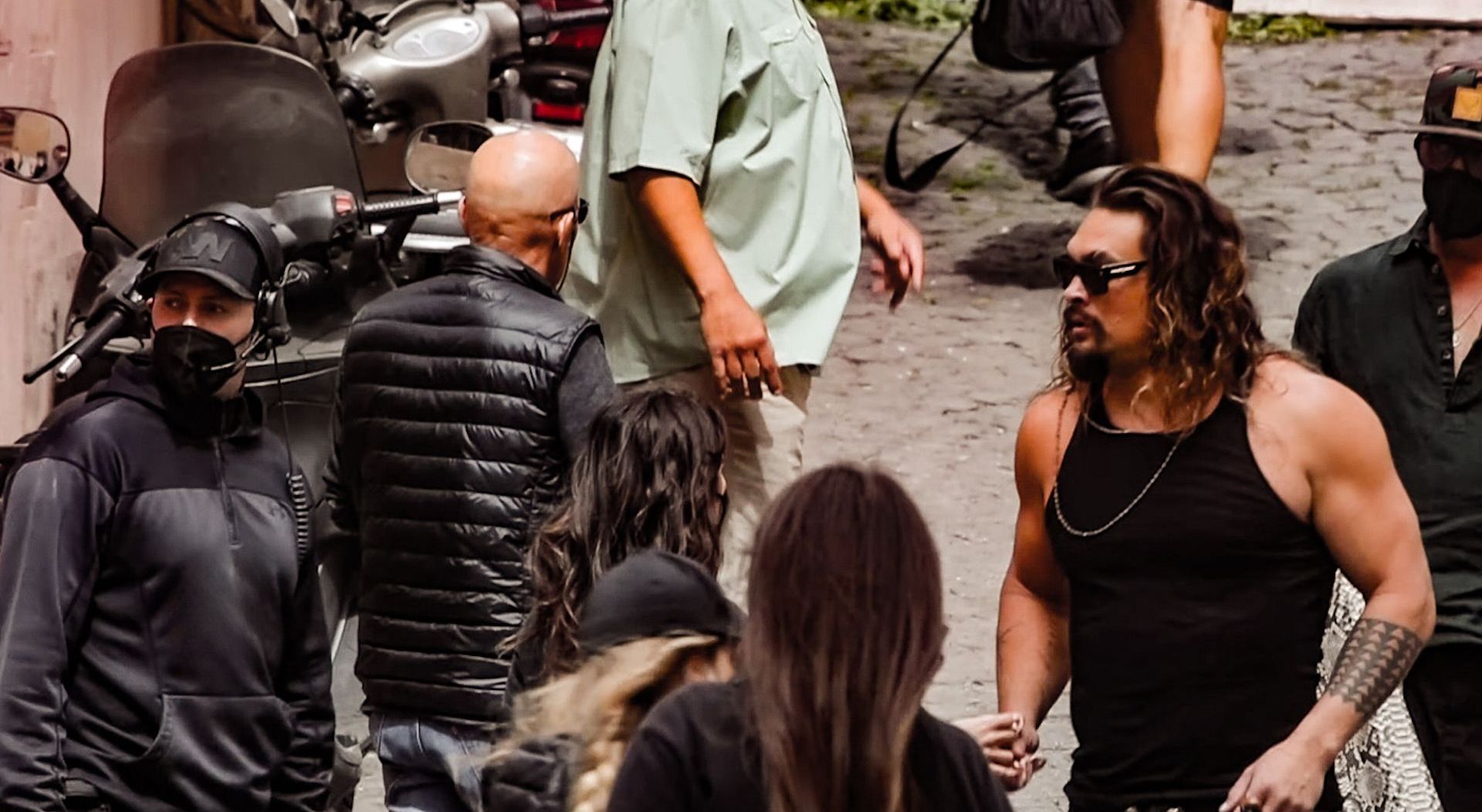
Fast X – Ferdi Fischer and Jason Momoa on Set
Stunt Coordinator / Stunt Coordination FAQ
Qu'est-ce qu'un coordinateur de cascades ?
A stunt coordinator is a specialized role within the film, television, and entertainment industries responsible for planning, designing, and supervising the execution of stunts and complex action sequences. Their primary duty is to ensure the safety of all performers and crew members involved in stunts while striving to fulfill the director’s vision for the action.
Stunt coordinators collaborate closely with the director, producers, and other department heads to create thrilling yet safe action scenes. They are experts in a variety of physical disciplines such as fight choreography, driving, high falls, and the use of mechanical rigs. Furthermore, they are often involved in the training of actors and stunt performers to safely perform dangerous scenes. Utilizing tools like the WarpCam®, specifically designed by stunt professionals for capturing dynamic action, they enhance the visual impact of stunts and ensure that action sequences are both safe and spectacular.
Outre leurs compétences techniques, les coordinateurs de cascades doivent posséder d'excellentes aptitudes à la communication, une connaissance approfondie de la physique et de l'ingénierie, ainsi que la capacité de gérer et d'atténuer efficacement les risques.
Comment devenir coordinateur de cascades ?
Devenir coordinateur de cascades requiert une combinaison de prouesses physiques, de compétences techniques et une excellente maîtrise du maniement de la caméra pour filmer efficacement les scènes d'action. Voici une approche étape par étape pour débuter :
- Expérience en cascades : Débutez votre carrière comme cascadeur pour maîtriser différentes techniques de cascades et comprendre la dynamique des scènes d'action du point de vue d'un cascadeur.
• Technical Training: Develop a solid grounding in safety management and technical skills such as high falls, martial arts, precision driving, and rigging. Familiarity with cinematography and specifically how different camera setups, like the WarpCam® , can enhance the visual impact of stunts, is crucial.
• Certification and Education: Obtain certifications from recognized industry bodies that may include safety procedures, stunt coordination, and specialized camera techniques for action scenes.
• Networking: Build professional relationships by working on diverse film projects. Networking is key in the film industry and helps in gaining opportunities to work with experienced stunt coordinators and directors.
- Mentorat et rôles avancés : Sollicitez le mentorat de coordinateurs de cascades expérimentés. Participez à des séquences d’action complexes afin de comprendre l’interaction entre la coordination des cascades et le travail de la caméra, et d’optimiser les scènes pour un impact dramatique et une sécurité optimaux.
Embarking on this career path will equip you with the skills necessary to choreograph and execute stunning stunts that are both safe and visually spectacular, making use of innovative camera technology like the WarpCam® to capture dynamic action.
Combien de temps faut-il pour devenir coordinateur de cascades ?
The timeline to become a stunt coordinator involves a significant commitment to training and practical experience in the stunt and film industries:
- Initial Stunt Experience: Start your career as a stunt performer, gaining essential skills in a variety of action sequences over approximately 3 to 5 years.
- Advanced Skills and Technology: As you progress, focus on mastering advanced safety protocols, stunt planning, and specialized camera work. It’s critical to become proficient with technologies designed specifically for action filming, such as the WarpCam®, which was developed by stunt professionals to capture dynamic motion and enhance the visual impact of stunts.
- Professional Growth and Networking: Continue your education, obtain relevant certifications, and expand your professional network. This phase is crucial for gaining insights and opportunities in stunt coordination and typically extends for several years.
- Transition to Coordination: Assist experienced coordinators and gradually manage your own stunt projects. Establishing yourself as a stunt coordinator usually takes an overall commitment of about 8 to 10 years, depending on your learning curve and the opportunities you pursue.
The path to becoming a stunt coordinator is comprehensive, often spanning a decade, requiring a deep dedication to mastering both the physical and technical aspects of stunt work, including innovative technologies like the WarpCam® designed to revolutionize action cinematography.
Quels sont les aspects les plus difficiles du métier de coordinateur de cascades ?
Being a stunt coordinator involves a unique set of challenges that require a high level of skill, creativity, and responsibility. Some of the most significant challenges include:
- Ensuring Safety: The foremost responsibility is to maintain the highest safety standards for all stunt performers and crew members. This involves rigorous risk assessments, meticulous planning, and constant vigilance during execution to prevent accidents and injuries.
- Creative Vision vs. Practical Limitations: Balancing the director’s creative vision with the physical and safety limitations of the performers and the environment can be complex. It requires innovative thinking and often, the use of technology like the WarpCam® to achieve dynamic shots while ensuring safety.
- Time and Budget Constraints: Working within the constraints of tight schedules and budgets while trying to deliver spectacular action sequences adds significant pressure. Efficient planning and resource management are critical.
- Communication and Coordination: A stunt coordinator must effectively communicate with a large team, including directors, other department heads, and the stunt team. Coordinating all these elements to synchronize perfectly during filming demands exceptional organizational skills.
- Adapting to New Technologies: Keeping up-to-date with the latest advancements in filming and stunt technology, such as new camera systems and rigging techniques, is essential. Stunt coordinators must continuously learn and adapt to incorporate these tools effectively into their work.
- Physical and Emotional Stress: The role can be physically demanding and emotionally taxing. Ensuring the well-being of their team and dealing with the aftermath of any potentially dangerous stunts can be stressful.
Ces défis font de la coordination de cascades une profession exigeante mais gratifiante, nécessitant un mélange de vision artistique, d'expertise technique et de compétences en leadership.
Quels sont les débouchés professionnels pour les coordinateurs de cascades en dehors du cinéma et de la télévision ?
Stunt coordinators have a variety of career opportunities outside of the conventional film and television industry. These alternative paths leverage their expertise in choreography, safety, and dynamic action management:
- Spectacles vivants et théâtre : De nombreux coordinateurs de cascades trouvent des carrières enrichissantes dans le domaine du spectacle vivant, notamment les représentations théâtrales, les cascades en direct dans les parcs d’attractions ou les tournées de spectacles de cascades. Ces rôles impliquent souvent la création et l’exécution de cascades répétées, dans le respect de normes de sécurité élevées devant un public.
- Formation et enseignement des cascades : Les coordinateurs de cascades expérimentés peuvent se tourner vers l’enseignement dans des écoles de cascades, des ateliers ou des instituts de cinéma. Ils partagent leurs connaissances en matière de sécurité, de technique et de coordination des cascades avec les cascadeurs et coordinateurs en herbe.
- Publicité et montage : Les coordinateurs de cascades sont également très recherchés pour les tournages publicitaires nécessitant des scènes d'action. Leurs compétences permettent d'amplifier l'impact visuel des campagnes publicitaires.
- Développement de jeux vidéo : Avec la démocratisation de la capture de mouvement, les coordinateurs de cascades collaborent de plus en plus avec les développeurs de jeux vidéo pour chorégraphier et capturer des séquences d'action réalistes.
- Conseil en sécurité : Forts de leur connaissance approfondie des protocoles de sécurité, les coordinateurs de cascades peuvent intervenir comme consultants en sécurité auprès des secteurs exigeant des activités dangereuses chorégraphiées, tels que l'armée ou les programmes de formation aux interventions d'urgence.
- Événements spéciaux et animation d'entreprise : La coordination des cascades pour les événements d'entreprise, les lancements de produits ou les activités promotionnelles permet aux coordinateurs de cascades de concevoir des expériences uniques et captivantes pour le public.
- Conception d'actions pour la réalité virtuelle (RV) et la réalité augmentée (RA) : Avec l'essor des technologies de RV et de RA, les coordinateurs de cascades sont indispensables pour concevoir et chorégraphier des séquences d'action à la fois immersives et réalistes. immersif et sûr pour les utilisateurs dans les environnements virtuels.
These career paths offer stunt coordinators a chance to apply their skills in diverse environments and industries, showcasing the versatility and demand for their unique expertise.
The role of a stunt coordinator involves significant collaboration with directors and various department heads to ensure that stunt sequences are safely and effectively integrated into the overall production. Here’s how this collaboration typically unfolds:
- Pre-Production Meetings: Early in the pre-production phase, stunt coordinators meet with directors and heads of departments such as cinematography, special effects, and art direction. These meetings are crucial to understanding the director's vision and discussing how stunts can enhance the narrative.
- Planning and Design: Stunt coordinators work closely with the director and the director of photography to design action sequences that are visually compelling and align with the story’s requirements. This often involves using specialized technology like the WarpCam® to capture dynamic action from unique angles.
- Safety Protocols: Coordination with the health and safety department is essential to ensure that all stunt practices adhere to legal and industry safety standards. Stunt coordinators are responsible for creating detailed safety plans and conducting risk assessments.
- Rehearsals: Stunt coordinators organize and oversee rehearsals, ensuring that all performers are well-prepared and that the sequences are executed as safely as possible. This often requires synchronizing with the props and special effects teams to manage the physical elements involved in stunts.
- On-Set Execution: During filming, stunt coordinators maintain open lines of communication with the director, assistant directors, and the camera crew to manage the timing and execution of stunts. They need to be flexible and ready to adjust plans based on real-time feedback from the director and the operational needs of other departments.
- Post-Production Input: Although their primary role is during the shooting phase, stunt coordinators may also provide input during post-production, especially regarding the editing of action sequences to ensure continuity and the intended impact of the stunts.
By effectively collaborating with these key players, stunt coordinators help bridge the gap between the artistic vision of the director and the technical execution of stunt sequences, ensuring that the final product is both safe and spectacular.
La technologie a profondément révolutionné la façon dont les cascades sont planifiées, réalisées et filmées dans l'industrie cinématographique, améliorant à la fois la sécurité et le spectacle visuel des scènes d'action. Voici quelques avancées technologiques majeures qui ont eu un impact considérable :
- Advanced Camera Systems: Technologies like the WarpCam®, specifically designed by stunt professionals for action scenes, allow for dynamic and immersive shots that capture high-speed action from any angle. This system provides a clearer, more thrilling view of stunts, elevating the viewer's experience.
- Motion Capture: Used extensively in both gaming and films, motion capture technology records the movements of stunt performers, which are then used to create realistic digital models. This is particularly useful for creating complex or dangerous stunts that are too risky to perform live.
- Computer-Generated Imagery (CGI): CGI works hand-in-hand with practical stunts to enhance the final visual effect without putting performers at risk. It can be used to augment elements of the stunt or to create environments that would be impossible to replicate physically.
- Safety Equipment Technology: Innovations in safety gear, including airbags, harnesses, and rigging systems, have significantly increased the safety of performing high-risk stunts. This equipment is continually being refined to provide better protection and more freedom of movement.
- Drones and Robotics: Drones can be used to film stunts from angles that might be unsafe or impossible for human camera operators. Similarly, robotic camera systems can create highly precise and repeatable movements, which is ideal for complex action sequences.
These technological advancements not only enhance the spectacle of stunts but also increase the safety and efficiency of stunt performances, allowing stunt coordinators to push the boundaries of what can be achieved in film and television.
Quelles sont les considérations juridiques dont un coordinateur de cascades doit tenir compte lors de la planification et de l'exécution de cascades ?
Les coordinateurs de cascades doivent composer avec un ensemble complexe de considérations juridiques afin de garantir la conformité de toutes les cascades aux lois et réglementations en vigueur, assurant ainsi la sécurité de la production et de son personnel. Voici quelques-unes des principales considérations juridiques :
- Autorisations et permis : Selon le lieu et la nature des cascades, des autorisations spécifiques peuvent être requises pour certaines actions, notamment si elles impliquent des espaces publics, l'utilisation de pyrotechnie, des acrobaties aériennes ou des explosions de grande ampleur. Les coordinateurs doivent s'assurer que toutes les autorisations nécessaires sont en règle avant le début des cascades.
- Assurance et responsabilité civile : Les coordinateurs de cascades doivent collaborer étroitement avec la production afin de souscrire une assurance adéquate couvrant la responsabilité civile en cas d'accident ou de blessure. Il est essentiel de bien comprendre l'étendue et les limites de cette couverture pour gérer efficacement les risques potentiels.
- Respect des normes de sécurité : Des normes et réglementations de sécurité strictes encadrent le travail de cascadeur afin de protéger toutes les personnes impliquées dans la production. Les coordinateurs de cascades doivent veiller à ce que toutes les cascades soient conformes aux normes de sécurité nationales et à toute réglementation locale supplémentaire, qui peut imposer des mesures spécifiques telles que la présence de personnel médical ou d'équipements de sécurité incendie.
- Contrats et droit du travail : Il est important que tous les cascadeurs travaillant sous la direction du coordinateur de cascades disposent de contrats clairs définissant leurs rôles, leurs responsabilités et les risques associés à leurs cascades. Ces contrats doivent être conformes au droit du travail, notamment en ce qui concerne la rémunération équitable, les horaires et les conditions de travail.
- Considérations éthiques : Outre leurs obligations légales, les coordinateurs de cascades doivent également respecter des normes éthiques qui garantissent la dignité et le consentement des cascadeurs. Cela implique de s’assurer que ces derniers sont pleinement informés des risques et ne sont pas contraints d’effectuer des cascades qui les mettent mal à l’aise.
En gérant efficacement ces aspects juridiques, les coordinateurs de cascades contribuent à garantir que la production respecte tous les cadres juridiques nécessaires, protégeant ainsi le projet et tout le personnel associé.